
If you are wondering how long do dentures last, there is no single replacement date that applies to everyone. A denture may remain useful for years, but the fit and the condition of the appliance can change. An exam helps determine whether adjustment, repair, relining, replacement, or continued monitoring is appropriate.
Request an Appointment at Celebrity Smiles Melbourne
How long do dentures usually last?
Cleveland Clinic gives a general average lifespan of seven to 10 years. That range is a reference, not a promise, warranty, or deadline. Some dentures may need attention sooner, while others may remain usable longer. Age by itself cannot show whether a denture is still suitable for your mouth.
Dentures replace missing teeth and may be complete or partial, as described by MedlinePlus. Their useful life depends on more than the material. Fit, wear, changes in the mouth, cleaning habits, and accidental damage all matter. A denture can look intact but move or rub because the tissues supporting it have changed. Conversely, an older appliance may still appear comfortable but deserve professional review.
Use the lifespan estimate as a reason to keep an eye on fit, not as a countdown. If yours is approaching that range, bring it up at a dental visit. If a problem appears earlier, do not wait for a specific anniversary to ask for advice.
What affects how long a denture stays useful?
Changes in gums, bone, and remaining teeth
The shape of the mouth can change over time. When the supporting tissues change, the denture may no longer rest as it once did. You might notice movement, pressure in one area, or difficulty keeping it stable. These observations do not identify the cause, and they do not automatically mean a new denture is required. A dental professional can examine the appliance and your mouth to discuss possible next steps.
With a partial denture, the remaining teeth also matter. A change in a tooth that supports or contacts the appliance can affect how the partial sits. If it feels unusually tight or does not settle in its familiar position, do not force it into place. Record what feels different and arrange an assessment.
Daily use, wear, and repairs
Daily insertion, removal, chewing, and cleaning expose a denture to repeated handling. Wear may accumulate gradually, and damage can happen suddenly if the appliance is dropped. A denture that has been repaired before may still be usable, but a recurring crack or a new change in fit deserves another look. The age of a repair does not tell you whether the surrounding structure remains sound.
Tell the dentist how often you wear it and whether you have noticed changes during meals, speech, or removal. If you clench or grind your teeth, mention that as well. These details help frame a useful conversation about the appliance, even though they cannot replace an examination.
Cleaning and storage habits
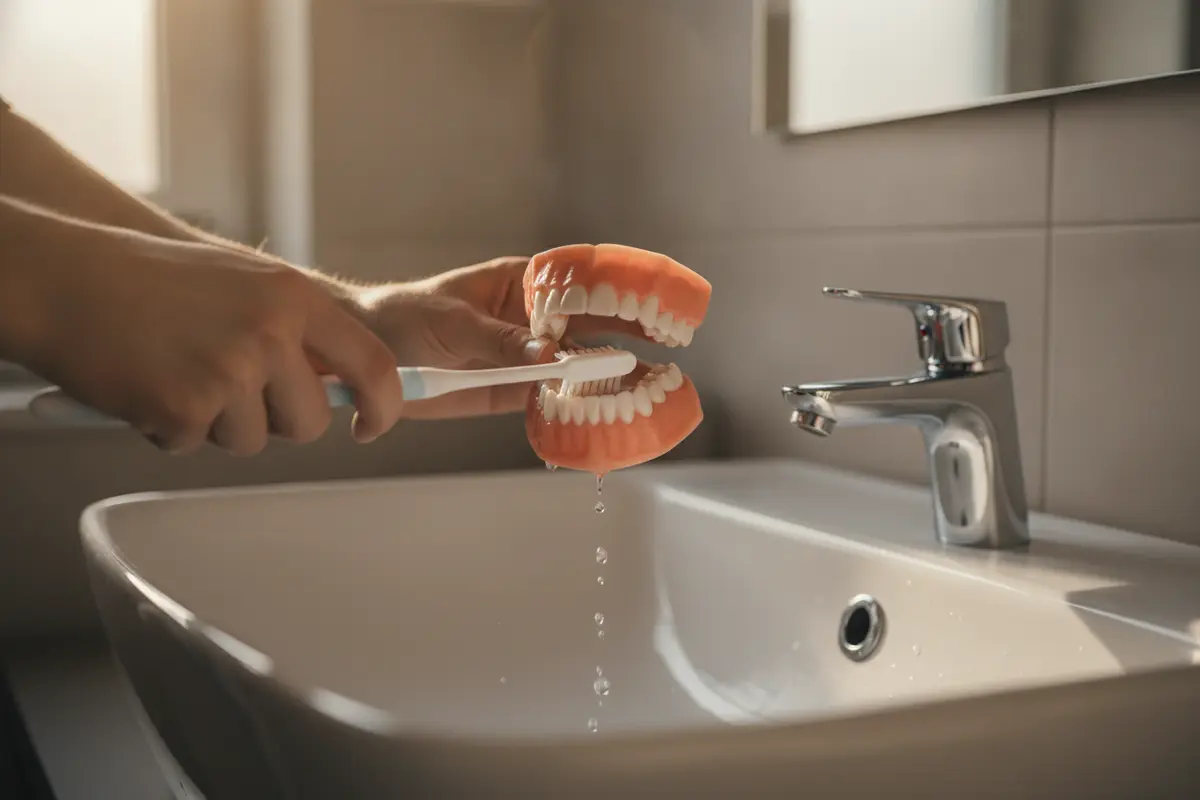
Care practices can help reduce avoidable damage. Handle the denture over a folded towel or a basin partly filled with water while cleaning. Use products and methods recommended for its material. Avoid hot water and household cleaners unless a dental professional specifically advises them, because unsuitable heat or products may damage some appliances.
Storage instructions can differ. Ask whether your specific denture should be kept moist, which soaking product is appropriate, and what to do when traveling. Do not assume that every denture has identical care requirements. If the appliance changes after a new product or cleaning method, stop using that method and ask the dental office for guidance.
How do common denture types compare?
A complete removable denture replaces all teeth in an upper or lower arch. A removable partial denture replaces some missing teeth while other teeth remain. These types have different points to monitor, but neither has a guaranteed service life. A dental evaluation considers the appliance and the mouth together.
| Type or concern | What it means | What to notice | Useful question for the visit |
|---|---|---|---|
| Complete removable denture | Replaces all teeth in one arch | Movement, rubbing, comfort, visible damage | Does the fit need assessment or adjustment? |
| Removable partial denture | Replaces some teeth while other teeth remain | Changes in stability or fit around remaining teeth | Could changes in my mouth affect how it sits? |
| Cracked or chipped appliance | Damage may affect use or create a sharp area | Loose pieces, rough edges, instability | Should I stop wearing it until it is examined? |
| Older but comfortable appliance | Age alone does not establish suitability | Whether it remains stable and comfortable over time | Is monitoring appropriate, and when should I return? |
For more background, review the American College of Prosthodontists’ denture overview. You can also explore the practice’s dental services and ask which evaluation fits your concern. Recommendations depend on an in-person exam and a personalized treatment plan.
What signs mean it is time to contact a dentist?
Arrange an evaluation if the denture feels newly loose, shifts while speaking or eating, rubs persistently, causes sore spots, or becomes difficult to insert or remove. A crack, chip, sharp edge, or sudden change in how the teeth meet also deserves attention. These signs do not confirm a particular problem, but they are useful reasons to seek professional advice rather than trying to reshape the appliance yourself.
Pain, swelling, bleeding, or a sore that does not improve should be assessed. Such symptoms can have different causes, so do not assume the denture is the only source. If an appliance breaks, keep the pieces and contact a dental office. Avoid wearing it if it is sharp, unstable, or causing injury. The practice’s contact page provides a way to request an appointment in West Melbourne.
Describe the change, not just the age
When contacting the office, explain what changed and when you first noticed it. For example, say whether the denture moves only during meals or also when speaking, whether rubbing happens in one spot, and whether the fit feels different after it has been out of your mouth. Mention any sudden damage and whether you have tried a new cleaning product. Specific observations can help the office understand why you are seeking an appointment.
Can a denture be repaired or relined?
Adjustment, repair, relining, and replacement address different situations. An adjustment may change a particular contact or pressure area. A repair may address some breaks. A reline changes the surface that contacts the gums to improve adaptation. It may not correct every issue with the teeth, the overall structure, or changes elsewhere in the mouth.
Replacement may be discussed if the appliance has extensive wear, repeated damage, or a fit problem that cannot be addressed adequately with another approach. That decision is individual. Ask what the recommended service is expected to improve, what it will not address, and how the dentist assessed the appliance. Do not assume that a reline is always preferable or that replacement is inevitable after a certain number of years.
For a practical conversation, ask whether the denture is structurally sound, whether the proposed work is intended as a short-term or longer-term solution, and whether a follow-up fit check may be needed. If more than one option is reasonable, ask how each relates to your goals and oral health. The practice’s new-patient information can help you prepare for a first visit.
How can you care for dentures between visits?
- Clean the appliance regularly with products recommended for its material.
- Handle it over a towel or basin of water to reduce the chance of damage if it slips.
- Follow the storage instructions for your specific denture.
- Keep dental appointments so the appliance, mouth tissues, and any remaining teeth can be assessed.
- Do not use household glue, bend the appliance, or file rough areas at home.
- Keep any care instructions and product labels available if you are unsure what you used.
A repeatable routine can make care easier. Choose a consistent time to clean the appliance, keep the recommended supplies together, and store it where it is less likely to be dropped. If your schedule changes or you travel, ask how to maintain the same care practices away from home. Avoid improvising with a household cleaning product when you run out of a recommended one.
During a visit, describe your usual cleaning and storage routine. This gives the dentist a chance to clarify whether it fits the appliance. If a product causes an unexpected change to the denture or irritation in your mouth, stop and ask what to do next rather than trying several products in succession.
What should you expect at an evaluation?
An evaluation is a chance to discuss both the denture and the changes you have noticed. Bring the appliance, including broken pieces if it has been damaged. If you have a removable partial, bring it even if the concern seems to involve one of the remaining teeth. The clinician can examine the appliance and your mouth and explain what the findings mean for possible next steps.
Before the visit, make a short note of when the change began, where you feel pressure or rubbing, and which activities bring it on. Include whether the denture has been repaired before, how you clean it, and whether it has recently been dropped. You do not need to decide in advance whether the appliance needs repair or replacement; that is part of the assessment.
Useful questions include:
- Which part of the denture or mouth needs attention?
- Is an adjustment, repair, reline, replacement, or monitoring being considered, and why?
- What should I do with the appliance while deciding or waiting?
- What changes should prompt me to contact the office sooner?
- When should fit and comfort be reviewed again?
If you are new to the practice, review information about the dental team and the practice before your visit. Bring a list of medications and relevant health information if requested by the office, and allow time to explain your concern without rushing. The goal is to leave understanding the recommendation and the next step, not to guess based on an average lifespan.
How can you make sense of a recommendation?
If the dentist recommends work, ask for a plain-language explanation of the problem being addressed. For example, a loose fit and a visible crack are different observations and may lead to different discussions. Ask how the recommendation relates to what was found during the exam, what alternatives were considered, and what outcome is realistic to expect. No option can be assessed fully from a description alone.
You can also ask what the plan means for everyday use. Should you wear the denture as usual, limit use, or leave it out until it is evaluated further? What cleaning and storage steps should you follow? If the denture is being repaired or replaced, ask whether you will need a follow-up visit and how to report discomfort afterward. These questions clarify what to do between appointments.
If you would like to compare general information before your visit, see MedlinePlus guidance on dentures and discuss questions with a dental professional. Online information can explain terms, but it cannot determine whether your own appliance fits properly.
What if you are deciding whether to wait?
A denture that feels unchanged and comfortable does not necessarily require urgent attention, but there is no universal interval that applies to every person. Ask your dental professional how often your mouth and appliance should be checked based on your circumstances. Continue routine dental care even when the denture seems to be working well, particularly if you have remaining teeth that also need assessment.
By contrast, new instability, persistent soreness, sharp damage, or difficulty eating or speaking with the appliance are reasons to contact a dentist rather than waiting for it to reach a certain age. If symptoms are severe or rapidly worsening, seek prompt professional guidance. Do not diagnose the cause yourself or rely on a calendar estimate to decide whether a change matters.
For adults in West Melbourne, Melbourne, Palm Bay, Viera, Suntree, and nearby Brevard County communities, a dentist can review the appliance and explain suitable next steps. Learn more about comprehensive dental care or arrange a conversation through the contact page.
Request an Appointment at Celebrity Smiles Melbourne
Frequently Asked Questions
Do dentures need replacement every seven years?
No fixed schedule applies to everyone. Cleveland Clinic cites seven to 10 years as a general average, but fit, condition, and oral health need individual assessment.
Can dentures last longer than 10 years?
Some may remain usable longer, but age alone cannot show whether fit and condition are suitable. A dentist can assess the appliance and your mouth.
Should I stop wearing a loose denture?
If it is unstable, painful, sharp, or causing sores, contact a dentist for advice. Do not force it into place or attempt a home repair.
Can I repair a cracked denture at home?
Do not use household glue, bend, or file it. Keep the pieces and ask a dental office about assessment and repair options.
Does an older denture always need to be replaced?
No. The right next step depends on fit, condition, and the findings of an evaluation. Ask what the dentist recommends and why.
Dentures may remain useful for years, but comfort, fit, and condition matter more than the calendar; request an evaluation if yours has changed or no longer feels right.