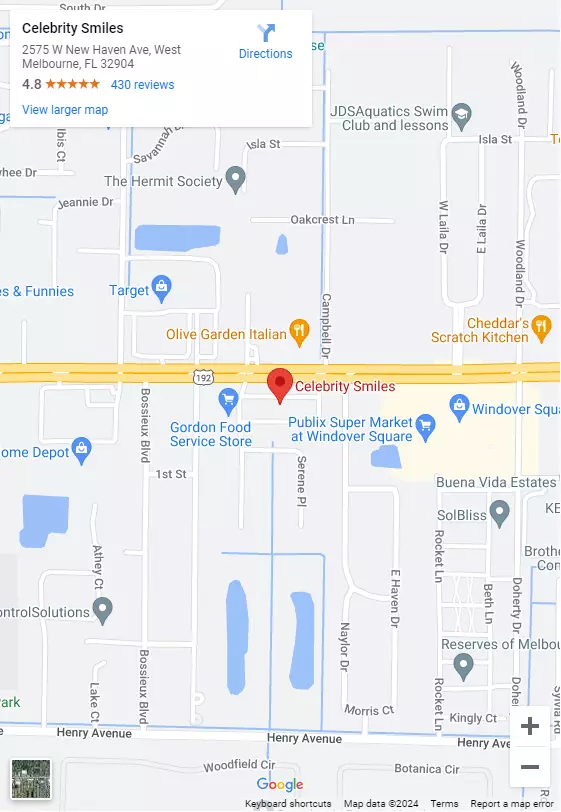
If you are missing a tooth, you may be asking, does Delta Dental cover implants? The answer depends on your specific plan, the reason for tooth loss, the treatment stages involved, and the plan terms in effect when care begins. A benefits card or general insurance statement cannot confirm your final out-of-pocket cost. This checklist can help adults in West Melbourne, Melbourne, Palm Bay, and nearby Brevard County organize the right questions before moving forward.
Request an implant consultation at Celebrity Smiles Melbourne
Does Delta Dental cover implants in every plan?
No. Delta Dental is a network of independently operated companies, and plans can differ by employer, state, group, and coverage level. Some plans may exclude implants. Others may provide benefits for certain portions of implant treatment, subject to deductibles, coinsurance, annual maximums, waiting periods, exclusions, and plan limitations.
Even when a plan lists implant benefits, that does not mean every patient or every procedure qualifies. A plan may distinguish between surgical implant placement, an abutment, and the crown or other restoration placed on top. It may also apply a missing-tooth clause, alternate-benefit provision, replacement limitation, or waiting period. The current plan document and a written estimate are more useful than a general statement that implants are covered.
Coverage is also separate from clinical suitability. A dentist must evaluate your teeth, gums, bone, medical history, and goals before recommending an implant or another replacement. Celebrity Smiles’ implant care information can help you prepare for that conversation. Final recommendations depend on an in-person exam and a personalized treatment plan.
Which parts of implant treatment should you identify?
Implant care is usually a sequence rather than one single billing event. When you contact Delta Dental, ask how the plan treats each stage and the procedure description or code used for that stage. Your dental office can explain the proposed sequence, but Delta Dental makes the coverage determination under your plan.
- Evaluation and imaging: Ask whether the examination, radiographs, CBCT 3D imaging, or other planning services have separate benefits or frequency limits.
- Tooth removal: If a tooth must be removed, ask whether extraction is covered independently and whether the reason for extraction affects benefits.
- Bone or gum procedures: Some patients need additional preparation before implant placement. Ask whether grafting or related procedures are excluded or reviewed separately.
- Implant placement: This is the surgical placement of the implant fixture. It may have a separate benefit category or exclusion.
- Abutment: The connector between the implant and restoration may be billed separately from the implant fixture.
- Crown or prosthesis: The visible replacement tooth, bridge, denture, or full-arch restoration may have different coverage rules from the surgical portion.
- Follow-up care: Ask about examinations, repairs, adjustments, and replacement limits.
For patients with more than one missing tooth, the proposed plan may involve a single-tooth implant, an implant-supported bridge, implant-supported dentures, or a full-arch solution. A full-arch plan may use a system such as Locator Fixed or another approach, but the clinical name and the insurance classification may not be the same. Ask Delta Dental to review the entire proposed sequence instead of discussing only the first appointment.

What plan details can change your implant benefits?
A careful review should go beyond the word “implant.” Look for the following sections in your benefit booklet or online member portal. If a term is unclear, ask Delta Dental for the exact plan language and request the answer in writing.
Exclusions and limitations
An exclusion means the plan does not provide a benefit for a service or category of care. A limitation may restrict how often a service is covered, which teeth qualify, or what the plan pays. Implant exclusions can appear in major-services, prosthodontics, missing-tooth, or alternate-treatment sections. Do not assume that coverage for crowns or bridges automatically extends to implant-supported restorations.
Annual maximum
An annual maximum is the most the plan will pay toward covered services during a benefit year. It is not the total price of implant treatment. If other dental care has already used part of the maximum, less may remain for implant-related claims. Ask when the benefit year resets and whether claims are applied based on the date treatment is performed or the date they are submitted.
Deductible and coinsurance
A deductible is the amount you may pay before the plan begins contributing to certain services. Coinsurance is the percentage you may owe after the deductible. Confirm whether both apply to surgery and restoration, whether they are individual or family amounts, and whether network status changes your share.
Waiting periods
A waiting period can delay benefits for certain categories after enrollment. It may not apply to every service, and an employer plan may handle it differently from an individual plan. Ask when the waiting period ends and whether treatment that begins before that date is treated differently from treatment that begins afterward. A Delta Dental benefit summary example illustrates why the effective date and the date treatment begins can matter when a plan reviews multi-stage care. This example is not your plan, so use your own current documents for a coverage decision.
Missing-tooth and replacement rules
Some plans limit benefits when a tooth was missing before the policy began. Other plans limit how often a prosthetic restoration can be replaced. Ask when the tooth was considered missing under the plan, whether a previous bridge or denture affects the claim, and whether the plan has a replacement interval.
Alternate benefits
An alternate-benefit provision may allow the plan to calculate payment using a less costly covered treatment, even when your dentist recommends an implant. For example, the plan might calculate a benefit using a bridge or removable prosthesis. This does not mean the dentist is required to provide the alternate treatment. It means your plan’s calculation may differ from the fee for the treatment you choose.
How should you compare implant coverage options?
Use a written comparison rather than relying on a verbal percentage. The table below shows the questions to ask for common implant-related services. It is a planning tool, not a prediction of what Delta Dental will pay.
| Part of care | What to ask Delta Dental | What to confirm with the dental office |
|---|---|---|
| Exam and imaging | Is the evaluation covered, and are there frequency or imaging limits? | Which diagnostic services are recommended and why? |
| Extraction | Is the extraction covered, and does the reason affect benefits? | Whether removal is needed and how it fits the sequence. |
| Implant placement | Is the fixture excluded, limited, or subject to review? | The proposed site, procedure description, and timing. |
| Abutment and crown | Are the connector and restoration covered separately, and is there an alternate benefit? | The restoration type and whether it is supported by one or more implants. |
| Full-arch or supported denture | How does the plan classify the prosthesis, and do denture rules apply? | Whether a removable or fixed option is being considered. |
| Follow-up and replacement | Are adjustments, repairs, and replacements covered, and at what intervals? | What maintenance the proposed restoration may require. |
What is the difference between a predetermination and preauthorization?
Insurance companies use these terms differently, so ask Delta Dental what its process means for your plan. A predetermination of benefits may provide an estimate of how a claim could be processed before treatment. It is generally not a guarantee of payment. Preauthorization may mean the plan must review and approve a service before it is performed for a benefit to be considered. The exact effect depends on the contract.
Ask whether the review is required, whether your dentist must submit records or radiographs, how long the review may take, and how long the response remains valid. Ask whether a decision can change if eligibility, plan terms, treatment dates, or procedure details change. Keep the reference number, date, representative’s name, and written response.
A benefits estimate can still differ from your final responsibility. Claims may be affected by other treatment, a change in eligibility, an annual maximum, coordination of benefits, coding, or information that was not available during the estimate. Treat the estimate as a planning document, not a promise.
How can you verify your Delta Dental benefits?
Start with your member ID card and the plan’s current benefit booklet. You can also use the member portal or call the customer service number listed by Delta Dental. Be specific. Instead of asking, “Are implants covered?” ask the representative to review each planned service and explain exclusions, limitations, and the estimated plan payment.
- Confirm eligibility: Ask whether coverage is active on the expected date of treatment and whether you are enrolled in the plan whose benefits you are reviewing.
- Ask about network status: Confirm how the plan handles an in-network and out-of-network dentist, and ask whether the implant surgeon, restoring dentist, or laboratory is evaluated separately.
- Discuss the complete sequence: Review the exam, imaging, extraction, grafting if applicable, placement, abutment, restoration, and follow-up.
- Ask about plan restrictions: Confirm the deductible, coinsurance, annual maximum, waiting period, missing-tooth rule, alternate benefit, and replacement limitation.
- Request a written explanation: Ask for a predetermination or benefit estimate if available, and confirm whether it is binding or only an estimate.
- Record the conversation: Write down the date, representative, reference number, answers, and documents requested.
- Recheck before treatment: If treatment is delayed, the plan year changes, or the treatment sequence changes, verify benefits again.
Your dental office may be able to submit a proposed treatment plan or supporting records. You can also review Celebrity Smiles’ dental insurance information and financial information for dental care. Current insurance, financing, and membership details should be confirmed directly because eligibility and terms vary.
How can you estimate your likely out-of-pocket amount?
Begin with the full proposed fee, then separate the services by treatment stage. For each stage, record the plan’s allowed amount, estimated percentage, deductible, remaining annual maximum, and any alternate-benefit calculation. Do not subtract a percentage from the total fee unless Delta Dental confirms that it uses that method for the specific service.
For example, a plan might treat the crown as a covered major service but exclude the implant fixture. Another plan might apply a benefit to a restoration while calculating payment as though a less costly alternative had been selected. A third plan might have a waiting period or annual maximum that changes the estimate. These examples show why one overall “implant coverage” percentage can be misleading.
Also ask whether separate providers or facilities submit claims for different stages. If a treatment plan changes after examination, updated imaging, or healing, request a revised estimate. Keep your written estimate with the treatment plan, but remember that the final claim is processed under the actual plan terms and services provided.
What should you ask at an implant consultation?
Bring your benefit booklet, member ID card, prior dental records if available, and the questions you recorded. Ask the dental team to explain the clinical reason for each stage, the alternatives that may be appropriate, and which parts of the plan can be submitted for review.
- What type of tooth replacement is being considered, and why?
- What diagnostic information is needed before a recommendation is made?
- Which stages are expected, and could the sequence change after the exam?
- Are a single implant, bridge, implant-supported denture, or full-arch option relevant to my situation?
- What questions should I direct to Delta Dental about each billing category?
- What amount is an estimate, and what amount cannot be known until the claim is processed?
- What follow-up and maintenance should I plan for?
For additional preparation, review comprehensive dental care at Celebrity Smiles and the practice’s dental technology information. Online information cannot replace an examination or a plan-specific insurance determination. Patients considering several missing-tooth solutions can also compare general information about dental bridges with the implant discussion they have with their dentist.
When a full-arch approach is discussed, ask how the proposed restoration is supported, whether it is fixed or removable, and how the plan classifies each component. Locator Fixed is a premium full-arch implant system by Zest Dental that uses a tapped-on or snapped-on approach rather than traditional screwed-in implants. Locator Fixed systems and other full-arch approaches may be discussed in clinical terms that differ from the billing categories used by an insurer. The appropriate option depends on an in-person evaluation, your oral health, available bone and tissue, and your goals.
Request an appointment to review your implant options
Frequently Asked Questions
Does Delta Dental cover the full cost of dental implants?
Usually, you should not expect a plan to pay the full cost without checking its terms. Even when a service has a benefit, deductibles, coinsurance, annual maximums, exclusions, waiting periods, and alternate benefits may affect what you owe. Ask Delta Dental for a written estimate based on the proposed treatment.
Can I find out about coverage before starting treatment?
Ask Delta Dental and your dental office whether a predetermination or preauthorization is available and required. The response can help with planning, but ask whether it is a guarantee or an estimate and whether it remains valid if treatment dates or details change.
What if my plan excludes implants?
Ask whether the plan covers related services, such as an examination, extraction, or restoration under a different benefit category. Then discuss clinically appropriate alternatives and payment questions with your dental office. Do not choose an option based only on insurance classification.
Can a missing-tooth rule affect my claim?
Yes, some plans limit benefits when a tooth was missing before coverage began or when a prior restoration was already present. Ask Delta Dental how the rule applies to the tooth in question and request the answer in writing.
Who decides whether an implant is right for me?
A dentist decides whether an implant may be clinically appropriate after an examination and review of your health and oral structures. Delta Dental decides benefits under your plan. These are separate decisions, and neither one should be assumed before the relevant review.
What is the next step?
If you are considering an implant in West Melbourne or nearby Brevard County, gather your Delta Dental documents and schedule an exam so you can compare clinical recommendations with plan information. The Celebrity Smiles team can explain the proposed treatment sequence, while Delta Dental can confirm the benefits that apply to your specific policy.