Choosing Palm Bay dental care involves more than finding an office within driving distance. You may be looking for a routine exam, help with a damaged or missing tooth, a cosmetic consultation, or guidance about a new concern. Start by identifying what you want to discuss, then compare how a practice evaluates needs, explains choices, and plans follow-up care.
Request an appointment at Celebrity Smiles Melbourne
What kinds of dental care might Palm Bay patients need?
Dental needs vary from person to person and can change over time. One adult may be due for preventive care, while another wants to ask about a chipped tooth, tooth sensitivity, or a gap in their smile. It can help to look for a practice that can discuss related concerns and explain when a different type of care or referral may be appropriate.
Common areas to ask about include:
- General and preventive care: Exams and routine care help the dentist assess your oral health and talk through ongoing needs. Ask what the appointment includes and what follow-up is recommended.
- Cosmetic dentistry: Whitening, veneers, or other options may be discussed when you want to address the appearance of your smile. An exam helps determine which choices are reasonable for your teeth and goals.
- Restorative care: Crowns, bridges, and other restorations may be considered for a damaged or missing tooth. The choice depends on the individual situation and an in-person evaluation.
- Dental implants: An implant is one possible way to replace a missing tooth. Suitability, alternatives, planning, and care needs should be discussed with a dentist.
- Urgent dental care: Pain, a broken tooth, swelling, or another worrying change is a reason to contact a dental office promptly for guidance.
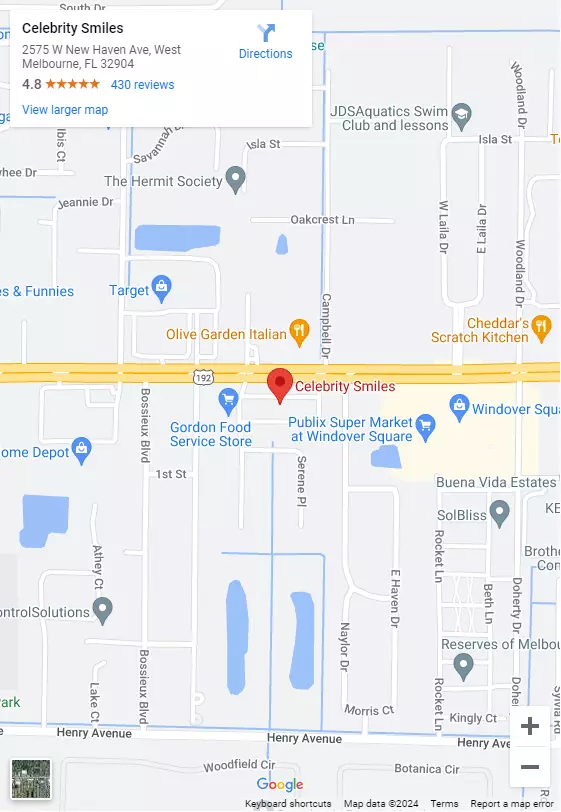
Celebrity Smiles is a dental practice in West Melbourne, Florida, serving nearby communities such as Palm Bay. Its care includes general, cosmetic, restorative, implant, and urgent dental needs. A practice’s dental services and comprehensive-care approach can help you prepare questions, but only an exam can inform recommendations for your situation.

How can you compare care options near Palm Bay?
Begin with the concern that matters most to you. If you have a specific symptom or change, explain it clearly when you contact a practice. If you are planning routine care or exploring a cosmetic goal, ask what the first visit involves and how the dentist will discuss possible next steps. A clear explanation is useful whether the recommendation is to proceed, gather more information, or monitor an issue.
Use the questions below to compare practices without assuming that one service or piece of equipment guarantees a particular result. They also give you a simple way to organize a phone call or appointment.
| What to compare | Questions to ask | What the answer helps clarify |
|---|---|---|
| Services | Can the practice evaluate this concern or explain where I should go next? | Whether the office can discuss the issue and what additional care may be relevant. |
| First visit | What will the exam and conversation include? | What information or records to bring and what to expect during the visit. |
| Technology | Could imaging or scanning be useful, and what would it show? | The purpose of a tool in your evaluation, rather than assuming every patient needs it. |
| Options | What alternatives are appropriate to discuss, and what are their trade-offs? | How choices differ and what factors may affect a recommendation. |
| Urgent concern | How should I reach the office if the problem changes or worsens? | How to get guidance about the next step without delaying contact. |
| Planning | Who can explain benefits, estimates, and payment questions? | Which details need to be confirmed with the practice or plan administrator. |
For example, imagine you have a damaged tooth and are also interested in replacing an older restoration. Rather than deciding in advance that you need a crown, describe what happened, when you noticed it, and what you would like to understand. Ask what the dentist will evaluate, whether more than one approach may be considered, and what information would help you compare them. The discussion should be based on your exam and health history, not a generic description online.
What should you ask about general and preventive care?
At a routine visit, tell the dentist what has changed since your last exam and what you want to address. Mention sensitivity, bleeding, discomfort, or a concern about a tooth or gum area. If a symptom comes and goes, note when it tends to happen and what seems to affect it. These details can make the conversation more focused, but they do not establish a diagnosis.
Ask what the exam covers, what the dentist observed, and whether any follow-up is recommended. If you are unsure about a term or a suggested next step, ask for it to be explained in plain language. You can also ask how often you should return; the appropriate interval depends on your situation and the clinician’s assessment.
New patients can review the practice’s new patient information before the appointment. Ask whether the office needs prior records, a medication list, or forms completed in advance. If you have a family member with a disability or other special health care needs, explain any communication or access needs when arranging care. Support for Families notes that dental care can pose extra challenges for children and youth with special health care needs; families can use that information to prepare questions about an individual child’s visit (Overcoming Challenges with Dental Care).
How do you discuss cosmetic or restorative goals?
Describe the change you hope to make instead of naming a procedure you have already chosen. You might be concerned about discoloration, a chip, a worn restoration, or a space between teeth. A dentist can evaluate the area, discuss relevant choices, and explain limitations or other considerations. Cosmetic decisions should account for oral health as well as appearance, and no article can promise a specific result.
For instance, if you are interested in a brighter smile, ask which whitening approaches are offered and whether an exam should come first. Celebrity Smiles documents Zoom! LED and Venus White whitening offerings; ask the practice which approach, if any, fits your needs. You can review its information about cosmetic dentistry and teeth whitening as background, then discuss your questions during a consultation.
If a tooth is damaged, ask what the dentist sees and why a crown, another restoration, or a different course might be considered. Find out what each option involves, what steps may be needed, and how the result will be checked. The practice’s page about porcelain crowns can introduce the topic, but a personalized recommendation requires an exam.
What should Palm Bay patients ask about dental implants?
If you are missing a tooth or expect to lose one, ask which replacement options may be relevant. An implant is not a single plan that suits every person. The number and condition of the teeth involved, oral health, and other individual factors are part of the conversation. A dentist can explain whether a single tooth implant, an implant-supported bridge, or another approach is worth discussing after evaluating you.
Useful questions include: What does the evaluation involve? What alternatives should I understand? What stages might be part of treatment? What follow-up care should I expect? What could affect timing or the recommendation? Ask the dentist to explain any imaging or digital planning that is proposed and how it informs the plan. Technology can support an evaluation; it does not replace the clinician’s judgment or an individualized discussion.
Explore the practice’s information about dental implants and implant care and its dental technology to prepare for that conversation. Do not assume that an implant is suitable before an in-person assessment, and take time to understand alternatives before making a decision.
When should you contact a dentist about an urgent concern?
Contact a dental office promptly about significant tooth pain, a broken tooth, swelling, or another troubling change. A web article cannot determine the cause or tell you which treatment is needed. When you call, describe what happened, when it began, where you notice it, and whether it is changing. Mention any other symptoms or relevant medical information that the office asks about.
Use the practice’s emergency dental care information to identify how to contact the office. Ask what next step is appropriate and whether you should arrange an urgent appointment. If you believe you have a medical emergency, seek emergency medical care rather than relying on an online article or waiting for a routine dental visit.
How can you prepare for a first appointment?
Preparation can make the first conversation more useful. Write down your main concern and the questions you most want answered. If you have more than one goal, put them in priority order so you can cover the most time-sensitive or important item first. Bring relevant health information and a medication list, and ask whether prior dental records or insurance details would be helpful.
- State your main concern. Use a short description, such as wanting a routine exam or asking about a damaged tooth.
- Note the timeline. Record when you first noticed the issue and any changes since then. For urgent symptoms, contact the office rather than waiting to prepare a perfect list.
- Gather context. List relevant dental treatment, health history, medications, allergies, and questions about records.
- Ask about the visit. Confirm what to bring and what the first appointment is expected to cover.
- Request a clear explanation. Before deciding, ask about the findings, choices, next steps, timing, and follow-up.
- Write down what remains uncertain. If you need time to consider options, ask what information you can review and whom to contact with follow-up questions.
If cost or benefits are part of your planning, ask the practice and your plan administrator for current details. Coverage and individual costs can vary, and you should not assume a particular service is covered. The practice’s financial information and insurance information can help you frame questions; confirm specifics directly before making a financial decision.
How can you understand a proposed treatment plan?
When a dentist recommends a next step, ask for a simple explanation of the finding that led to it. You can ask what the proposed care is intended to address, what other options were considered, and whether there is anything you should understand before deciding. If the explanation includes unfamiliar terms, ask the dentist to describe them without jargon or show you the area being discussed when appropriate.
It can be useful to separate questions into three groups:
- Reason: What did the exam show, and why is action being considered now?
- Choices: What alternatives may be appropriate, and what are the differences in steps, timing, and follow-up?
- Planning: What should I expect before, during, and after the proposed care, and who should I contact with questions?
For example, someone with a damaged tooth may want to know whether the dentist is concerned about the tooth’s structure, comfort, or another finding. The question is not a request for a guaranteed outcome; it is a way to understand the reasoning and make a decision with relevant information. If the answer is unclear, say what part you would like explained again. It is reasonable to ask for time to review a plan and to confirm practical details, including follow-up arrangements and current financial estimates, before agreeing to care.
What if you have several goals at once?
Many patients have more than one question. You may want a routine checkup and also have a concern about a chipped tooth, or you may be exploring replacement options while asking about general oral health. Write each concern down and mark anything that is painful, changing, or time-sensitive. Share the list at the start of the visit so the dentist can help organize the discussion. A prioritized list does not mean every concern will be addressed in one appointment; it helps ensure that the most important issues are heard and that you leave knowing what comes next.
It is also helpful to distinguish the outcome you hope for from a specific procedure. For example, say that you want to improve the appearance of a front tooth or understand options for a missing tooth. The dentist can evaluate the area and discuss possibilities, including limitations or alternatives. You can then ask which steps are essential, which are optional, and what information is still needed before making a choice. The final recommendation depends on an in-person exam and personalized treatment plan.
How can you make a practical shortlist?
A shortlist does not need to be complicated. First, identify whether your need is routine, urgent, restorative, cosmetic, or related to replacing a missing tooth. Second, review whether the practice describes services relevant to that concern. Third, contact the office to ask about the evaluation, records, and scheduling details that matter to you. Finally, consider whether you understand the explanations and feel able to ask follow-up questions.
For Palm Bay residents considering an office in West Melbourne, travel is one practical factor among several. Think about the route and appointment logistics, but also consider whether the practice can discuss your needs and how it communicates recommendations. If you are comparing care for several family members, ask how each person’s needs will be evaluated rather than assuming one plan fits everyone.
Celebrity Smiles provides dental care in West Melbourne, Florida, and offers services spanning preventive, cosmetic, restorative, implant, and urgent needs. You can learn more about the practice and its care team on the practice information page and provider page. A helpful appointment gives you the chance to explain your goals, hear the findings, and ask what options are appropriate. Recommendations require an in-person exam and a personalized treatment plan.
Request an appointment to discuss your dental care
Frequently Asked Questions
Is West Melbourne too far from Palm Bay for dental care?
Travel convenience depends on your schedule and needs. Consider the route, appointment logistics, and whether the practice offers care relevant to your concern. Contact the office to confirm practical details before scheduling.
Can I know which treatment I need before an exam?
No. General information can help you prepare, but a dentist needs to evaluate your individual situation before making a recommendation. A personalized plan follows an in-person exam.
Should I call if a tooth suddenly hurts?
Yes. Contact a dental office promptly, describe the pain and any other changes, and ask what next step is appropriate. An article cannot diagnose the cause or determine treatment.
What if I am considering more than one type of care?
Bring a list of your goals and put the most important concern first. The dentist can assess your oral health, discuss relevant options, and explain what may need attention before other goals.
What should I bring to a first dental appointment?
Ask the office what it needs in advance. A medication list, relevant health information, prior dental records, and a written list of questions may help the conversation, depending on your circumstances.
With clear questions and an in-person evaluation, Palm Bay residents can make a more informed choice about dental care near West Melbourne.