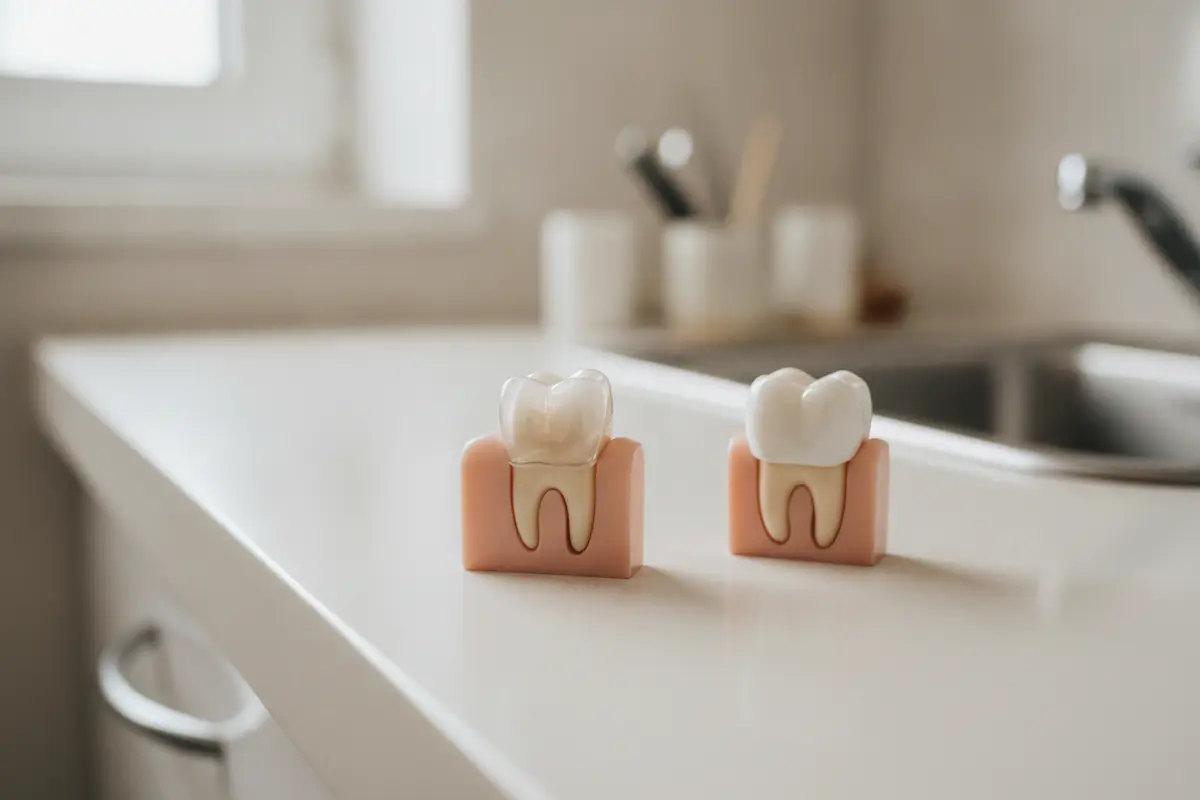
If you are weighing veneers vs crowns, the clearest difference is coverage: a veneer generally covers the visible front surface, while a crown covers a tooth more fully. That distinction can help you frame the conversation, but it cannot tell you which restoration fits a particular tooth. The tooth’s condition, your bite, oral health, and what you hope to change all matter.
Request an appointment to discuss your options
What is the difference between a veneer and a crown?
A veneer is a thin restoration bonded to the front of a tooth. It may come up in a conversation about a visible surface concern, such as a change in shape or color, when the tooth has enough healthy structure to support the plan. A crown covers the tooth more extensively. A dentist may discuss one when a tooth needs broader restoration or coverage.
Those descriptions are useful starting points, not fixed rules. The same visible concern can have different causes, and two teeth that look similar in a photo may differ in their structure, existing dental work, or bite forces. A dentist examines the tooth and surrounding tissues before explaining whether either restoration—or another approach—may be suitable.
It also helps to separate a goal from a treatment. “I want this tooth to look more even” describes a goal. It does not establish that a veneer is the right method. “I want to protect a tooth with a large existing filling” is a concern to discuss, not a diagnosis. Ask what the examination shows and how any proposed treatment addresses it.
How do veneers and crowns compare?
| Consideration | Veneer | Crown |
|---|---|---|
| Coverage | Generally covers the visible front surface. | Covers the tooth more fully. |
| Possible discussion | May be discussed for selected concerns focused on the visible surface. | May be discussed when broader restoration or coverage is being considered. |
| Preparation | May involve reshaping the front surface; the plan depends on the tooth. | Requires preparation for fuller coverage; the plan depends on the tooth. |
| Factors to review | Healthy structure, gums, bite, shade, and the patient’s goals. | Remaining structure, existing dental work, function, bite, and goals. |
| Care after placement | Oral hygiene and dental follow-up remain important. | Oral hygiene and dental follow-up remain important. |
| What the comparison cannot decide | Whether the tooth is suitable or what preparation is appropriate. | Whether the tooth needs fuller coverage or what material is appropriate. |
The comparison does not mean that more coverage is automatically better, or that a surface-focused restoration is always the more conservative choice. Each plan has to fit the condition of the tooth and the purpose of treatment. General education can help you prepare questions; it cannot evaluate your mouth. The American Dental Association’s oral-health information is another source of general education to review alongside a discussion with a dentist.
How can the same concern lead to different recommendations?
Imagine two people who each notice a dark front tooth. One person might have a surface discoloration and no other concern. Another may have a large filling, a crack, or a history of dental treatment in that tooth. The appearance sounds alike, but the tooth’s condition may not be. An examination helps a dentist assess possible causes and explain which options are worth discussing.
A small chip is another example. Its location, size, the amount of remaining tooth structure, and how the teeth meet can all affect the conversation. A dentist may discuss a surface-focused restoration for one situation and broader coverage or a different option for another. These examples are not predictions about what any reader needs; they show why a photograph or online comparison cannot select treatment.
It can be useful to write down what you notice before an appointment. Note when the concern began, whether it has changed, and whether you have sensitivity, discomfort, or trouble chewing. If the change is sudden or you suspect damage, make that part of the conversation rather than treating it only as a cosmetic question.
When might a dentist discuss a veneer?
A veneer may be discussed when the concern is mainly about the visible front of a tooth and the tooth can support the planned restoration. A dentist will consider more than color or shape. The condition of the enamel and other tooth structure, the surrounding gums, tooth position, and the way the teeth meet can all affect planning.
Ask how the proposed veneer would address your specific concern. If you want a change in appearance, ask how shade and shape would be planned and how the result would relate to nearby teeth. Ask what the restoration may not change, whether another option could meet the same goal, and what trade-offs each option involves.
Do not assume a veneer requires no tooth preparation. Depending on the tooth and plan, reshaping may be discussed. Ask which surfaces may be changed, why that preparation is being considered, and whether it can be described or shown before you decide. The practice’s enamel veneers guide and cosmetic dentistry information can help you prepare for that conversation.
A veneer is not a substitute for addressing an underlying dental problem. If the tooth hurts, has a suspected crack, or changes suddenly, arrange an evaluation before focusing on a cosmetic restoration. The dentist can explain whether any other care needs attention first.
When might a dentist discuss a crown?
A crown may be considered when a tooth needs more extensive coverage than a veneer provides. In evaluating that possibility, a dentist may review how much healthy structure remains, the size and condition of existing dental work, the tooth’s position, and the forces placed on it when you bite. The aim is to connect the recommendation to the findings for that tooth.
Ask what a proposed crown is intended to address and whether other care should happen first. A crown may be discussed for reasons involving restoration or coverage, but a general description does not confirm that it is right for an individual. The practice’s porcelain crown information can be a starting point for questions about the option and material.
If you are deciding between a crown and a veneer, ask the dentist to explain the coverage difference in relation to your tooth. A crown is not automatically the right choice because it covers more, and a veneer is not automatically preferable because it focuses on the front. Ask how the examination supports the recommendation and what alternatives are reasonable.
What does an evaluation need to consider?
A useful evaluation starts with your concern and goals. The dentist examines the tooth and may assess the gums, neighboring teeth, bite, and previous dental work. Imaging or scanning may help answer particular questions in some cases; the dentist determines what is appropriate. Celebrity Smiles offers CBCT 3D imaging and digital intraoral scanning. You can review information about the practice’s dental technology and ask what a recommended tool could clarify in your situation.
Before the visit, sort your priorities into a few categories. You might care most about appearance, comfort, chewing function, or understanding the treatment sequence. A dentist may identify an oral-health or structural issue that needs attention before an appearance goal. Both parts of the conversation matter. Ask for a plain-language explanation if a term or recommendation is unclear.
- Describe the change. Say what you notice, when it began, and whether it has changed. Mention sensitivity, discomfort, or a recent injury without trying to identify the cause yourself.
- Ask what the examination shows. Find out what the dentist observed about the tooth, gums, bite, and existing dental work. Ask whether anything needs attention before restoration planning.
- Connect each option to the finding. Ask why a veneer, crown, or another approach is being considered for this particular tooth. Ask what each option is meant to do.
- Understand the preparation. Ask which surfaces may be reshaped, how the plan is determined, and why preparation is needed. Make sure you understand before consenting to treatment.
- Review the sequence. Ask what happens at each stage, whether a temporary restoration is expected, and what follow-up is planned. Do not assume every case uses the same process or number of visits.
- Clarify practical details. Request a written plan and ask what an estimate includes. Confirm current insurance or payment information directly rather than assuming a particular benefit applies.
What should you ask about preparation and recovery?
Preparation differs because veneers and crowns cover different areas, but the actual plan depends on the tooth. Before treatment, ask what will be changed and why. You can ask how the restoration is expected to fit with the surrounding teeth and your bite, and how the dentist will check it during the process.
Ask what to expect between stages. For example, will temporary coverage be used? What should you do if it feels unusual? Who should you contact if you have a concern? These questions help you understand the plan without assuming that every patient has the same experience, materials, or timeline.
Before leaving after treatment, ask about eating, cleaning, and any activities or habits to avoid while you follow the dentist’s instructions. Ask what sensations may warrant a call and how to reach the office. If a restoration feels different when you bite or you notice a problem, contact the dental office rather than trying to adjust it yourself.
Cost is another practical part of planning. The estimate may depend on the proposed restoration and what the dentist finds during the evaluation. Read the practice’s information about factors that may affect crown cost, then ask for current details about the specific plan. If comparing estimates, check whether they include the same services and stages. Verify insurance coverage or financing eligibility directly; neither should be assumed.
How should you care for either restoration?
After a veneer or crown is placed, regular oral hygiene and dental follow-up remain important. Brush regularly, clean between teeth, and follow the instructions given for your situation. Avoid using teeth to open packages or bite hard objects. These habits support oral health, but they cannot promise that a restoration will last for a particular period.
Contact a dentist if you notice discomfort, damage, a change in how your teeth meet, or another new concern. An examination can help determine what is happening and whether the restoration or another part of the mouth needs attention. Keep recommended follow-up visits so you can discuss changes and questions in context.
Celebrity Smiles provides comprehensive dental care in West Melbourne, Florida, for adults in nearby communities. You can review the services overview and practice information as you prepare to speak with the office.
How can you compare treatment recommendations?
If you hear more than one reasonable option, compare what each plan is intended to accomplish rather than choosing by the restoration name alone. One may address a visible surface concern; another may provide broader coverage. Ask how each relates to the examination, what preparation it involves, and what care or follow-up it requires.
A simple comparison note can make the discussion easier to remember. For each option, write down the concern it addresses, the reason it was recommended, what preparation is planned, and what questions remain. Then compare the explanations side by side. If the plan is unclear, ask the dentist to explain it another way or to show which part of the tooth is involved.
- What finding is this restoration meant to address?
- How much of my tooth may need reshaping, and why?
- Could another option—including monitoring or a different restoration—be appropriate?
- What benefits and limitations apply to this tooth?
- How might the plan relate to my bite and appearance goals?
- What should I expect during treatment and between stages?
- What home care and follow-up will I need?
- What does the estimate include, and whom should I contact to verify coverage?
Bring relevant dental history, a list of medicines, and your questions. If you are seeking another opinion, ask what records may be useful and how the clinician will assess the tooth. The goal is not to collect a particular answer; it is to understand how the findings, possible choices, and practical details fit together.
What if you are deciding whether to wait?
A stable appearance concern and a sudden symptom are not the same kind of question. If you have pain, a broken tooth, swelling, or another sudden change, arrange an evaluation promptly rather than trying to choose between a veneer and crown online. You can review the practice’s emergency care information and contact the office about the next step.
If there is no new symptom and you are considering a cosmetic change, take time to understand the alternatives, preparation, care, and costs before deciding. You can bring notes or photographs that help explain what you hope to change. They can support the conversation, but they do not replace an examination.
One practical way to prepare is to write three questions: What is the concern? What options fit the examination? What does each option involve? Add questions about preparation, follow-up, and cost. You can also review new patient information before contacting the practice. A clear written plan can help you revisit the conversation after the appointment.
Request an appointment at Celebrity Smiles Melbourne
Frequently Asked Questions
Are veneers and crowns the same?
No. A veneer generally covers the visible front surface of a tooth, while a crown covers it more fully. A dentist can explain which approaches may fit after evaluating the tooth and your goals.
Does a crown always require more preparation than a veneer?
Preparation depends on the tooth and the treatment plan. Ask what may be reshaped, how the dentist will determine that, and why the proposed preparation is needed.
Can a veneer be used for a damaged tooth?
That depends on the type and extent of damage and the condition of the tooth. A dentist needs to evaluate it and discuss whether a veneer, crown, or another approach is appropriate.
Can I choose based on appearance alone?
Appearance is a valid goal, but tooth structure, oral health, and bite also affect planning. An examination helps a dentist explain options in relation to both the visible concern and the tooth’s condition.
What should you take away from the comparison?
Veneers and crowns differ mainly in how much of a tooth they cover, but coverage alone does not determine the right treatment. Ask what the examination shows, how each option addresses your concern, and what preparation, follow-up, and costs to expect before making a decision with a dentist.