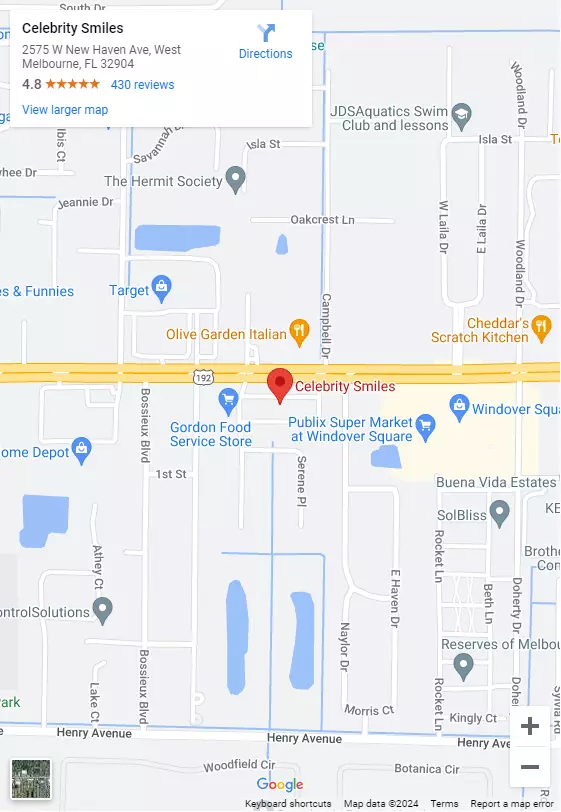
Does dental insurance cover implants? Sometimes a plan may contribute toward part of implant treatment, but coverage is not automatic. The answer depends on the specific policy, the reason for treatment, the services included in the proposed plan, and limits that may apply. Before making decisions, ask the insurer to explain your benefits and review the details with the dental office.
Request an implant benefits appointment at Celebrity Smiles Melbourne
Does dental insurance cover implants in every case?
No single answer applies to every plan. Some policies may provide a benefit for certain implant-related services, while others exclude implants or limit benefits to a different covered treatment. A plan can also cover one part of care but not another. For example, the insurer may assess the implant, the restoration attached to it, and related services under separate benefit rules.
The American Association of Oral and Maxillofacial Surgeons notes that dental or medical insurance may partially cover the cost of dental implants. That possibility is not a promise of payment, and the terms of an individual policy control. Read the plan documents and ask the insurer to evaluate the proposed services. The dental office can help provide information, but the insurer makes coverage determinations.
It is useful to distinguish three questions: Is a service covered under the plan? How much might the plan pay after its rules and limits are applied? What amount, if any, would remain your responsibility? A “yes” to the first question does not settle the other two.
Which parts of implant treatment should you ask about?
Implant care is often a sequence of services rather than one item on a bill. Your dentist will explain which steps may be relevant to your individual situation after an exam. When checking benefits, ask the insurer to review each planned service rather than asking only whether “implants” are covered.
- Evaluation and imaging: Ask whether the plan has separate benefits, frequency rules, or cost-sharing for the examination and any recommended images.
- Implant placement: Ask whether the implant procedure is covered, excluded, or subject to a waiting period or other condition.
- Abutment and restoration: Find out how the plan evaluates the connector and the crown, bridge, or other restoration. These may have different benefit rules.
- Related care: If the treatment plan includes other procedures, ask which are covered and whether they are considered necessary under the plan’s terms.
- Maintenance and follow-up: Ask what the plan says about future visits or replacement of a restoration. Do not assume future services will be paid at the same rate.
These are questions to verify, not predictions about what treatment you need. A dentist must examine you and discuss your health history before recommending an approach. Celebrity Smiles offers dental implant care in West Melbourne; any recommendation depends on an in-person exam and an individualized treatment plan.
What plan limits can affect implant benefits?
Even when a policy includes a benefit for an implant-related service, its financial limits can reduce what it pays. The details vary by policy, so ask the insurer to explain how each item would be processed. Review the plan’s written terms rather than relying on a general description of benefits.
Annual maximum
An annual maximum is the most a plan may pay for covered dental services during a benefit year. If other dental care has already used part of that amount, less may remain for implant-related services. Ask how much of the maximum remains, when the benefit year ends, and whether unused benefits carry forward. Do not assume a new benefit year will make the full proposed treatment payable; plan limits and timing still apply.
For example, if the plan has already paid benefits for preventive or restorative care earlier in the year, the remaining maximum may be lower than the amount shown at the start of the benefit year. Ask for the current remaining balance, not just the plan’s headline maximum. If care spans more than one benefit year, ask how the insurer assigns each service to a year and whether the proposed sequence is clinically appropriate. Do not delay or divide care solely to pursue a possible benefit without discussing timing with the dentist.
Deductible and coinsurance
A deductible is an amount you may need to pay before the plan contributes to eligible services. Coinsurance is the portion assigned to you after the deductible and other plan rules are applied. Ask whether these apply to each procedure and whether the plan uses different percentages for different service categories. A quoted percentage does not necessarily equal that percentage of the dentist’s total fee.
Waiting periods and frequency rules
Some plans impose a waiting period before certain benefits begin. Others set frequency limits for particular services, or require that a prior service be a certain number of years in the past. Ask when the relevant coverage becomes effective and whether any frequency rule affects a service in your proposed treatment. Confirm whether the policy’s dates are based on enrollment, the procedure date, or another plan-defined period.
Also ask whether your plan has a different process for a new enrollee, a dependent, or someone whose coverage recently changed. If your coverage is through an employer, confirm whether the benefits you reviewed are for the current plan year, not a prior year’s summary. A change in enrollment or plan options can affect eligibility and terms, so let the dental office know if your insurance information changes while you are arranging care.
Exclusions and alternate benefits
A policy may exclude a service or apply an alternate benefit provision. Under such a provision, the plan may calculate payment using a different, covered option rather than the proposed implant restoration. Ask which service code and benefit category the plan would use, and request an explanation in writing. If an exclusion applies, ask the insurer to identify the exact plan language rather than relying on a brief verbal summary.
Missing-tooth clauses and pre-existing conditions
Some plans have provisions relating to teeth missing before coverage began or conditions that existed before enrollment. The language and application differ among policies. If the tooth was lost before your plan started, ask specifically whether a missing-tooth clause or similar provision could affect the benefit. Ask the insurer to point to the relevant terms and describe any documentation it needs.
How can you verify benefits before treatment?
A few organized steps can make the conversation clearer and help you spot unanswered questions. Benefit verification is an estimate based on information available at that time; it does not replace the plan contract or guarantee that a claim will be paid.
- Review your plan documents. Find the current summary of benefits, exclusions, limitations, and any detailed policy or certificate. Check the effective dates and the name of the insurer or plan administrator.
- Get an examination and proposed plan. The dentist can assess your situation, discuss appropriate options, and identify services to include for an estimate. Do not select treatment based only on a benefit estimate or an online article.
- Ask for a pre-treatment estimate. Where available, ask the dental office to submit the proposed services and supporting information to the insurer for a pre-treatment review. Ask how long the review may take and whether the insurer needs additional records.
- Call the insurer yourself. Use the member-service number on your insurance card. Ask the representative to review each proposed service, explain applicable limits, and provide a reference number for the conversation.
- Request the answer in writing. Save the pre-treatment estimate, written explanation, and plan documents. Compare the service codes, fees, and dates on the estimate with the proposed plan.
- Recheck before care begins. Benefits can change when a plan renews, eligibility changes, or the treatment plan is revised. Confirm current eligibility and limits close to the planned service date.

For general details about available services, see the practice’s dental services in West Melbourne. For questions about plan participation and benefit information, you can also review the dental insurance information provided by Celebrity Smiles. Confirm current details directly with the practice and your insurer.
What should you ask the insurance company?
Keep the call focused on the actual plan and proposed services. You can use this checklist and write down the representative’s name, date, and reference number.
- Is my plan active on the anticipated date of treatment, and are there waiting periods that apply?
- Does my specific plan include benefits for the proposed implant placement and restoration services?
- Are any of those services excluded, or subject to a missing-tooth clause or other limitation?
- Will the plan apply an alternate benefit? If so, what service and fee will it use to calculate payment?
- What deductible remains, what is my annual maximum, and how much of that maximum is still available?
- Are there frequency limits, documentation requirements, or pre-treatment review steps?
- Is the dentist or practice considered in network for my plan, and how does that affect the estimate?
- How long is this benefit estimate valid, and what circumstances could change it?
- Can you send the explanation in writing and provide the plan language that applies?
If an answer is unclear, ask the representative to explain the policy provision in plain language or direct you to the relevant section of your plan documents. Keep copies of any messages and estimates. A predetermination or estimate can help with planning, but the insurer may make its final decision only after reviewing a submitted claim.
How should you compare an estimate with your out-of-pocket cost?
Look at each item separately and identify what is known, what remains an estimate, and what needs clarification. The table below is a guide to questions, not a forecast of coverage or a fee quote. Your actual costs depend on your treatment plan, the practice’s fees, your policy, and the insurer’s processing of the claim.
| Plan detail | What to confirm | Why it matters |
|---|---|---|
| Eligibility and effective dates | Active status, effective date, and waiting periods | A benefit may not be available on a planned service date if eligibility or timing rules are not met. |
| Covered services | How the plan classifies placement, abutment, restoration, and related items | Different parts of care may be handled under different terms. |
| Exclusions or alternate benefit | Applicable plan language and the service used to calculate a benefit | The plan’s estimate may differ from the proposed treatment or restoration. |
| Deductible and annual maximum | Amounts remaining for the relevant benefit year | These can limit the plan’s contribution even for a service with a stated benefit. |
| Estimated patient portion | What the estimate includes and what it leaves uncertain | A pre-treatment estimate is useful for planning but is not a payment guarantee. |
Ask whether your plan uses an allowed or contracted fee to calculate its share and whether the office’s network status changes how the estimate is prepared. If you have more than one dental plan, tell both insurers and ask how coordination of benefits works; having two plans does not always mean that they will pay the full balance. Ask which insurer should receive the claim first and what documents the second plan needs. Keep the responses with your estimate so you can compare the same services, dates, and assumptions.
After treatment, review the insurer’s explanation of benefits alongside the final statement. An explanation of benefits describes how a claim was processed; it is not itself a bill. If a claim is denied or the amount differs from the estimate, ask the insurer for the reason, the plan language it relied on, and the process and deadline for an appeal. The dental office may be able to help clarify the submitted claim details, but the insurer determines claim payment under the policy.
If you need to discuss payment arrangements, check the practice’s financial information and ask which options are currently available. Terms, eligibility, and approval requirements may vary, so confirm details before relying on them. You can also explore new patient information before arranging a visit.
What if your plan does not cover implants?
An exclusion or limited benefit does not by itself determine which dental option is right for you. Ask the dentist to explain appropriate alternatives, the differences in care, and the expected fees for your individual situation. Possible approaches vary depending on oral health, the location of the missing tooth, and other clinical factors; only an in-person evaluation can clarify which options may be suitable.
Do not assume that a bridge or another restoration will be covered, either. Ask the insurer to verify any alternative treatment under the same policy rules, and request a separate estimate when appropriate. The plan may apply its own limits, exclusions, and benefit calculation to every option.
Celebrity Smiles is a privately owned dental practice in West Melbourne led by Dr. Anand Shah, DMD. The practice provides comprehensive dental care, including implant services. A consultation can help you discuss your concerns and questions, but no treatment recommendation or coverage outcome can be made without reviewing your circumstances and plan details. For more about the practice, visit the dentist and practice information.
Request an appointment to discuss implant benefits and treatment questions
Frequently Asked Questions
Does dental insurance cover the full cost of dental implants?
Not necessarily. A plan may contribute to some covered services, but exclusions, deductibles, coinsurance, annual maximums, and alternate benefit provisions can affect payment. Ask the insurer to review the exact services in your proposed plan and explain your potential patient responsibility.
Will a pre-treatment estimate guarantee payment?
No. It can help you understand how the plan expects to process proposed services, but final payment can depend on eligibility, plan terms, claim review, and information available when care is provided. Ask the insurer how long the estimate is valid and what could change its decision.
Can I use dental insurance if I had the missing tooth before enrolling?
It depends on the policy. Some plans include a missing-tooth clause or similar limitation, while others may use different terms. Ask your insurer to review the timing and circumstances under your specific plan and to identify the applicable written provision.
Should I choose treatment based on insurance coverage?
Insurance is one practical consideration, but it does not establish which treatment is clinically appropriate. Discuss your options with a dentist after an in-person exam, then verify benefits and costs for the plan you are considering.
Plan your next step with clear information
When asking whether dental insurance covers implants, verify each proposed service, the plan’s limits and exclusions, and the assumptions behind any estimate. Reviewing those details with your insurer and dental office can help you make an informed decision without treating a benefit estimate as a guarantee.