For adults dealing with loose dentures, missing teeth, or a failing full arch, Locator Fixed can be an option worth understanding. This full-arch implant approach uses a fixed prosthesis that snaps onto implant-supported attachments, giving West Melbourne patients another treatment conversation beyond traditional dentures or a conventional screw-retained restoration.
Request an Appointment at Celebrity Smiles Melbourne
The name can be confusing because Locator Fixed is not a single implant and it is not simply a standard removable denture. It is a system of implants, abutments, inserts, housings, and a custom prosthesis. The right design depends on your oral health, bone anatomy, existing restorations, goals, and an in-person examination by a dentist.
What is Locator Fixed?
Locator Fixed is a full-arch implant prosthesis designed to stay in place during normal daily use while remaining removable by a dental professional. It uses Locator abutments with rigid retention inserts and a specialized housing. The prosthesis connects by a snap-style attachment rather than by traditional screw-retained connections.
Zest Dental Solutions describes LOCATOR FIXED as a fixed full-arch treatment that can use the same general abutment and workflow as its removable LOCATOR system. Its product information states that a minimum of four implants is needed to begin the process, but the number and distribution appropriate for one patient cannot be determined without diagnostic records and clinical evaluation. Read the manufacturer overview of LOCATOR FIXED for additional product background.
At Celebrity Smiles Melbourne, Dr. Anand Shah, DMD has a Locator Fixed mastership. That training is one reason the practice can discuss this named full-arch system alongside other implant and denture options. A mastership is a trust signal, not a promise that any particular treatment will be recommended or suitable.
How does Locator Fixed differ from traditional fixed and removable teeth?
Locator Fixed occupies a distinct position between removable overdentures and some traditional screw-retained full-arch designs. The restoration is intended to remain fixed for the patient, but it attaches to the implant-supported Locator components through a snap connection and can be removed by the dental provider for professional care.
| Option | How it attaches | Who removes it? | What the evaluation focuses on |
|---|---|---|---|
| Traditional denture | Rests on the gums, sometimes with adhesive | Patient | Fit, support, bite, gum and bone condition |
| Implant-supported overdenture | Uses implants and attachment components | Patient | Retention, hygiene access, implant position and prosthesis design |
| Locator Fixed | Uses rigid inserts and housings on Locator abutments | Dental provider | Implant distribution, restorative space, bite, hygiene and component selection |
| Screw-retained full arch | Attaches to multi-unit abutments with prosthetic screws | Dental provider | Implant angulation, restorative design, bone anatomy and maintenance access |
The practical difference is the attachment strategy. Locator Fixed is not the same as a removable implant-supported denture, even though both may use Locator-related components. It is also not identical to every All-on-X or screw-retained full-arch treatment. Your dentist should explain how each design would fit your anatomy, cleaning routine, bite, and long-term maintenance plan.
Who may want to ask about Locator Fixed?
Adults with significant tooth loss, failing teeth, or an existing removable prosthesis may want to ask whether Locator Fixed belongs in their list of full-arch options. The question is not whether a person can self-select a system from a description online. The question is whether examination findings and restorative goals support a safe, maintainable plan.
- People who are exploring fixed full-arch teeth instead of a conventional removable denture.
- Patients who currently wear a removable denture and want to understand implant-supported alternatives.
- Adults with an existing LOCATOR removable overdenture who want to ask whether a fixed conversion is clinically possible.
- Patients comparing a snap-on fixed approach with an implant-supported overdenture or screw-retained full arch.
- People who want a clear explanation of the required imaging, implant positions, prosthesis design, and maintenance expectations before making a decision.
These situations do not establish candidacy. Gum health, bone volume and anatomy, medical history, medications, bite forces, oral hygiene, smoking status, restorative space, and other factors may influence the recommendation. Only an in-person examination and individualized treatment plan can address those questions.
What happens during a Locator Fixed evaluation?
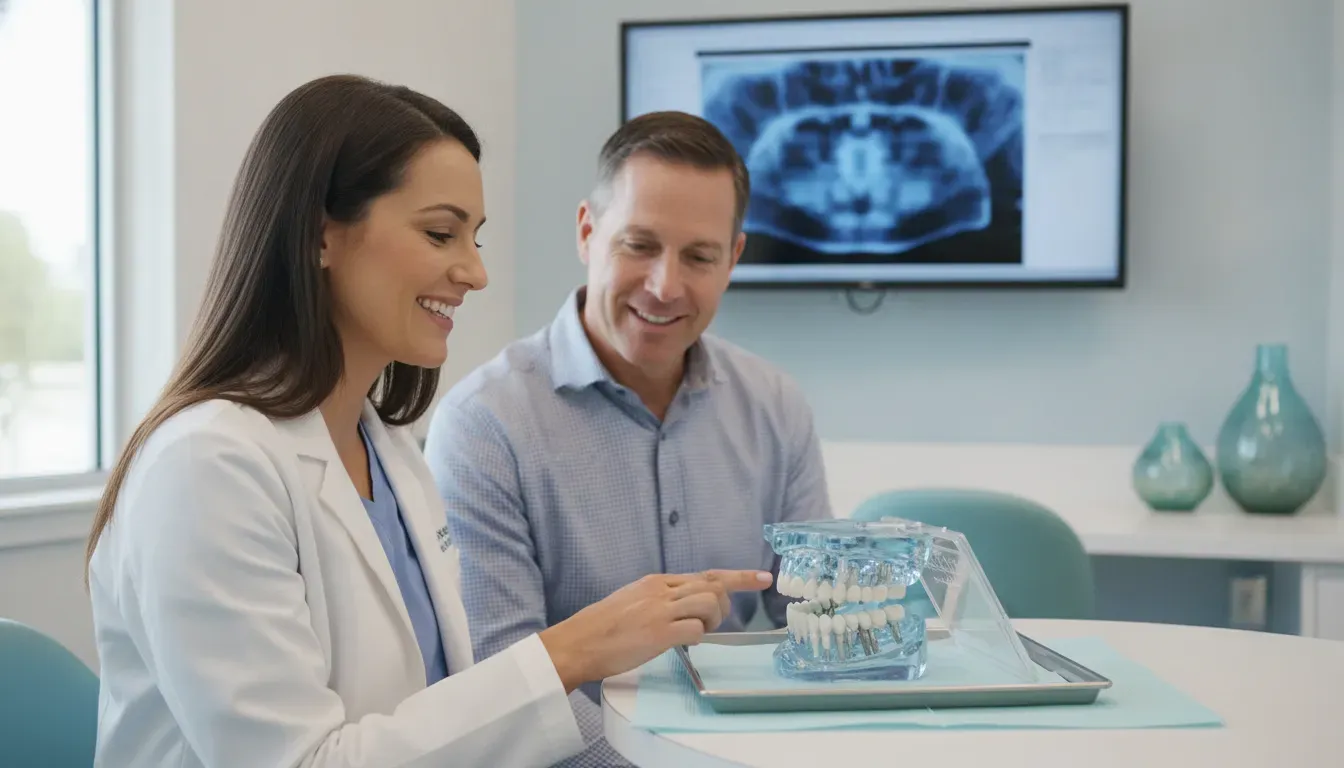
A Locator Fixed evaluation connects your goals with clinical records and a prosthetic plan. The process may include a health history, oral examination, CBCT 3D imaging, digital scanning, discussion of existing dentures or teeth, and comparison with other full-arch solutions. The purpose is to understand the available options, limitations, risks, and maintenance responsibilities.
- Review your goals and history. Tell the dental team what you want to change about chewing, speech, appearance, denture movement, cleaning, or daily confidence. Share medical conditions, medications, prior dental work, and any concerns about treatment.
- Examine teeth, gums, bone, and the bite. The clinician looks for active disease, failing teeth, gum conditions, available restorative space, and how the jaws come together.
- Use CBCT 3D imaging when indicated. CBCT can help visualize bone anatomy and important structures for implant planning. It does not make a treatment decision by itself, and it cannot replace a clinical examination.
- Capture digital records. Digital intraoral scanning may help the team evaluate existing teeth or prostheses and plan the shape, contacts, bite, and appearance of a proposed restoration.
- Compare treatment paths. The discussion may include a conventional denture, implant-supported overdenture, Locator Fixed, or a screw-retained full-arch design. Each option has different attachment, hygiene, maintenance, and clinical considerations.
- Build a personalized plan. If treatment is appropriate, the dentist explains the proposed sequence, expected appointments, temporary and final prosthesis considerations, home care, professional maintenance, and risks before you decide.
Talk with Celebrity Smiles Melbourne about your full-arch implant options
What are the potential benefits and trade-offs?
Locator Fixed may appeal to patients who want a fixed full-arch restoration without choosing the same attachment design used in a traditional screw-retained approach. The potential advantages and trade-offs are personal. A careful discussion should address function, appearance, cleaning, component maintenance, costs, timing, and alternatives rather than focusing on one feature alone.
Potential reasons to consider the system
- The prosthesis is intended to remain fixed for the patient during normal use.
- The snap-style attachment can offer a different connection method from a screw-retained full arch.
- The system may be discussed for some patients who already have compatible Locator-related components or an existing removable overdenture, subject to evaluation.
- The treatment conversation can include a comparison with traditional dentures, removable implant-supported options, and other fixed full-arch designs.
- Professional removal can give the dental team access for inspection, hygiene support, repairs, or component maintenance when needed.
Important trade-offs to discuss
- Implant placement and restorative design require surgery, planning, healing, and ongoing professional care.
- The prosthesis and attachment components can require maintenance, adjustment, repair, or replacement over time.
- A fixed restoration still requires daily home cleaning and regular dental visits.
- Bone anatomy, gum health, bite forces, medical history, and other factors can affect the available choices.
- Locator Fixed is not automatically the best option, the least expensive option, or the right option for every full-arch patient.
How does Locator Fixed compare with other full-arch options?
Locator Fixed should be compared with the full range of available solutions, not viewed in isolation. Traditional dentures are patient-removable, implant-supported overdentures are designed to be removed for cleaning, and screw-retained full-arch restorations use a different connection method. The best fit depends on examination findings and your priorities.
Traditional dentures
Traditional complete dentures rest on the gums and are removed by the patient. They may be appropriate for some people, but fit, retention, comfort, speech, chewing, and maintenance can change as the mouth changes. A consultation can explain whether a conventional denture or an implant-supported option better matches your needs.
Implant-supported dentures
Implant-supported dentures use implants and attachment components to improve retention, while the patient still removes the prosthesis for cleaning. This is different from Locator Fixed, which is intended to stay in place for the patient and be removed by the dental provider. Learn more about implant-supported dentures in Melbourne before comparing options.
All-on-X and screw-retained full arch
All-on-X is a broad term for full-arch treatment supported by a planned number of implants. Many such restorations use screw-retained components, although treatment designs vary. Celebrity Smiles also explains All-on-4 dental implants in Melbourne, Florida. That article covers a broader full-arch treatment concept, while this guide focuses on the Locator Fixed attachment system.
Patients comparing full-arch solutions can also review the practice’s dental implant services and discuss how a proposed plan relates to bone anatomy, restorative goals, maintenance, and long-term care.
What questions should you ask a dentist about Locator Fixed?
Good questions help you understand whether Locator Fixed is appropriate, how it compares with alternatives, and what care it would require. Ask for a plain-language explanation of the attachment system, implant plan, temporary and final teeth, hygiene routine, maintenance schedule, risks, costs, and what happens if your needs change.
- What findings from my exam and CBCT imaging affect my full-arch options?
- How would Locator Fixed compare with an implant-supported overdenture or screw-retained full arch for me?
- How many implants would you recommend, and how would their position support the proposed restoration?
- Would my current denture or existing Locator components be relevant to the planning discussion?
- Who removes the prosthesis for professional care, and how should I clean around the attachments at home?
- What maintenance, repairs, insert changes, or replacement needs should I plan for?
- What are the alternatives if Locator Fixed is not appropriate for my anatomy or goals?
- What is included in the treatment plan, and which costs or appointments should I understand before proceeding?
Request a Locator Fixed consultation in West Melbourne, FL
Locator Fixed frequently asked questions
Locator Fixed is a named full-arch implant option that uses a snap-style attachment system rather than a traditional screw-retained connection. It is intended to remain fixed for the patient and be removable by a dental provider. An examination is required to determine whether it belongs in an individualized treatment plan.
Is Locator Fixed removable?
The patient generally does not remove a Locator Fixed prosthesis as part of normal daily use. The dental provider can remove it for professional inspection, hygiene support, repairs, or maintenance. This differs from a removable overdenture, which the patient takes out for cleaning.
How many implants does Locator Fixed use?
Zest Dental Solutions states that a minimum of four implants is needed to begin the LOCATOR FIXED process. The appropriate number, position, and implant design for an individual patient require CBCT imaging, an examination, and restorative planning. Do not assume that a product minimum means every patient has the same plan.
Is Locator Fixed the same as All-on-4?
No. Both may be discussed as full-arch implant options, but Locator Fixed describes a specific attachment system with rigid inserts and housings. All-on-4 commonly describes a full-arch treatment concept using four implants, often with a screw-retained restoration. Your dentist can explain which connection method and prosthesis design are being proposed.
Can an existing removable Locator overdenture become fixed?
Manufacturer information describes a pathway for converting some existing LOCATOR Removable overdentures into a fixed prosthesis without changing the underlying abutments. That does not mean every existing overdenture can be converted. The dental provider must confirm component compatibility, implant condition, prosthesis condition, bite, hygiene access, and overall clinical suitability.
How does CBCT help with planning?
CBCT 3D imaging can show bone anatomy and important structures that support implant planning. The images are interpreted alongside an oral examination, health history, bite assessment, and digital records. CBCT supports planning, but it does not independently determine candidacy or guarantee a result.
Does Locator Fixed guarantee a comfortable result?
No dental treatment can guarantee a particular comfort level or outcome. A well-designed plan considers fit, bite, hygiene, tissue health, component selection, and patient adaptation, but the expected experience varies. Ask your dentist to explain the benefits, limitations, risks, alternatives, and maintenance requirements before choosing a treatment.
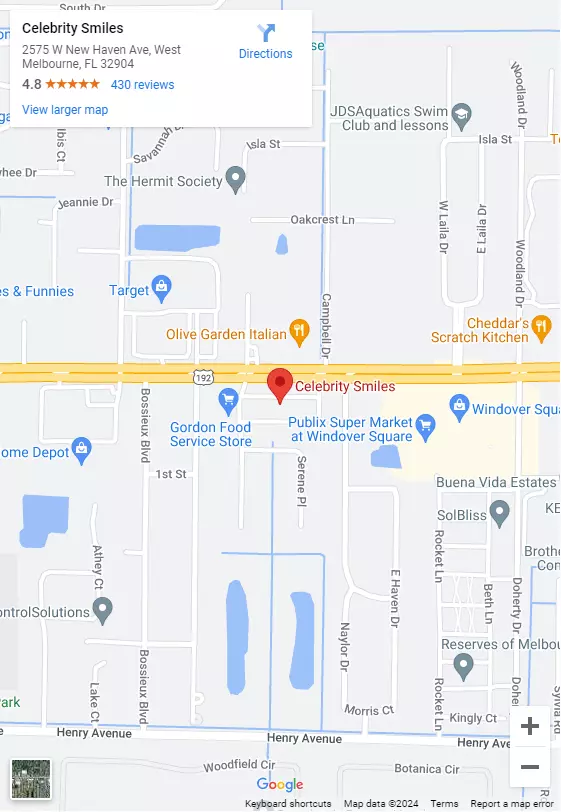
Adults in West Melbourne, Palm Bay, Melbourne, Viera, Suntree, and nearby Brevard County communities can schedule an evaluation with Celebrity Smiles Melbourne to discuss full-arch implant and denture options. Call (321) 914-0929 or use the appointment page to begin the conversation. Final recommendations require an in-person exam and personalized treatment plan.