
People often ask, “how long do dental implants last?” The honest answer is that there is no single lifespan that applies to every person. An implant is designed to replace a missing tooth, but its condition depends on the surrounding bone and gums, daily cleaning, bite forces, general health, and the care plan over time. An exam can help clarify what may be appropriate for you.
Request an implant consultation at Celebrity Smiles Melbourne
What does “lasting” mean for a dental implant?
A dental implant is a small post placed in the jawbone to support a replacement tooth. The visible restoration may be a crown, bridge, or denture. These parts do not necessarily experience the same wear or need the same care. A crown, for example, may need repair or replacement while the implant post remains in place. That possibility is one reason it is more useful to discuss the whole restoration and its maintenance than to expect one fixed number of years.
Research can describe outcomes across groups, but it cannot predict an individual result. A long-term study of dental implants followed patients over varying periods and reported clinical performance across the implants studied; it does not promise a particular lifespan for any one patient. Your dentist can explain how your oral health, anatomy, and restoration affect the outlook. See the long-term clinical performance study of dental implants for cohort findings and follow-up context.
Celebrity Smiles in West Melbourne uses CBCT 3D imaging and digital planning where appropriate to assess implant cases. Learn more about dental implants and implant care and the practice’s dental technology.
Which factors can affect implant longevity?
Implant care is not just about the post. Healthy tissues, a stable restoration, and habits that limit excess stress all matter. A dentist may consider several factors together rather than treating any one item as a guarantee.
- Gum and bone health: The tissues around an implant need ongoing attention. Inflammation or changes in supporting bone require professional evaluation.
- Daily cleaning: Plaque can collect around implant restorations. Brushing and cleaning between teeth help reduce buildup, although the best tools depend on the shape of the restoration.
- Bite and force: Clenching, grinding, or an uneven bite may place extra load on a crown or implant. Mention jaw soreness, worn teeth, or a known grinding habit during visits.
- Smoking and health history: Tobacco use and some health conditions or medicines can affect oral tissues and healing. Share relevant medical updates with the dental team.
- Restoration design and wear: A single crown, bridge, or implant-supported denture has different cleaning needs and components. Wear, looseness, or damage should be checked rather than ignored.
- Regular follow-up: Visits allow the dental team to review tissues, restoration stability, cleaning, and changes in your health or bite.
These factors do not mean an implant will fail if one applies to you. They are reasons to tailor the plan and keep communication open. Do not try to diagnose a problem based on a symptom or online information; contact a dental professional if you notice pain, swelling, bleeding, mobility, or a change in the way your teeth meet.
How does implant maintenance differ from routine tooth care?
Implants cannot develop decay in the way natural tooth structure can, but the gum and bone around them can still become unhealthy. The restoration also needs cleaning and monitoring. Brush twice daily with a soft-bristled brush and fluoride toothpaste unless your clinician recommends another approach. Clean between teeth every day, using floss or another suitable aid based on the space and restoration design.
Some implant-supported restorations have contours or connectors that need a specific cleaning method. Ask your dentist or hygienist to demonstrate how to reach those areas without damaging the restoration or irritating the gums. Avoid forcing a tool into a tight space. If a cleaning method is uncomfortable or seems ineffective, ask for guidance rather than abandoning it.
A clinical review on implant maintenance discusses regular professional evaluation and individualized recall planning. Its suggested visit timing is not a universal schedule: your own interval should reflect your oral health, implant type, and findings. Keep your recommended appointments even when the implant feels normal, because a check can identify changes that are not obvious to you. Read the clinical update on implant maintenance for a discussion of professional review and personalized recall.
What happens at an implant follow-up visit?
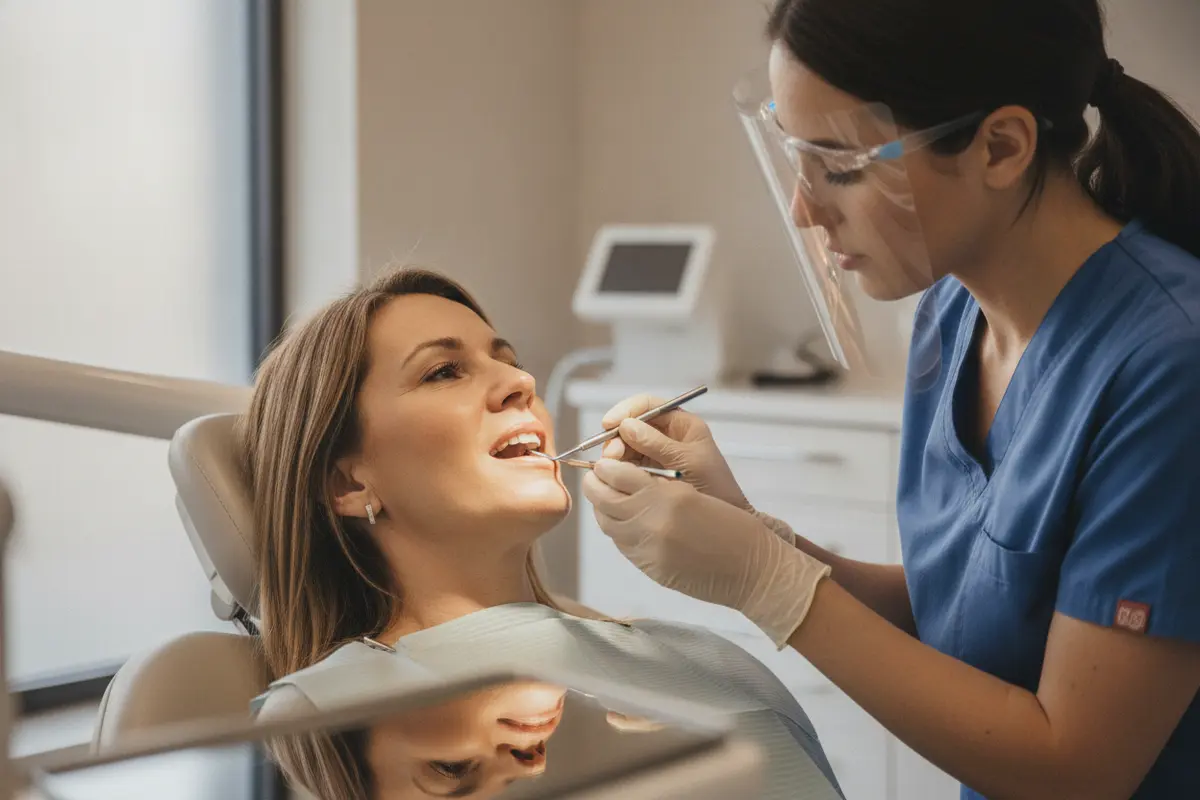
The visit is a chance to compare current findings with your baseline and address questions. Depending on your needs, the dental team may assess the gums around the implant, check the restoration and bite, review home-cleaning technique, and decide whether imaging or further evaluation is appropriate. The exact steps vary; not every patient needs the same tests at every appointment.
Bring an updated list of medications and health changes, and mention any new discomfort or difficulty cleaning. Tell the team if the restoration feels different, catches food, or seems loose. Avoid waiting for a routine visit if you have a concerning change. The practice offers comprehensive dental services and can discuss next steps after an examination.
How do implant and restoration needs compare?
The table below gives a general overview. Actual care depends on the restoration and clinical findings; it is not a treatment schedule or a prediction of lifespan.
| Part or concern | What care may involve | What to ask |
|---|---|---|
| Implant and surrounding tissues | Professional review of gum health, stability, and supporting structures | Which signs should prompt an earlier visit? |
| Crown or bridge | Check fit, wear, bite, and areas that collect plaque | How should I clean around this design? |
| Implant-supported denture | Review retention, cleaning access, and any components that need service | Should I remove it for cleaning, and how? |
| Home routine | Brushing and appropriate between-tooth cleaning every day | Can you show me the right brush or aid for my restoration? |
| Recall interval | Timing based on individual health and examination findings | How often should I return, and why? |
What changes should you bring to your dentist’s attention?
Contact your dental office if you notice persistent tenderness, swelling, bleeding around the implant, a new bad taste, a change in your bite, a cracked restoration, or movement. These signs can have different causes and do not establish a diagnosis. A dentist needs to examine the area to determine what is happening and whether care is needed.
If you have a dental emergency or sudden severe symptoms, seek prompt professional advice. Celebrity Smiles provides emergency dental care information. For a non-urgent concern, note when it began and what makes it better or worse, then contact the practice to arrange an appropriate evaluation.
How can you support your implant between visits?
- Brush carefully twice each day, reaching the gumline and all sides of the restoration.
- Clean between teeth daily with the method recommended for your implant design.
- Keep scheduled dental and hygiene visits, and ask how often your personal plan should be reviewed.
- Share changes in medications, health, smoking habits, or grinding with your dental team.
- Do not use an implant to open packages or bite objects that could damage teeth or restorations.
- Arrange an evaluation if you notice a change; do not wait for discomfort to become severe.
Consistency is more useful than trying to predict a guaranteed number of years. If you are comparing replacement approaches, learn about dental bridges and review how a dentist may assess the options for your situation.
What should you ask at an implant consultation?
A consultation should leave you with a clear understanding of the proposed plan, alternatives, maintenance, and follow-up. Consider asking:
- What findings from my exam and imaging shape the recommendation?
- What type of implant restoration is being considered, and how will I clean it?
- Which parts may need repair or replacement over time?
- What follow-up interval do you recommend for me, and what could change it?
- Could my bite, health history, or habits affect the plan?
- Which symptoms should prompt me to call sooner?
Dr. Anand Shah, DMD, leads the practice. An in-person exam and personalized treatment plan are needed before making recommendations about suitability or expected care. You can also review information about the dental team before your visit.
To understand how maintenance relates to broader replacement choices, you can also explore the practice’s dental implant information and discuss questions about a single implant, bridge, or implant-supported denture during an exam.
For some patients missing many teeth, a dentist may also discuss implant-supported options such as a bridge or denture. These designs can differ in cleaning access, how the restoration is retained, and what parts are checked at follow-up. Ask what you would be expected to clean at home and which maintenance tasks require professional care. The answer should be specific to the proposed design rather than based on a general rule.
It can help to keep a simple record between appointments. Note when a concern started, whether it is changing, and which area feels different. Bring that information along with questions about brushing aids, bite changes, or difficulty reaching a surface. This does not replace an examination, but it can help the conversation focus on what you have noticed.
In addition to the routine checks, tell the dental team if a new restoration has changed how food moves around the area or how easily you can clean it. Small practical problems can make a daily routine harder to maintain. The team may be able to suggest an adjusted tool or demonstrate a different angle for brushing or interdental cleaning. Avoid assuming that one product is right for every implant shape.
When planning for long-term care, keep any available records about the implant and restoration, including the date of placement and the type of prosthesis if you know it. These details can be useful if you change dental offices or need an evaluation years later. If you do not have records, that is not a reason to delay an appointment; share what you remember and let the clinician determine what information would help.
Discuss habits openly, even if they seem unrelated to the implant. A history of nighttime grinding, tobacco use, or changes in health can inform questions about maintenance and monitoring. These details do not determine the outcome by themselves, but they can help your dentist understand the factors that may influence the plan. Ask which changes are worth reporting between routine visits.
Replacement designs also differ in how a person manages them at home. A single crown remains in place and needs careful cleaning around its edges. A removable implant-supported denture may need to be taken out for cleaning, while a fixed restoration can have areas beneath it that are harder to reach. Your clinician can show the method suited to your design. Rather than buying several tools at once, ask for a demonstration and try the recommended approach while the clinician can confirm that you are reaching the right surfaces.
A useful way to prepare for a maintenance visit is to think through a typical day. When do you brush? Which side is difficult to reach? Does food tend to catch near the restoration? Do you avoid a certain area because it feels tender? These practical details give the dental team a starting point for explaining technique or investigating a new concern. Bring the cleaning aids you currently use if you are unsure whether they fit the restoration.
Do not adjust or tighten implant components yourself. If something feels loose, or a denture no longer feels secure, contact the dental office for advice. Trying to repair a restoration at home could damage it or make the underlying issue harder to assess. Keep the piece if a component comes off, and ask the practice how it should be handled before the appointment.
Changes in your bite deserve attention even when they do not hurt. A restoration that meets the opposing teeth differently, a new clicking sensation, or a tendency to chew only on one side can be useful information for the dentist. Note when you first noticed the change and whether it happens every time you bite. That description can help guide an examination, but only a clinician can determine the cause.
People who have had an implant for years may wonder whether a check is still needed if nothing feels wrong. Routine monitoring remains useful because you may not see or feel every change around the gumline or restoration. The appropriate schedule depends on your personal situation, so follow the interval recommended by your dental team and ask whether changes in health or cleaning should bring a visit forward.
Everyday choices are only one part of long-term care. If you have a chronic condition, start a new medicine, or make a change in tobacco use, let the dental team know at your next visit or sooner if instructed. Do not stop prescribed medication because of an implant concern without speaking with the clinician who prescribed it. Coordinated, accurate health information helps the dentist consider the full context of your care.
Request an appointment to discuss implant maintenance and follow-up
Frequently Asked Questions
Can a dental implant last a lifetime?
No provider can promise that an implant will last a lifetime. The implant and its restoration have different potential maintenance needs, and individual outcomes vary. A dentist can discuss your circumstances after an examination.
Can the crown wear out while the implant remains stable?
Yes. The crown or another restoration can experience wear or damage independently of the implant post. Any change should be assessed so the dentist can determine what component needs attention.
How often should I have an implant checked?
There is no single interval for everyone. Your dentist or hygienist should recommend a schedule based on your oral health, restoration, and examination findings.
Does an implant need special cleaning?
It needs careful daily cleaning, and the best method can depend on the restoration’s shape and access. Ask your dental team to demonstrate appropriate tools and technique for your specific implant.
What is the next step?
Dental implant longevity depends on more than the implant itself: restoration condition, gum health, cleaning, bite forces, and professional follow-up all deserve attention. If you have an implant or are considering one, arrange an exam to discuss an individualized care and monitoring plan.