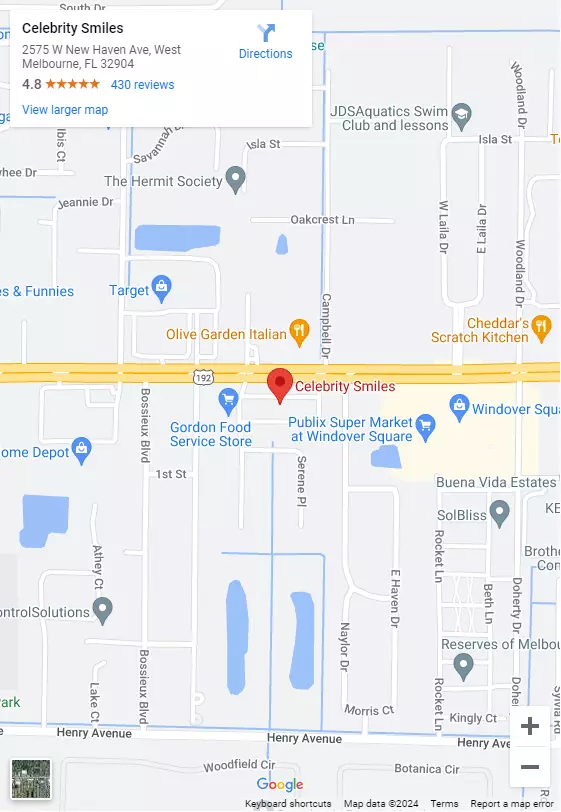
Choosing a dentist Rockledge residents can feel comfortable visiting starts with more than comparing addresses. Consider the care you may need, how the office explains options, and whether the location and appointment process fit your life. Adults in Rockledge can also compare practices in nearby Brevard County communities, including West Melbourne.
Request an Appointment at Celebrity Smiles Melbourne
What should you look for when choosing a dentist near Rockledge?
Start by identifying what matters to you now. You may want routine preventive visits, help with a tooth concern, a way to replace a missing tooth, or advice about improving your smile. A practice offering several types of care can make it easier to discuss related needs in one setting. A dentist still needs to assess your circumstances before recommending treatment.
Look for clear information about services, the care team, office location, and how to request an appointment. A useful first conversation should leave room for questions. You should understand the next step and what information the dental team needs from you. Notice whether explanations are understandable, whether the team checks your understanding, and whether you feel rushed into a decision.
- Care options: Check whether the practice provides preventive, restorative, cosmetic, or urgent dental care relevant to your concerns.
- Communication: Ask how the dentist will explain findings, alternatives, risks, and follow-up.
- Location and access: Consider the drive from Rockledge, parking, and whether the visit times work with your schedule.
- Planning: Ask how an exam or imaging helps shape a personalized recommendation.
- Continuity: Consider whether you can return to the same office for follow-up and related care.
Celebrity Smiles is a dental practice in West Melbourne, Florida, serving adults in nearby communities. Its care includes general and preventive dentistry, cosmetic treatments, dental implants, and emergency dental care. Review its dental services, practice information, and provider information as you decide what questions to bring.
Which services might be relevant to your needs?
The right starting point depends on your concern, not a treatment name you found online. Routine checkups and preventive care give a dentist an opportunity to assess oral health. If you have a damaged tooth, the dentist may discuss restorative options such as a crown or bridge. If you are concerned about appearance, a consultation can clarify whether cosmetic dentistry or another approach may be appropriate.
For a missing tooth, ask about ways to restore the space and what an evaluation involves. Dental implants are one possible option for some patients, while bridges or other approaches may be discussed depending on the teeth and tissues involved. Read about dental implant care and dental bridges, then bring questions to an exam instead of assuming one option fits everyone.
If discomfort or an injury is why you are searching, contact a dental office promptly to ask about next steps. Severe or worsening symptoms deserve timely attention. The practice’s emergency dental care page explains how to reach the team for urgent concerns. It does not replace an examination or emergency medical care when symptoms are severe.

How can you compare nearby dental practices?
A simple comparison helps you focus on practical differences without relying on one feature. Use the same questions for each office, and write down the answers while they are fresh. The comparison can help you decide where to request an appointment, but it cannot establish which treatment is right for you.
| What to compare | Questions to ask | What to note |
|---|---|---|
| Services | Can the practice evaluate my concern and explain options? | Whether the first visit can address your immediate question. |
| Location | How manageable is the trip from Rockledge? | Travel time, route, parking, and likely follow-up visits. |
| Technology and planning | What imaging or digital tools might be used, and why? | Whether the purpose and limits of each tool are explained. |
| Cost and benefits | Can I receive an estimate and verify plan details first? | Which amounts are estimates and which depend on insurer review. |
| Communication | Will the team discuss alternatives and follow-up? | Whether you have a clear opportunity to ask questions. |
Distance is only one part of the choice. A nearby office may be convenient, while a practice a little farther away may offer services that better match your needs. Think through the full path, not just the first drive: if a treatment plan involves more visits, ask about expected visit frequency before deciding whether the location works for you.
Ask how the office handles records from a previous dentist and whether you should bring a medication list, insurance information, or recent images. If you have not visited a dentist for some time, say so when booking. That helps the team understand what you hope to cover and whether more time may be needed. Do not postpone urgent evaluation just to collect paperwork.
What happens at an initial dental visit?
The process depends on the reason for your visit. A dentist may ask about health history, medications, symptoms, past dental care, and your goals. The team may examine your mouth and recommend imaging when it is relevant to a clinical question. Digital tools, including CBCT 3D imaging or intraoral scanning, may be used when appropriate; ask what a proposed test is intended to show and how the result could inform planning.
After the evaluation, expect a conversation about findings and possible next steps. Ask which options are available, what each involves, what risks or limitations apply, and whether care can be staged across visits. You can ask the dentist to distinguish what needs timely attention from what can be considered later. A recommendation should reflect an in-person exam and your individual circumstances.
- Describe your main concern and when it began. Be specific about what changes it, if anything, without trying to diagnose it yourself.
- Share relevant health conditions, medications, allergies, and past dental treatment.
- Ask what the examination or any proposed imaging can clarify.
- Discuss options, timing, follow-up, and written cost estimates.
- Repeat back the plan in your own words and ask for clarification before proceeding.
To prepare, write down your questions and bring relevant records you already have. You can review new patient information before contacting the office. If you have coverage questions, check your plan directly and review the practice’s insurance information; benefits differ among plans.
How should you think about cost and insurance?
Dental costs depend on the recommended service, the materials and steps involved, and your individual circumstances. Insurance terms also vary. Before agreeing to care, ask for a written estimate that separates the proposed treatment fee from any expected plan contribution, and confirm details with your insurer. A pre-treatment estimate is not necessarily a guarantee of payment.
For a useful estimate, clarify what the proposed amount includes. Ask whether the estimate covers the evaluation, imaging, temporary restorations, follow-up, or other related steps when relevant. If a plan contribution is shown, ask whether it is based on an insurer response or an office estimate. Confirm annual limits, waiting periods, deductibles, exclusions, and how the plan classifies the proposed service with your insurer. Do not assume the insurer will pay a particular amount until the claim is processed.
If there are clinically appropriate alternatives, ask how they differ in purpose, visits, maintenance, and expected lifespan. You are not required to choose the least expensive option without understanding its limitations, or the most extensive option without understanding why it is recommended. If you need time to review an estimate, say so. For payment arrangements, ask the office which options are currently available and whether eligibility requirements apply; do not assume financing approval or plan coverage.
For general preparation, the American Dental Association’s patient resource at MouthHealthy offers oral health information. Use general education to prepare questions, not to diagnose yourself or replace a dental examination.
How can you make a practical shortlist?
Rather than trying to rank every office, choose a few that appear to meet your basic needs. First, check whether the office is in a location you can reach consistently. Next, confirm that the team evaluates the kind of concern you have. Then ask how to book, what to bring, and whether the first appointment is an exam, consultation, or another visit type.
For example, an adult with a missing tooth might shortlist practices that can discuss both implant and bridge options, then compare how each office explains evaluation steps and follow-up. Someone seeking routine care might prioritize appointment access, clear preventive recommendations, and a manageable route. A person with a new painful symptom should not treat a general comparison as a reason to wait: contact a dental office and describe what is happening to find an appropriate next step.
Keep a short record of each conversation: the date, who you spoke with, what the office said to bring, and questions still unanswered. This makes it easier to compare actual information rather than relying on memory. If an answer is unclear, ask for a plain-language explanation. You can also request a copy of the proposed plan and review it at your own pace when the issue is not urgent.
What should you ask before choosing a dentist?
A short list helps keep the conversation focused. Choose questions that relate to your concern and the decisions you expect to make.
- What will you assess during my first visit?
- What options may address my concern, and what are their trade-offs?
- What information or imaging is needed before making a recommendation?
- What should I expect for follow-up and home care?
- Can I review a written estimate and verify insurance details before treatment?
- Who should I contact if my symptoms change after the visit?
- How should I arrange transfer of records, if I want the office to review them?
You do not need to choose a procedure before an evaluation. It is reasonable to ask for an explanation in plain language and take time to consider non-urgent decisions. A helpful conversation should make the next step clearer, even if it does not settle every treatment question in one visit.
How can you make the first call useful?
A brief call can help you understand the logistics before you set aside time for a visit. You do not need to explain every detail or decide what treatment you want. Start with the main reason you are looking for care, then ask what kind of appointment the office recommends. If you have a specific time constraint, mention it early so you can learn whether the schedule can accommodate it.
It may help to keep a few notes nearby. Write down when the concern began, whether it is changing, and what you have already tried. For routine care, note when you last had an exam if you remember. If you take medication or have a health condition that affects dental care, mention that you can provide details at the visit. Do not stop or change medication based on a general conversation; questions about medication should be addressed with the clinician who manages it.
- Ask whether the first appointment is intended for an exam, a consultation, or evaluation of a particular symptom.
- Ask what records or forms would be useful and whether you can complete them before arriving.
- Confirm the office address, arrival instructions, and how to notify the team if your plans change.
- For a time-sensitive concern, describe the symptoms clearly and ask what the office recommends as the next step.
These questions do not guarantee that a particular procedure can be completed at the first visit. The schedule and clinical needs vary. An examination may be needed before a dentist can estimate treatment, and additional records or imaging may be useful in some cases. The goal of the call is to make the appointment process less uncertain and ensure the team understands why you are seeking care.
How do you weigh convenience against continuity?
A dentist is not only a destination for a single visit. Preventive care, treatment planning, and follow-up can involve an ongoing relationship. Consider whether you can realistically return to the office if the dentist recommends another appointment. A route that seems manageable once may feel different during a busy workweek, so think about travel at the times you would likely attend.
Convenience also includes how you receive information. Some patients prefer to review written instructions after a visit; others want to talk through each step in person. Ask how the team communicates appointment details and how you can raise a question after the visit. These practical details can matter when you are comparing offices, especially if a plan involves multiple stages.
Continuity does not mean you must agree to every recommendation immediately. You can ask what should happen first, what can wait, and whether the dentist can provide a written summary. If you choose to seek another opinion for a non-urgent concern, take any relevant records or proposed treatment information with you. For urgent symptoms, ask a dental professional promptly rather than delaying evaluation while comparing options.
What can a thoughtful comparison look like?
Imagine you are considering two offices. One is closer to home, while the other lists services that seem relevant to your concern. Instead of deciding based on distance alone, ask both offices the same basic questions: whether they can evaluate the concern, what the initial visit involves, what information to bring, and how cost estimates are handled. Then consider how each answer fits your needs, without treating a phone conversation as a clinical recommendation.
For a missing tooth, the comparison might focus on whether the dentist can discuss more than one restoration approach and explain what evaluation is needed. For routine preventive care, you might focus on how the practice plans exams and follow-up, and whether the location is practical over time. For a cosmetic concern, ask what a consultation can clarify and whether the dentist will discuss limitations as well as possible benefits. These are different starting points, so a single checklist should be adapted to the question you actually have.
Keep the comparison factual. Note what you confirmed, what remains unclear, and what depends on an in-person exam. Avoid using a quoted estimate or a service list as proof that a treatment is suitable for you. A dentist must assess your oral health and goals before recommending a specific plan.
Request an Appointment with Celebrity Smiles Melbourne
How should you prepare if you feel nervous about a visit?
It is reasonable to tell the office if you feel anxious about dental care or have had a difficult experience in the past. You do not need to share more than you are comfortable sharing during a booking call. Let the team know what would help you feel informed, such as having each step explained before it begins or being able to pause and ask questions. The dentist can discuss which comfort measures may be appropriate after learning more about your needs.
Before the appointment, choose your most important questions rather than trying to remember every concern at once. You might write down what you want the dentist to explain, what outcome matters to you, and what practical limits affect your decision. During the visit, ask for clarification if a term or recommendation is unfamiliar. It is acceptable to say that you need a moment to think or would like the plan in writing.
Good preparation is not about arriving with a self-diagnosis. It is about sharing useful context and making space for a two-way conversation. A dental professional can then evaluate your situation, explain the options that apply, and help you understand what comes next.
Frequently Asked Questions
Is West Melbourne close enough to consider for a Rockledge dentist search?
West Melbourne is a nearby Brevard County community. Whether its location works for you depends on your route, schedule, and type of care. Check the address and travel time before booking.
Can I know which treatment I need before an appointment?
Online information can help you prepare, but it cannot determine your diagnosis or treatment. A dentist needs to evaluate your oral health and discuss your goals before making a personalized recommendation.
Should I bring records from my previous dentist?
Relevant records, a medication list, and information about your dental history can help inform a visit. Ask the new office whether it can request records or whether you should bring copies. Do not postpone urgent evaluation while waiting for records.
What if I have a tooth problem that feels urgent?
Contact a dental office promptly and explain your symptoms so the team can advise you about an appropriate next step. Seek urgent medical care for severe symptoms or a medical emergency.
Choosing a dentist is a personal decision. A clear conversation and an in-person evaluation can help you understand your options and decide what to do next.