When missing or failing teeth make eating, speaking, or smiling feel difficult, it can affect far more than your appearance. All on 4 dental implants offer a full-arch tooth-replacement approach designed to secure a complete set of teeth on a small number of strategically placed implants. For many people in Melbourne, FL, it can be a meaningful alternative to a removable denture. But the right option depends on your oral health, jawbone, goals, and a detailed in-person evaluation.
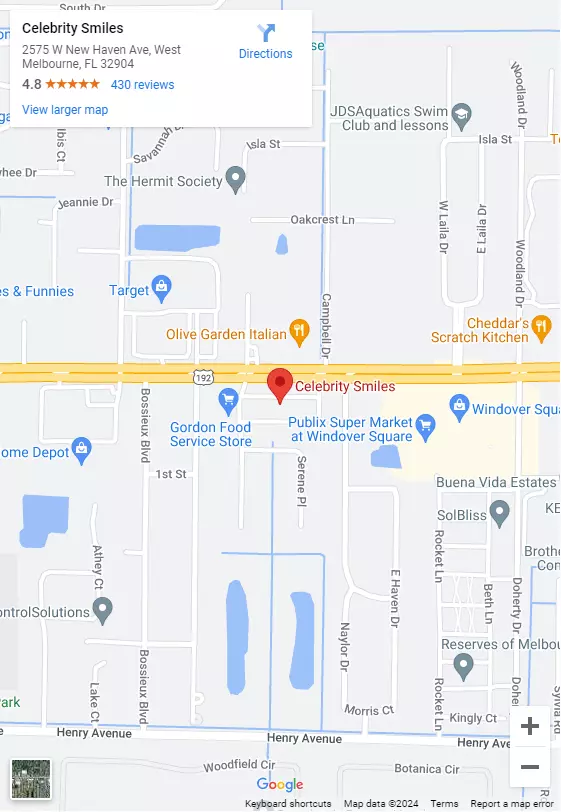
At Celebrity Smiles in West Melbourne, Dr. Anand Shah, DMD combines more than 13 years of implant experience with CBCT 3D imaging and digital planning to evaluate full-arch options carefully. He has placed thousands of dental implants and develops treatment plans around each patient rather than relying on a one-size-fits-all approach.
Quick answer: All on 4 dental implants are a full-arch implant treatment in which four implants support a fixed restoration for an upper or lower arch. The implants are positioned to make the best use of available bone. Some patients may be candidates for temporary teeth on the day of surgery, while the final timeline and restoration depend on the individual treatment plan.
What Are All on 4 Dental Implants?
All on 4 dental implants are a type of full-arch restoration. Instead of placing an implant for every missing tooth. A dentist places four implants in carefully selected areas of the jaw and uses them to support a full bridge of replacement teeth. The front implants are typically placed upright, while the back implants may be angled to use available bone efficiently.
This strategic placement is one reason the approach is often considered for people who have lost many teeth or are living with an unstable denture. A published review of the All-on-4 treatment concept describes it as a predictable approach for rehabilitating toothless jaws. Including situations where a patient may wish to avoid more extensive regenerative procedures. That does not mean every patient can avoid grafting or that every treatment follows the same plan. CBCT imaging is essential for evaluating bone anatomy, nerves, sinuses, and the safest path forward.
All-on-4 is different from replacing a single tooth with one implant and crown. It is also different from a conventional removable denture. The goal is to create a fixed full-arch restoration that is supported by implants rather than resting only on the gums. You can explore comprehensive dental implant solutions to see how single-tooth, bridge, and full-arch options address different needs.
How Locator Fixed fits into full-arch care
At Celebrity Smiles, full-arch discussions may include Locator Fixed, a premium full-mouth implant system from Zest Dental. Locator Fixed restorations are designed to tap or snap into place rather than use a traditional screw-retained connection. Dr. Shah will explain whether this approach, another fixed option, or an implant-supported denture is most appropriate after your examination and imaging. The Locator Fixed system has made full-arch treatment an increasingly comfortable and efficient option for many patients exploring all on 4 dental implants in the West Melbourne area.
Why digital planning matters
Implant treatment starts well before surgery. CBCT 3D imaging gives Dr. Shah a detailed view of bone volume and nearby anatomy, while digital intraoral scanning supports precise restorative planning without conventional messy impressions. That information helps guide a personalized plan and realistic discussion of treatment steps.
The All-on-4 Procedure: What to Expect
Every full-arch case is individualized, yet most all on 4 dental implant treatment plans follow a similar progression. Understanding the stages can make your consultation feel more productive and help you prepare useful questions.
- Comprehensive consultation and records. Dr. Shah reviews your health history, symptoms, existing teeth, gum condition, bite, and goals. CBCT 3D imaging and digital scans are used to assess your jaw and plan implant positions.
- Personalized treatment planning. Your plan may include removing non-restorable teeth, treating gum disease, preserving bone, or coordinating sedation. You will also discuss the type of full-arch restoration and whether Locator Fixed is suitable for your needs.
- Implant placement. The implants are placed in planned positions to support the arch. In many cases, four implants support one full arch, but the number and placement are determined by anatomy and clinical needs.
- Temporary restoration when appropriate. Some qualified patients receive a temporary fixed restoration shortly after implant surgery. This is not guaranteed, and safety, implant stability, healing needs, and your individualized plan determine what is appropriate.
- Healing and follow-up. The implant sites need time to integrate with the jawbone. Dr. Shah monitors healing, bite, comfort, and home-care needs during follow-up visits.
- Final restoration. Once healing and stability support the next step, the final full-arch teeth are designed for fit, function, and a natural-looking appearance. Digital planning helps refine the details.
If you are comparing a single implant to a complete arch replacement, our guide to full-arch implant systems can help frame the conversation. A consultation is still the only way to determine which option fits your situation.
All-on-4 vs. Other Tooth Replacement Options
There is no universal best tooth-replacement choice. The right treatment balances the number and condition of remaining teeth, bone and gum health, health history, budget, timeline, and personal goals. This comparison can help you identify the questions to bring to your exam.
| Option | How it is supported | Potential advantages | Considerations |
|---|---|---|---|
| All-on-4 full-arch implants | Four strategically placed implants support a full fixed arch | Replaces a full arch with a stable, non-removable restoration; may make efficient use of available bone | Requires surgery, healing, careful hygiene, and individualized planning |
| Traditional dentures | Rest on the gums | Non-surgical option; can replace many teeth | May move during eating or speaking and often require adhesives or periodic adjustment |
| Implant-supported dentures | Attach to implants and may be removable for cleaning | Added stability compared with a conventional denture | Retention system, number of implants, and daily care vary by design |
| Individual implants | One implant supports one crown, or several support a bridge | Useful when only one or several teeth are missing | May not be the most efficient full-arch solution when most teeth are missing or failing |
Compared with a traditional denture, an implant-supported restoration is anchored to the jaw rather than relying solely on gum tissue. That additional stability can be especially important to patients who are tired of slippage, looseness, or adapting their diet around a removable appliance. Learn more about implant-supported restoration options if you are deciding between a fixed and removable solution.
All-on-4 may also be considered when bone volume is limited. By angling posterior implants, the protocol can sometimes avoid more complex grafting, but it is not a promise that grafting is unnecessary. Your scan and clinical exam determine what is safe and predictable for you. Many patients considering all on 4 dental implants find this aspect especially relevant when previous dental professionals have recommended grafting.
Am I a Candidate for All-on-4 Dental Implants?
People who may want to explore all on 4 dental implants include those with many missing teeth. Failing teeth, a loose or uncomfortable denture, or a need for a full-arch solution. However, candidacy is not decided by a checklist alone. Dr. Shah evaluates several factors before recommending a plan:
- Bone and anatomy: CBCT 3D imaging helps assess available bone and the position of important structures.
- Gum and oral health: Active infection, gum disease, or non-restorable teeth may need to be addressed as part of the treatment sequence.
- General health and medications: Your medical history can affect surgical planning and healing considerations.
- Bite and functional goals: The restoration needs to be designed around the way you bite, speak, and use your teeth.
- Home-care readiness: A fixed full-arch restoration still needs consistent professional maintenance and daily hygiene.
Some people assume they cannot receive implants because they have been told they have bone loss. In certain cases, the All-on-4 approach may make use of available bone in a way that differs from traditional placement. Still, only an in-person exam and imaging can confirm whether All-on-4, Locator Fixed, another implant approach, or a different restorative option is appropriate.
Dr. Shah’s experience with complex implant treatment, combined with 3D planning, makes the consultation a useful place to compare options with confidence. The goal is not to fit every patient into one procedure. It is to recommend the treatment that best supports your health, comfort, and long-term function.
Recovery, Longevity, and Daily Life
Recovery after all on 4 dental implant treatment varies. Some patients experience swelling, tenderness, and dietary restrictions after surgery, while others need more time or additional treatment before progressing to a final restoration. Your postoperative instructions, medication guidance, diet, and visit schedule will be based on your case.
During early healing, a softer diet is commonly recommended to protect the surgical area and any temporary restoration. As healing progresses, Dr. Shah will advise when and how to return to different foods. Maintaining your result also involves brushing around the restoration, cleaning beneath the arch as instructed, attending professional maintenance visits, and reporting concerns promptly.
Long-term evidence for the All-on-4 concept is encouraging, but no dental treatment is maintenance-free or guaranteed for life. One systematic review reported an implant survival rate of 99.8% over periods longer than 24 months in the studies it analyzed. Individual results can vary based on health, bone quality, bite forces, smoking, hygiene, maintenance, and other clinical factors. Your consultation is the right time to discuss what those factors mean for you.
For many patients, the everyday goal is simple: a restoration that feels more stable during meals and conversations than the teeth or denture they have been living with. A thoughtfully planned full-arch solution can support that goal while preserving the focus on health and long-term care.
Frequently Asked Questions About All-on-4 Dental Implants
What is the average cost for All-on-4 dental implants?
Cost varies based on the number of arches treated, whether teeth need to be removed. Bone or gum treatment needs, sedation, the temporary and final restoration materials, and the complexity of your plan. An in-person consultation is the most reliable way to receive an estimate tailored to your needs. Avoid relying on a generic advertised number without understanding what it includes.
What are the downsides of All-on-4 dental implants?
All-on-4 is a surgical treatment and requires healing, ongoing hygiene, and professional maintenance. Not everyone is a candidate, and complications or restoration repairs are possible with any implant treatment. A clear exam and treatment discussion should cover your medical history, anatomy, risks, alternatives, expected maintenance, and anticipated timeline.
How long do All-on-4 dental implants last?
Implants and restorations have different maintenance needs and lifespans. Research on the All-on-4 concept reports strong implant survival outcomes, but individual longevity depends on healing, bite forces, health, hygiene, routine visits, and care of the restoration. Dr. Shah can explain the maintenance plan and realistic expectations for your situation.
Can I eat normally with All-on-4 teeth?
Eating guidance changes throughout recovery. You may need to follow a soft-food diet while implant sites heal, then progress according to your clinician’s instructions. Once a restoration is fully healed and adjusted, many patients appreciate improved stability compared with a loose denture. Your dentist will advise what is appropriate for your case.
Are All-on-4 implants possible with bone loss?
They may be an option for some people with reduced bone because implant positioning can make efficient use of available bone. However, this is not a substitute for an evaluation. A CBCT scan, exam, and review of your health history determine whether all on 4 dental implants. Grafting, another implant design, or an alternative restoration is the safest approach.
Take the First Step Toward a Complete Smile
If missing teeth or an unreliable denture are limiting your day, a full-arch consultation can give you clear answers. At Celebrity Smiles, Dr. Anand Shah, DMD uses advanced imaging and a personalized approach to evaluate all on 4 dental implants and Locator Fixed full-arch options for patients in West Melbourne. Melbourne, Palm Bay, and Brevard County.
Schedule a consultation online or call 321-914-0929. Your final recommendation and treatment plan will follow a comprehensive in-person examination.