Families need a trusted dental home for routine care, questions, and changing needs. Children may be learning to brush, teens may need guidance around aligners or sports, and adults may need preventive, restorative, cosmetic, or urgent care. A coordinated relationship with one local team can make those decisions easier to understand and easier to schedule.
Request an Appointment at Celebrity Smiles Melbourne
A family dentist in West Melbourne, Florida can provide age-appropriate preventive visits, children’s dental care, restorative treatment, cosmetic consultations, emergency evaluations, and tooth replacement for different generations. The right recommendations depend on an in-person examination and a personalized treatment plan.
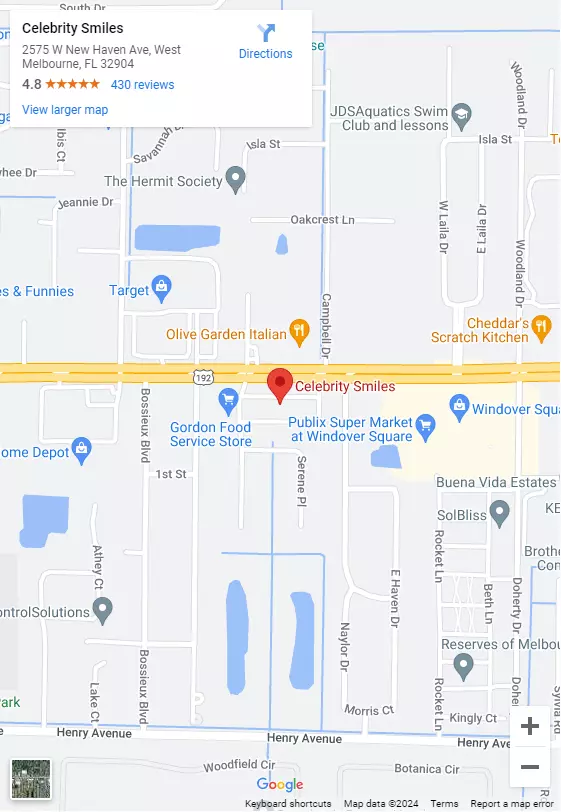
Celebrity Smiles Melbourne serves families in West Melbourne, Melbourne, Palm Bay, Viera, Suntree, and nearby Brevard County communities. The privately owned practice is led by Dr. Anand Shah, DMD, and has earned more than 500 five-star Google reviews. Its goal is to combine compassionate communication with modern tools, including CBCT 3D imaging and digital intraoral scanning, so patients can better understand their care.
What Does a Family Dentist in West Melbourne FL Do for Your Household?
A family dentist supports patients at different ages rather than treating every person as if they have the same needs. A young child may need a gentle introduction to the dental office. A teenager may need help maintaining a routine around braces, clear aligners, or school activities. Adults and older family members may need examinations, cleanings, fillings, crowns, bridges, tooth replacement, or help with a dental concern that has become uncomfortable.
The purpose of family dentistry is coordinated care. A familiar team can keep track of each patient’s history and explain findings in plain language. It can then recommend next steps based on that person’s oral health, medical history, comfort preferences, and goals. Family care does not mean using one treatment plan for everyone. It means having a consistent place to ask questions and receive care that is adjusted to the individual.

Care that can grow with your family
A household may visit for a routine cleaning one week and need help with a broken tooth or a missing tooth another week. A comprehensive practice can evaluate the concern, explain available options, and coordinate treatment within the same office when appropriate. This can reduce the need to repeat a medical history or start over with a new team for every question.
Families can also benefit from a practice that offers more than one type of care. Celebrity Smiles Melbourne provides general, cosmetic, emergency, restorative, and implant dentistry. The practice also offers crowns, bridges, veneers, teeth whitening, clear aligners, sedation dentistry, and sleep apnea treatment. Treatment availability and suitability depend on an in-person exam and the patient’s individualized plan.
What a first family visit may include
The first visit should be a conversation as well as an examination. The dental team may ask about current concerns, previous treatment, medications, home-care routines, dental anxiety, and goals for the visit. An examination can then help the dentist identify what is healthy, what needs monitoring, and what may require further attention.
- Review of medical and dental history, medications, and current concerns.
- Examination of the teeth, gums, bite, existing restorations, and areas that may need monitoring.
- Age-appropriate discussion of brushing, flossing, diet, fluoride, and other prevention topics.
- Imaging or digital scanning when the dentist determines that it can support evaluation or planning.
- Time for questions and a clear explanation of possible next steps.
Parents and caregivers should feel comfortable asking why a recommendation is being made, what alternatives may exist, and how urgent the concern is. A trustworthy dental relationship gives families information without pressuring them into a predetermined choice.
Preventive Dental Care for Every Generation
Prevention is the foundation of a family dental plan. Routine examinations and professional cleanings give the dental team regular opportunities to check the teeth, gums, bite, and existing dental work. Many patients are seen about every six months, but the appropriate interval can vary according to age, oral health history, gum health, cavity risk, medications, and other factors.
A preventive appointment is also a chance to adjust daily habits. The team may discuss brushing technique, flossing, diet, dry mouth, enamel wear, sensitivity, or plaque buildup. The CDC’s oral health guidance for children emphasizes regular dental care, fluoride toothpaste, and practical home routines. Recommendations should be tailored to the patient rather than copied from a general checklist.
How prevention changes across a household
Young children may need supervision and encouragement while learning to brush. Teens may need support keeping their teeth clean around orthodontic appliances or managing a busy school and sports schedule. Adults may need monitoring for gum concerns, worn teeth, sensitivity, or changes related to medications. Older adults may need careful attention to existing restorations, dry mouth, tooth replacement, and the ability to maintain daily hygiene.
Keeping these conversations in one practice can make patterns easier to notice. A parent may learn a brushing strategy that can also help a child. An adult who has delayed care may receive a plan that fits work and family responsibilities. A senior family member may need help coordinating preventive care with other health needs. Each person still receives an individual evaluation.
A practical preventive visit checklist
- Share changes in health, medications, diet, sleep, or home-care routines.
- Tell the dentist about sensitivity, bleeding gums, jaw tension, grinding, or dry mouth.
- Ask when the next examination and cleaning should be scheduled.
- Discuss whether fluoride, sealants, a mouthguard, or another preventive option may be appropriate.
- Confirm which symptoms should prompt an earlier call to the office.
Early attention does not mean every finding requires immediate treatment. It does give the dental team a better opportunity to monitor changes and discuss options before a small concern becomes more disruptive. The most useful plan is one that a patient and family can understand and follow.
How Can a Family Dentist Help Children Build Healthy Habits?
Children’s dental visits are about developing healthy routines as much as checking for cavities. Baby teeth help children eat and speak while permanent teeth develop. They also give children practice with brushing, dental appointments, and asking for help when something feels different. The CDC identifies cavities as the most common chronic disease of childhood, which is why early prevention and regular dental care matter.
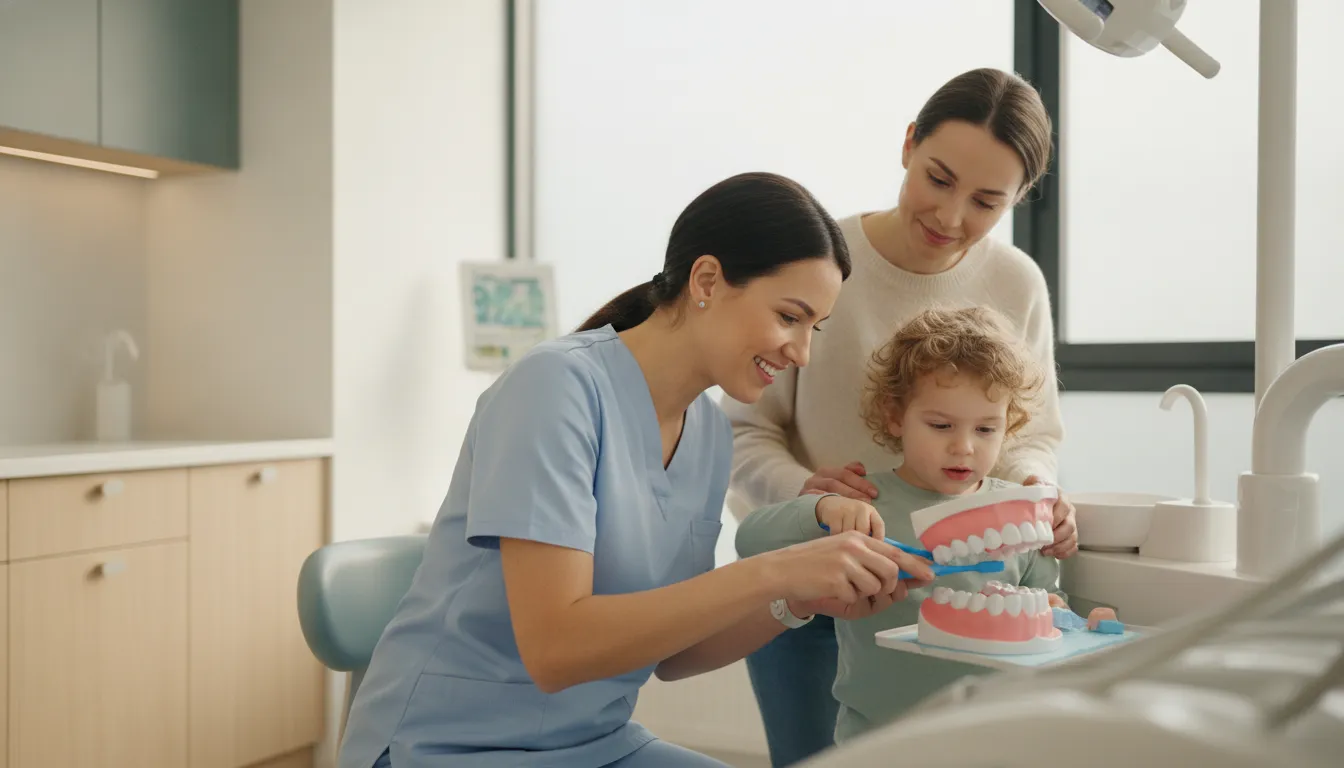
The CDC recommends a child’s first dental visit by the first birthday. That early appointment allows the dental team to look at development and help parents with home care. Before teeth erupt, parents can gently wipe the gums with a clean, soft cloth. Once teeth appear, a small, soft-bristled toothbrush and fluoride toothpaste can support a consistent routine. A dentist can explain the amount of toothpaste and supervision appropriate for the child’s age.
Make dental care predictable and encouraging
Children often respond better when appointments are explained in simple, calm terms. Parents can describe the visit as a chance to count teeth, clean the smile, and learn how to keep the mouth healthy. Avoiding frightening language and bringing questions to the dental team can help the child understand what to expect.
A supportive dental office cannot promise that every child will feel comfortable at every visit. It can create predictable steps, invite questions, and adjust communication to the child’s age and needs. Positive experiences over time can help children view dental care as a normal part of health rather than something reserved for an emergency.
Prevention options discussed during an exam
Home care is essential, and clinical prevention may add another layer of support when appropriate. Fluoride protection and dental sealants are examples of options a dentist may discuss after examining a child’s teeth. They are not automatic for every child. The dentist should consider the child’s age, tooth anatomy, cavity risk, oral health history, and ability to maintain daily care before recommending them.
Parents should also ask about snacks, drinks, thumb or pacifier habits, mouth breathing, tooth grinding, and sports protection. These conversations can identify practical changes without blaming the child or family. A personalized plan is more useful than a broad promise about what a treatment will accomplish.
Talk with a West Melbourne Dental Team About Your Family’s Care
How Can Teens and Adults Protect Their Smiles?
Teenagers and adults often have more independence, but they still benefit from consistent preventive guidance. Orthodontic appliances, clear aligners, sports, changing diets, work schedules, tobacco exposure, grinding, and cosmetic concerns can all affect daily oral care. A family dentist can help each patient identify practical priorities without losing sight of examinations and routine cleanings.
Guidance for teens
Teens may need a plan for cleaning around braces or aligners, wearing a mouthguard during sports, and maintaining appointments during busy school weeks. They may also ask about tooth color, alignment, or the appearance of their smile. Cosmetic dentistry can be discussed when appropriate, but recommendations should follow an examination and a personalized plan. A teen should understand both the intended purpose and the responsibilities associated with any proposed treatment.
Care for adults and older family members
Adults may need preventive care alongside fillings, crowns, bridges, or tooth replacement. A dentist can assess a damaged or missing tooth and explain whether an option may be appropriate. Celebrity Smiles Melbourne offers dental implant and tooth replacement information for patients who want to learn more. The appropriate approach depends on the examination, available bone and gum support, overall health, and the patient’s goals.
Older adults may need help maintaining existing dental work, managing dry mouth, or replacing teeth that no longer function comfortably. Care should account for dexterity, medications, health history, and support at home. A family member or caregiver can participate in the conversation when the patient wishes, while the patient’s preferences remain central.
When a dental concern feels urgent
A broken tooth, significant toothache, swelling, bleeding that does not stop, or a dental injury deserves prompt attention. A family dentist can help determine whether an urgent evaluation is needed and explain what information to bring. Explore the practice’s emergency dental care options, and contact the office promptly when symptoms are severe, worsening, or affecting eating and daily activities.
Online information cannot diagnose the cause of pain or swelling. If a child or adult has concerning symptoms, an in-person examination is the appropriate way to determine the next step.
What Services Can One Family Dental Practice Coordinate?
Households may need different services at different stages. A comprehensive practice can make it easier to discuss those needs with one familiar team, even though the clinical plan remains specific to each patient.
| Family need. | Care that may be discussed. | What determines the plan. |
|---|---|---|
| Routine prevention. | Examinations, cleanings, fluoride, and home-care guidance. | Age, risk factors, history, and examination findings. |
| Children’s care. | Early visits, cavity prevention, sealants, and habit coaching. | Development, tooth anatomy, risk, and cooperation. |
| Teen care. | Orthodontic coordination, sports protection, and cosmetic questions. | Oral health, goals, appliances, and lifestyle. |
| Adult restorative care. | Fillings, crowns, bridges, and treatment for damaged teeth. | Tooth structure, symptoms, health, and long-term goals. |
| Missing teeth. | Bridges, dentures, or implant consultations. | Exam findings, bone and gum support, and preferences. |
| Comfort concerns. | Communication planning and sedation dentistry discussion. | Medical history, procedure, anxiety, and safety review. |
Technology that supports clearer conversations
Celebrity Smiles Melbourne uses CBCT 3D imaging and digital intraoral scanning when clinically appropriate. Three-dimensional imaging can support evaluation and planning in selected cases. Digital scanning can create a digital model of the mouth without traditional impression materials. These tools do not replace the dentist’s examination or guarantee a particular treatment outcome. Their value is in supporting careful evaluation and helping patients understand what the team sees.
The practice also offers same-day crown technology when a patient is clinically suitable and the treatment plan allows it. Same-day eligibility is not guaranteed. Timing depends on the tooth, restoration, laboratory and technology requirements, and examination findings.
Comfortable care still requires personal assessment
Patients can ask about comfort preferences, sedation options, appointment length, and what will happen during a procedure. The practice’s sedation dentistry guide provides background for that conversation. Sedation suitability requires a review of health history and the planned treatment. It is not a substitute for an exam or a guarantee of a particular experience.
Why Choose Celebrity Smiles Melbourne as Your Dental Home?
Choosing a family dental office involves more than distance. Families often value a team that listens, explains recommendations, and provides continuity as needs change. Celebrity Smiles Melbourne is a privately owned practice in West Melbourne led by Dr. Anand Shah, DMD. The practice combines relationship-focused care with modern dental technology and a broad range of services.
Dr. Shah has more than 13 years of experience and has placed thousands of dental implants. Celebrity Smiles Melbourne has earned more than 500 five-star Google reviews. These facts provide helpful context, but they do not predict an individual patient’s result. Every recommendation should follow an in-person exam and a personalized treatment plan.
Questions to ask when comparing family practices
- Ask whether the practice provides age-appropriate preventive guidance.
- Ask how findings and treatment options are explained to patients and caregivers.
- Ask whether the practice can coordinate routine, restorative, cosmetic, implant, and urgent concerns when appropriate.
- Ask what technology may be used to support evaluation and planning.
- Ask how the team discusses comfort, anxiety, and questions before treatment.
- Ask what a patient should do if pain, swelling, or a dental injury develops.
Families can also review this guide to choosing a local dentist and learn more about cosmetic dentistry options. The goal is not to choose a practice based on one claim. It is to find a dental relationship that supports clear decisions and consistent care.
For families in West Melbourne, Palm Bay, Melbourne, Viera, Suntree, and nearby communities, a local dental home can make preventive care more manageable. The next step is a conversation about your household’s needs, followed by an examination that allows the dental team to make individualized recommendations.
Request an Appointment for Family Dental Care in West Melbourne
Frequently Asked Questions
What is the difference between a general dentist and a family dentist?
A general dentist may provide many of the same services as a family dentist. The phrase family dentist usually emphasizes welcoming children, teens, adults, and older adults in one practice. The important question is whether the office can provide age-appropriate care, communicate clearly, and tailor recommendations to each patient after an examination.
When should a child first visit a family dentist?
The CDC recommends a child’s first dental visit by the first birthday. An early visit can help the dental team review development and give parents practical guidance about gums, teeth, fluoride toothpaste, feeding habits, and brushing. The exact timing and follow-up schedule should be discussed with the dentist based on the child’s needs.
How often should a family schedule dental cleanings?
Many patients have examinations and cleanings about every six months, but no single schedule fits every household. The dentist may recommend a different interval based on cavity risk, gum health, age, medical history, existing restorations, and home-care habits. Ask the dental team to recommend a schedule after evaluating each family member.
Can one dental office treat children and adults?
Many comprehensive dental practices welcome children, teens, adults, and older adults, but the services and approach vary by office. Celebrity Smiles Melbourne provides general, cosmetic, restorative, implant, and emergency dental services for patients with different needs. Each patient still receives an individual exam and plan rather than a one-size-fits-all approach.
What should I do if someone in my family has dental pain?
Call the dental office promptly for guidance if pain is severe or worsening, or if there is swelling, bleeding, fever, or an injury. Online information cannot determine the cause. An in-person evaluation helps the dentist assess the concern and explain appropriate next steps. Seek immediate emergency medical care for a life-threatening emergency.