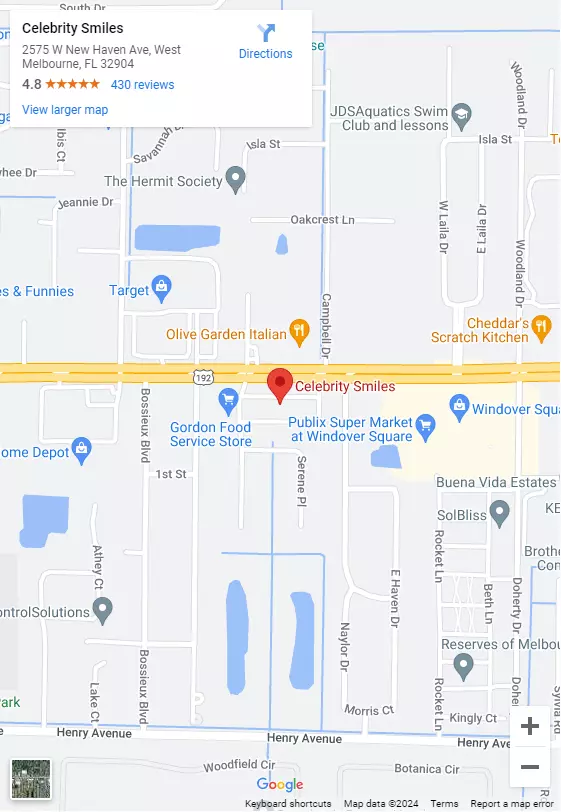
A dental crown is designed to cover and protect a tooth, but it still needs everyday care. If you are searching for how to care for a dental crown West Melbourne FL, the main steps are straightforward: brush gently and thoroughly, clean between teeth, keep up with dental visits, and pay attention to changes in how the crown feels. Good home care supports the tooth and gum around the crown, but it cannot replace an exam if something feels wrong.
Request an Appointment at Celebrity Smiles Melbourne
What does a dental crown protect?
A crown is a custom covering placed over a tooth. A dentist may recommend one when a tooth needs more coverage than a filling can provide, such as after damage or certain restorative treatment. The crown covers the visible part of the tooth, while the natural tooth and its supporting gum tissue remain important parts of the picture. The Healthdirect guide to dental crowns explains that crowns cover a damaged or broken tooth and can help it look and function better.
Care involves more than keeping the crown’s visible surface clean. Plaque can collect at the gumline and between teeth, including around a crowned tooth. Food debris may also become trapped in the spaces beside it. Brushing the crown while neglecting the surrounding gumline or the tooth next to it leaves parts of the area uncleaned.
The materials and shape of crowns differ, and an individual crown’s care instructions may depend on the treatment and your oral health. Follow the directions provided by your dentist. If you are unsure whether a cleaning tool or product is appropriate, ask before making a change to your routine.
How should you clean a crowned tooth each day?
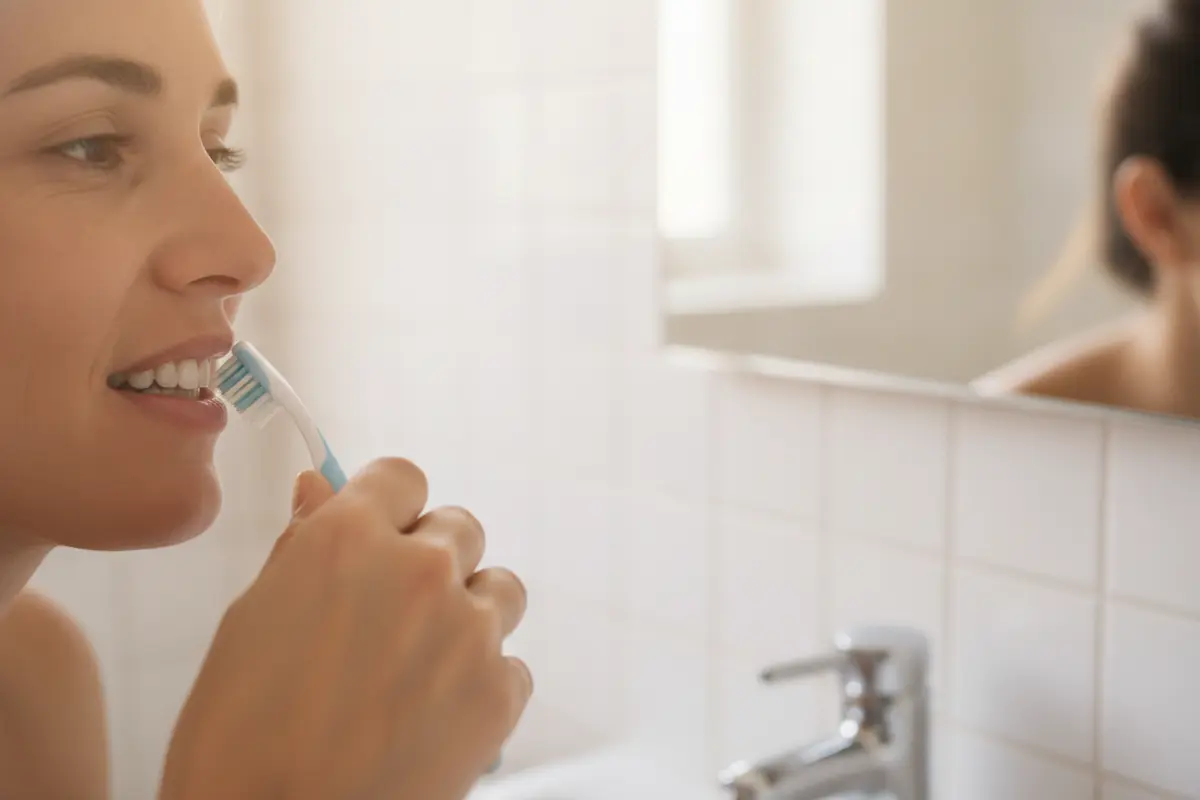
Use a consistent routine rather than scrubbing harder. Brush twice daily with fluoride toothpaste and a soft-bristled toothbrush. Aim the bristles toward the gumline and use gentle, small movements to clean the front, back, and chewing surface of every tooth. Give the edges around the crown attention without pressing aggressively.
Clean between teeth every day. Floss or another interdental cleaner can help reach spaces a toothbrush does not. Move floss carefully around the crowned tooth and along the gumline; avoid snapping it down onto the gums. If you have a bridge, implant, or another restoration as well, ask your dental team to demonstrate a cleaning method that suits that specific work.
A simple routine can help you remember the details:
- Brush morning and evening with fluoride toothpaste and a soft brush.
- Clean along the gumline around the crown, not only its top surface.
- Clean between the crown and neighboring teeth once each day.
- Rinse your toothbrush after use and replace it when the bristles are worn.
- Keep regular dental visits so your dentist can check the crown and nearby tissues.
For a general overview of crown upkeep, the Cleveland Clinic’s dental crown care guidance recommends brushing at least twice a day with fluoride toothpaste and a soft-bristled toothbrush. Your dentist may tailor this advice to your needs.
Do you need to change what you eat?
Most people do not need a special menu simply because they have a crown. Still, it is sensible to avoid using teeth as tools and to be mindful of foods that are especially hard, sticky, or difficult to chew. Biting hard objects can place stress on teeth and dental work. Examples include chewing ice, opening packaging with your teeth, or biting directly into a very hard item.
Pay attention to your own experience. If a particular food repeatedly causes discomfort or makes the crown feel different, stop chewing on that side and contact your dentist for guidance. Do not assume discomfort is a normal adjustment without asking, especially if it continues or worsens. A dentist can examine the crown, the tooth, and your bite to understand what may be contributing.
After crown treatment, follow the instructions given for your specific visit. The timing and advice may differ depending on the procedure and materials used. If you are not sure when to resume your usual diet or which foods to avoid temporarily, call the dental office rather than relying on general advice.
Which habits can help protect a crown?
Daily cleaning matters, but habits that put unusual pressure on teeth also deserve attention. Avoid chewing ice, pens, fingernails, or other non-food objects. If you clench or grind your teeth, mention it at your appointment. Your dentist can assess whether it may affect your teeth or restoration and discuss appropriate options. Do not start wearing an appliance or using a product for grinding without professional guidance.
Keep routine dental care on your calendar even when the crown feels fine. A checkup gives your dentist a chance to assess the restoration, surrounding gums, and your overall oral health. Celebrity Smiles offers comprehensive dental services in West Melbourne; the right visit schedule depends on your individual needs and recommendations.
If you have not had a recent exam, you can learn more about the practice and its care approach on the Celebrity Smiles website or read about the dental practice in West Melbourne. These links can help you plan a conversation, but a dentist must evaluate your mouth to make a personal care recommendation.
What should you do if the crown feels different?
Contact a dentist if a crown becomes loose, feels newly high when you bite, develops a rough or sharp edge, or causes persistent sensitivity or discomfort. A crown that moves or comes off should be assessed. Avoid trying to glue it back in place with household adhesive. Do not chew hard foods on that side while arranging guidance, and ask the dental office what to do next.
Seek prompt dental advice if you notice swelling, significant pain, or signs that concern you. These symptoms can have different causes, so an article cannot tell you what is happening. The dentist may need to examine the area and decide whether imaging or other evaluation is appropriate. If a crown issue follows an injury or is accompanied by severe symptoms, contact a dental office promptly for direction.
When you call, describe what changed and when you first noticed it. Tell the office whether the crown feels loose, whether your bite feels different, and whether you have pain or sensitivity. If the crown has come off, explain that as well. Clear details help the team understand your concern and advise you about the next step. Celebrity Smiles provides emergency dental care information for patients seeking help with an urgent dental concern.
What cleaning tools should you use around a crown?
A soft-bristled toothbrush is a practical starting point for most daily routines, but the best way to clean between teeth can vary. Some people prefer conventional floss. Others may find an interdental brush or another cleaner easier to use. The space around a restoration, the position of the teeth, and your dexterity all matter. Ask your dentist or hygienist to demonstrate options instead of choosing a tool based only on an advertisement or a friend’s routine.
Use any tool gently. A cleaner should reach the area without forcing it into a tight space or injuring the gum. If floss shreds, a brush does not fit, or a tool causes bleeding or discomfort repeatedly, mention that at your visit. A dental professional can check whether the fit of the tool, your technique, or the teeth and gums need attention. Do not try to scrape buildup from a crown with sharp instruments.
Toothpaste and mouth rinse choices can also raise questions. Fluoride toothpaste is generally recommended for brushing, but ask your dentist if you have allergies, sensitivities, or instructions that differ from routine advice. Mouth rinse does not replace brushing or cleaning between teeth. If you use a rinse for a specific dental concern, follow its directions and confirm that it is appropriate for you.
How can you prepare for a crown check?
A little preparation can help you explain your concern clearly. Before the visit, note when you first noticed a change and whether it happens during chewing, brushing, or at rest. Think about whether the sensation is improving, staying the same, or getting worse. If food catches near the crown, note where it happens and whether it is a new issue. These observations do not diagnose the problem, but they give your dentist useful context.
Bring any written aftercare directions you received and a list of questions. Mention relevant changes in your health or medications, and tell the dentist if you have had recent dental work elsewhere. If the crown came off, let the office know when you call and ask whether you should bring it. Do not attempt to repair or recement it at home. The office can advise you based on the situation and arrange an appropriate evaluation.
During the assessment, you can ask the dentist to explain what they are checking and what they find. Ask which next steps are recommended, why they are being considered, and whether there are alternatives. If you do not understand a term or instruction, ask for it to be explained in plain language. You should leave knowing how to care for the area and what changes should lead you to call again.
How do home care and a dental exam work together?
Home care helps remove plaque and food debris on a daily basis. A dental visit allows a clinician to evaluate areas you cannot assess reliably yourself, including the fit and condition of the crown, the gumline, and your bite. Neither should be treated as a substitute for the other. A crown can look intact while a concern still needs attention, and an uncomplicated checkup does not make daily cleaning optional.
At an appointment, your dentist may ask when the crown was placed, what symptoms you have noticed, and whether anything has changed when you chew or brush. You can mention your cleaning routine, any sensitivity, and concerns about grinding or food getting caught. Depending on the findings, the dentist will explain whether monitoring, an adjustment, or another evaluation is appropriate. The recommendation depends on the exam.
If your crown is part of a larger treatment plan, share what you know about the restoration and any instructions you received. Patients who need a crown evaluation or want to understand restorative options can review the practice’s porcelain crown information and discuss whether an exam is right for them. For questions about a different restorative approach, the dental bridge overview describes another option for certain situations. These pages are educational; they do not determine which treatment fits an individual tooth.
How do crown care steps compare with an office visit?
Use home care every day, and use an appointment to get professional guidance when you have a concern or need a routine assessment. This comparison can help you decide what belongs in each setting:
| Situation | What you can do at home | When to contact a dentist |
|---|---|---|
| Routine crown care | Brush gently twice daily, clean between teeth, and avoid using teeth as tools. | Keep checkups as recommended for your individual oral health. |
| Food catches near the crown | Clean the area carefully; do not poke with sharp objects. | Ask for an evaluation if it keeps happening or is uncomfortable. |
| New bite discomfort or sensitivity | Note when it occurs and avoid foods that trigger discomfort. | Contact the office to describe the change and ask about an exam. |
| Crown feels loose or comes off | Avoid chewing on that side and do not use household glue. | Seek prompt dental guidance about assessment and next steps. |
What questions can you ask about your crown?
It is reasonable to ask for clear instructions that fit your restoration and daily routine. Consider bringing these questions to your next appointment:
- What type of crown do I have, and are there care instructions specific to it?
- What is the best way to clean around this crown and the neighboring teeth?
- Should I use a particular flossing or interdental-cleaning method?
- What changes in my bite, gum tissue, or comfort should prompt a call?
- When should I return for a routine check of this restoration?
- Could clenching, grinding, or another habit affect the crown?
For patients in West Melbourne, Melbourne, Palm Bay, and nearby Brevard County communities, having these questions ready can make a dental conversation more useful. You can also review information about the Celebrity Smiles dental team before scheduling. A personalized recommendation still requires an in-person assessment.
Request an Appointment to Discuss Your Dental Crown
Frequently Asked Questions
Should I brush a dental crown differently from a natural tooth?
Use a soft-bristled toothbrush and fluoride toothpaste, and clean the crown and gumline gently as part of your normal routine. Pay attention to the spaces around the crown as well. Ask your dentist if you need a technique tailored to your restoration.
Can I floss around a dental crown?
Daily cleaning between teeth is important. Move floss carefully around the crowned tooth rather than snapping it against the gum. If you have a bridge or find floss difficult to use, ask the dental team to show you a suitable method.
What if my crown feels high when I bite?
Contact your dentist and explain when you noticed the change. Do not try to adjust the crown yourself. An in-person evaluation can help determine whether the bite or another issue needs attention.
Is sensitivity around a crown always an emergency?
Not necessarily, but persistent, worsening, or concerning sensitivity should be discussed with a dentist. Symptoms alone cannot identify the cause. Seek prompt guidance for significant pain, swelling, a loose crown, or a crown that has come off.
Ready to discuss crown care?
Consistent brushing, careful cleaning between teeth, and regular dental visits all contribute to caring for a crown. If the crown feels different or you need guidance specific to your tooth, schedule an exam so a dentist can assess it and discuss the next step.