Damaged, worn, or missing teeth can affect far more than your smile. They may make chewing less comfortable, change how you speak, or cause you to avoid certain foods and social situations. A well-planned restorative treatment can help rebuild everyday function and restore your confidence in your smile. For many adults throughout Brevard County, restorative dentistry Melbourne FL care may include fillings, crowns, bridges, implants, or dentures, depending on which teeth need repair or replacement. The overall goal is to restore function, protect long-term oral health, and support a natural-looking appearance, with every recommendation based on an in-person examination.
Request an Appointment at Celebrity Smiles Melbourne
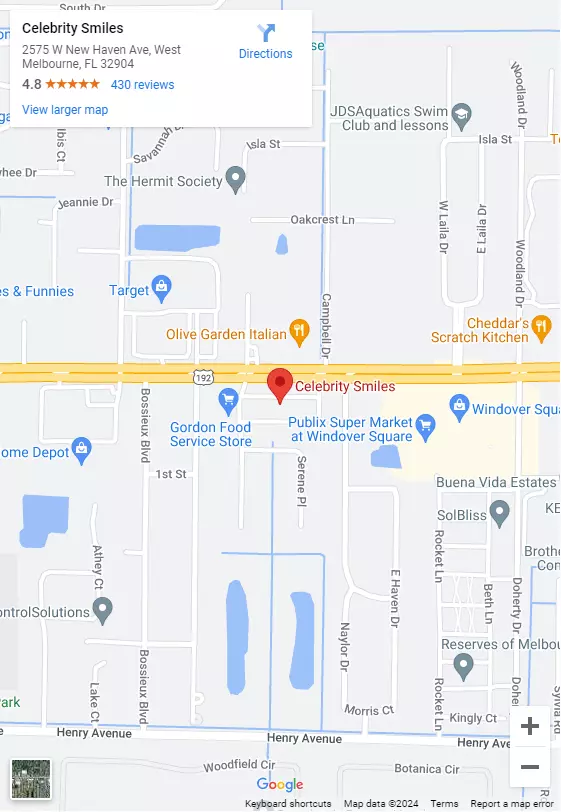
Celebrity Smiles Melbourne is a privately owned practice in West Melbourne, Florida, led by Dr. Anand Shah, DMD, who has more than 13 years of experience and has placed thousands of dental implants. The practice is trusted by patients across West Melbourne, Palm Bay, Viera, Suntree, Indialantic, Indian Harbour Beach, Satellite Beach, and nearby Brevard County communities, with more than 500 five-star Google reviews. A restorative dentistry consultation at Celebrity Smiles Melbourne begins with a thorough exam and, when appropriate, advanced diagnostic imaging. CBCT 3D imaging and digital intraoral scanning help your dentist explain your options with clarity and precision.
Restorative care is not one universal procedure. Understanding what each option does, and how your dentist evaluates the condition of your teeth, gums, and jaw, is the first step toward making an informed decision.
What Is Restorative Dentistry in Melbourne FL?
Restorative dentistry in Melbourne FL focuses on repairing or replacing teeth that have been damaged, weakened, or lost, restoring comfortable function and a strong, natural-looking smile. Cleveland Clinic defines dental restorations as treatments that restore damaged teeth and replace missing ones to support function, integrity, and aesthetics.
Depending on the condition of your teeth and gums, treatment may include several types of care:
- Fillings can repair a tooth affected by decay or a small area of damage.
- Crowns cover and strengthen a tooth that needs more support than a filling can provide.
- Bridges replace one or more missing teeth by filling the space between neighboring teeth.
- Dental implants use an artificial tooth root to support a replacement tooth, bridge, or denture.
- Dentures can replace multiple missing teeth or, in some cases, an entire arch of teeth.
These options are not interchangeable. A filling may be appropriate for limited damage, while a crown may be considered when a tooth has lost more structure. A bridge or implant may be discussed when a tooth is missing, and dentures may be part of the plan when several teeth need replacement. The right recommendation depends on factors such as your oral health, remaining tooth structure, bite, bone support, goals, and overall health.
Celebrity Smiles Melbourne provides comprehensive restorative care under one roof in West Melbourne, Florida. That can make it easier to move from evaluation to treatment without routinely coordinating care with multiple outside offices. A consultation begins with an examination and, when appropriate, diagnostic imaging. Dr. Anand Shah, DMD can explain what is happening, what choices may be available, and what each option involves. No online article can determine which restoration is suitable for you. A final recommendation requires an in-person exam and treatment planning based on your specific needs.
Dental Fillings: The First Step in Restoring Damaged Teeth
A dental filling is a straightforward way to restore a tooth affected by decay or limited damage. The dentist removes the compromised portion, cleans the space, and fills it with a restorative material that rebuilds the tooth’s shape and function, often in a single routine visit.
When might a filling be appropriate?
Fillings are commonly considered for cavities and limited tooth damage. They may also be an option when a small fracture or worn area has not weakened enough of the tooth to require a larger restoration. The right treatment depends on factors such as the location and extent of the damage, the remaining healthy tooth structure, and what an in-person examination shows.
Tooth-colored composite is a popular choice because it can be closely matched to the surrounding tooth. This can make the restoration less noticeable while allowing the dentist to restore the affected area conservatively. During your visit, the dental team can explain the available material options and whether a filling is suitable for your needs.
Why early attention matters
Decay does not always cause obvious symptoms at first. If it continues to progress, more of the tooth may be affected, which can make a filling no longer appropriate. A larger restoration, such as a crown, may then be needed to protect the tooth’s strength. If decay reaches the inner tissues, root canal treatment could also become part of the discussion. Early evaluation does not guarantee that a filling will be enough, but it gives your dentist an opportunity to assess the tooth before the problem becomes more extensive.
Dental Crowns: Restoring Strength and Function
A dental crown is a custom cover that fits over an existing tooth to protect and strengthen it. A crown is usually considered when a tooth is too weak or too damaged for a filling alone, such as after a large filling, a crack, or root canal treatment, helping restore natural shape and strength.
What the crown process may involve
The process typically starts with a thorough examination and digital intraoral scanning to capture precise details of your tooth and bite. The dentist prepares the tooth, takes the necessary records, and places a temporary restoration while your permanent crown is being made. Celebrity Smiles Melbourne offers same-day crown technology, which can allow a durable crown to be designed, milled, and placed without a separate return trip in many cases. After placement, your dentist checks the fit and bite and provides guidance for care and follow-up. Whether you are a candidate for same-day placement depends on your specific case and an in-person evaluation.
Dental Bridges: Filling the Gap Left by Missing Teeth
A dental bridge can replace one or more missing teeth by anchoring a prosthetic tooth to the neighboring natural teeth. It helps you chew comfortably and speak clearly by restoring the gap, while preventing remaining teeth from shifting. Bridges are a reliable restorative dentistry option for eligible patients. For more detail, read our guide to dental bridges in Melbourne FL.
How a dental bridge works
The teeth beside the gap are prepared to support the bridge, and impressions or digital scans are used to design a precise restoration. The bridge is then cemented or otherwise secured into place during a follow-up visit. A bridge is a fixed restoration, meaning it is not removed for cleaning the way a removable partial denture is. Your dentist can explain whether a traditional bridge, an implant-supported bridge, or another option is most appropriate for your situation after an exam.
Dental Implants: A Durable Replacement for Missing Teeth
A dental implant is an artificial tooth root placed into the jawbone to support a replacement tooth. Over time, the implant can integrate with the bone to provide a stable foundation for a crown, bridge, or denture. Implants are often considered when a single tooth, several teeth, or an entire arch need replacement.
Dr. Anand Shah, DMD, has placed thousands of dental implants and uses advanced implant planning with CBCT 3D imaging to evaluate bone and plan placement carefully. Modern implant care can be planned with digital intraoral scanning for greater precision and a more comfortable experience.
How a single-tooth implant works
A single-tooth implant uses a small post that is placed in the jawbone to support a replacement crown. The implant replaces the missing root, which helps preserve jawbone and provides a stable base for the visible crown. The complete process normally involves several phases, including evaluation, placement, a healing and integration period, and finally the attachment of the restoration. Many patients who want a natural-looking, long-term solution for a missing tooth find a dental implant to be a strong candidate, though suitability depends on an in-person exam. For more detail, see our guide to same-day and traditional dental implants in Melbourne FL.
Experience and evidence matter
Because implant placement is a surgical procedure, the skill and experience of your provider matter. Dr. Shah’s extensive implant experience, combined with advanced imaging and planning tools, supports careful treatment from initial consultation through final restoration. As with any procedure, no outcome can be guaranteed, and your dentist will review your individual health history, bone support, and goals before recommending a plan.
Dentures and Full-Arch Solutions for Multiple or All Missing Teeth
When several teeth or an entire arch are missing, dentures and full-arch implant solutions can restore comfortable chewing and a complete smile. Removable dentures replace missing teeth with prosthetic teeth on a supporting base, while implant-supported dentures use a few implants to secure the denture more firmly. To weigh the options, compare implant-supported dentures versus traditional dentures.
Celebrity Smiles Melbourne emphasizes full-arch and All-on-X style solutions for patients who qualify. For eligible patients, these approaches can replace all teeth in an arch on a small number of implants, restoring comfortable chewing and a complete, natural-looking smile. Because eligibility depends on bone, health, and personal goals, a comprehensive exam is always the first step.
How to Choose Restorative Dentistry in Melbourne FL for Your Smile
Choosing restorative dentistry in Melbourne FL should start with a complete exam rather than a guess based on costs or online descriptions. Your dentist evaluates the condition of each tooth, the health of your gums and jawbone, your bite, and your overall health before recommending a course of care. The decision combines clinical findings with your functional and cosmetic goals.
| Restoration | Best suited for | Typical structure | Common consideration |
|---|---|---|---|
| Dental filling | Small areas of decay or limited damage | Material placed directly in the tooth | Conservative, usually completed in one visit |
| Dental crown | Weakened or heavily restored teeth | Custom cover over the existing tooth | Protects strength; may be same-day in eligible cases |
| Dental bridge | One or more missing teeth | Prosthetic tooth anchored to neighboring teeth | Fixed restoration that is not removed for cleaning |
| Dental implant | Replacing a single tooth, several teeth, or an arch | Titanium post in the jawbone plus a restoration | Long-term option needing healing time |
| Dentures and full-arch | Multiple or all missing teeth | Removable or implant-supported prosthetic set | Restores a complete smile and chewing function |
This table is a general guide, not a treatment plan. Your dentist must confirm which option fits your specific teeth, gums, bone, and goals after a clinical examination.
Start with a comprehensive exam and imaging
A thorough evaluation includes a clinical examination and, when appropriate, diagnostic imaging. CBCT 3D imaging and digital intraoral scanning give your dentist a detailed view of the teeth, roots, bone, and bite. These tools support more precise treatment planning and clearer communication about your options.
Consider how many teeth are affected
The number and location of affected teeth can narrow the range of suitable options. A small area of decay may be treated with a filling, while a significantly weakened tooth may need a crown. A bridge may replace one or more missing teeth by using neighboring teeth for support. An implant uses a post in the jawbone to support a replacement tooth instead. When several or all teeth in an arch are missing, dentures, implant-supported dentures, or a full-arch solution may be discussed. These options are not interchangeable, so an examination is essential.
Weigh durability, cost, and visit preferences
Ask how each option is expected to function, what maintenance it requires, and how many visits it typically involves. Some restorations may be completed quickly, while others require multiple appointments and a healing period. Cost can also vary by material and complexity. Your dental team can outline realistic expectations and discuss financing or insurance considerations without implying that every patient qualifies for the same plan.
Discuss your cosmetic and functional goals
Restorative care should support comfortable function while also respecting your desired appearance. Tell your dentist if you want a natural-looking shade, a balanced shape, or a restoration that blends with the surrounding teeth. Your provider can discuss realistic possibilities, materials, and limitations after evaluating your smile. The best path is a shared decision based on clinical needs, appearance goals, and long-term care requirements, not a treatment choice made from an online description alone.
Request a restorative dentistry consultation at Celebrity Smiles Melbourne today
Frequently Asked Questions
What is restorative dentistry?
Restorative dentistry repairs damaged or decayed teeth and replaces missing teeth to help restore oral function, tooth integrity, and appearance. Depending on your needs, treatment may include fillings, crowns, bridges, implants, or dentures. Cleveland Clinic describes dental restorations as treatments for restoring damaged teeth and replacing missing ones.
How do I choose the right restorative treatment?
The right option depends on factors such as the condition of the tooth, the number of teeth involved, your gum and jawbone health, your goals, and your budget. A dentist must complete an in-person exam and may recommend digital scans or CBCT 3D imaging before creating a personalized plan. Avoid choosing a restoration based on cost or appearance alone.
Does insurance cover restorative dentistry?
Coverage varies by plan, procedure, diagnosis, annual maximum, waiting period, and eligibility requirements. Some policies may contribute toward medically necessary fillings, crowns, bridges, or dentures, while implants may have different benefits or exclusions. The practice can review available information, but your insurer makes the final coverage determination.
How long do dental restorations last?
There is no single lifespan for every restoration. Materials, bite forces, oral hygiene, diet, smoking, regular checkups, and the health of supporting teeth and gums all matter. Your dentist can explain expected maintenance and replacement considerations for the specific filling, crown, bridge, implant restoration, or denture recommended after your exam.
Request Your Restorative Dentistry Consultation in Melbourne FL
A personalized evaluation can help clarify which restorative options may support your oral health, comfort, and everyday function. Dr. Anand Shah, DMD and his team at Celebrity Smiles Melbourne can discuss your concerns and explain next steps after an in-person examination.
Request an appointment for restorative dentistry care at Celebrity Smiles Melbourne