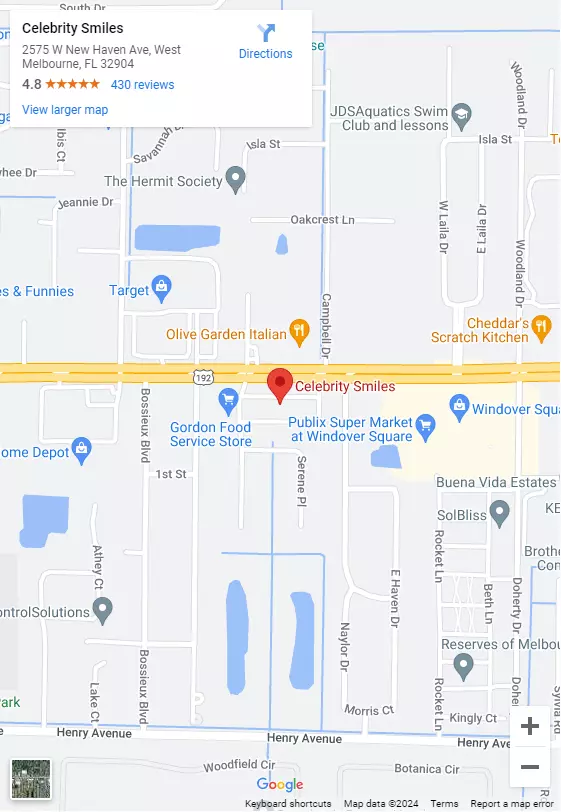
Tooth sensitivity after a crown can have several explanations, and the feeling alone does not show which one applies. A brief response to cold soon after treatment may settle, while pain that lingers, hurts when you bite, or appears after a comfortable period deserves a dental check. If you are looking for answers about tooth sensitivity after a crown in West Melbourne, FL, this guide explains what to notice, what a dentist may assess, and when to request an appointment. It cannot diagnose the cause; an exam is needed to make a recommendation for your tooth.
Request an Appointment at Celebrity Smiles Melbourne

What does sensitivity after a crown feel like?
People use “sensitivity” to describe different sensations. You might notice a quick zing when drinking something cold, tenderness when chewing, a dull ache, or discomfort that continues after the trigger is gone. Those details help your dentist decide what to examine, but they do not confirm a cause on their own.
A newly placed crown changes the tooth’s surface and how the teeth meet. The tooth and surrounding tissues may need time to settle after preparation and placement. At the same time, sensitivity can also relate to the tooth beneath the crown, the bite, the crown’s fit, nearby gum tissue, or another dental issue. Do not assume that every new sensation is expected, or that every sensitive crown needs replacement.
Make a note of when it began, which triggers bring it on, how long it lasts, and whether it is improving or worsening. For example, “a brief cold twinge that fades quickly” gives a different history than “sharp pain on each bite” or “an ache that wakes me.” This record is useful at an exam and can help you describe a change accurately.
Why might a crowned tooth be sensitive?
Recent treatment and temporary irritation
Crown treatment may involve reshaping the tooth and working near sensitive inner structures. Some tenderness can follow dental work, and the dentist who treated you can explain what recovery is reasonable for your individual tooth. The trend matters: symptoms that steadily ease are different from pain that becomes stronger, lasts longer, or interferes with eating. There is no single timeline that guarantees a particular sensation is harmless.
If you have a temporary crown, tell the office that it is temporary when you call. Temporary restorations and permanent crowns have different roles, and a dentist can advise you about care until the next visit. Avoid trying to cement, file, or adjust a crown yourself.
The bite may need to be checked
If the crowned tooth seems to hit first, or chewing produces a sharp, localized discomfort, the way your teeth come together may need assessment. A dentist can check your bite and the crown’s contact with neighboring teeth. Do not attempt to grind down a crown at home. A small adjustment, if appropriate, is a clinical decision after the dentist evaluates the restoration and tooth.
The tooth beneath the crown may need attention
A crown covers the visible portion of a tooth, but it does not make the underlying tooth immune to problems. The nerve may be irritated or inflamed, decay may affect an edge, or a crack or other issue may be present. These are possibilities, not conclusions that can be made from a symptom description. The type of pain, dental history, exam findings, and sometimes imaging help inform what to do next.
A crown is not a reason to ignore symptoms, but neither does sensitivity automatically mean that root canal treatment or crown replacement is required. Treatment depends on what the evaluation shows. If you want to learn more about how restorations are considered, see the practice’s information on porcelain crowns and discuss your own tooth with a dentist.
The gum or neighboring tooth may be involved
Tenderness around the crown can come from irritated gum tissue, food caught between teeth, or a neighboring tooth that is sensitive. These may feel as if the crowned tooth is the source even when the cause is elsewhere. Mention whether flossing, brushing, pressure on the gum, or biting on a particular side changes the sensation. Your dentist can examine the crown margins, gums, and nearby teeth rather than relying on the location you point to alone.
Which symptom details should you track?
Before you call or attend an appointment, keep the notes simple. You do not need to test the tooth repeatedly or deliberately provoke pain. Record what happens during ordinary activities and share the information with the dental team.
- Timing: When did the sensation start? Was it present immediately after the crown visit, or did it begin later?
- Trigger: Does it occur with cold, heat, sweet foods, chewing, clenching, or pressure near the gum?
- Duration: Does it stop quickly after the trigger, or does it continue? Avoid using a specific number of seconds to self-diagnose.
- Location: Can you identify one tooth, or does the discomfort seem to spread to the jaw or nearby teeth?
- Direction: Is the symptom improving, staying the same, or worsening?
- Other changes: Note swelling, a loose or damaged crown, an unpleasant taste, fever, or difficulty eating.
These observations help a clinician understand your concern. They do not replace an exam, and online descriptions cannot determine whether a tooth needs an adjustment, monitoring, or other care.
How may a dentist assess sensitivity after a crown?
The dentist will ask when the crown was placed and what you feel. If another office completed the work, bring any information you have about the date, the tooth, and prior treatment. You can also describe any temporary crown, recent dental work, or change in your bite. The dentist may examine the crown, tooth, gums, and nearby teeth, and check how your teeth meet.
Depending on your history and exam, the dentist may use appropriate tests or dental images to evaluate the tooth. Celebrity Smiles lists dental technology including CBCT 3D imaging and digital intraoral scanning. Whether a particular image or test is useful is determined by the treating dentist; advanced imaging is not automatically necessary for every sensitive crown.
After assessment, the dentist can explain the finding, possible next steps, and what to watch for. Sometimes the plan is to monitor a symptom or address a bite concern. If the exam points to a problem with the tooth or restoration, the dentist will discuss appropriate options. The plan is specific to the tooth and should not be assumed from another person’s experience.
Talk with Celebrity Smiles Melbourne About Crown Sensitivity
How do common patterns guide the conversation?
The table below is a discussion aid, not a diagnostic chart. The same symptom can have different causes, and more than one factor can be involved. Use it to organize what you have noticed, then ask a dentist what an examination suggests.
| What you notice | What to tell the dentist | Helpful next step |
|---|---|---|
| Brief cold sensitivity after recent crown work | When treatment occurred, what triggers it, and whether the sensation is easing | Contact the treating office for guidance, especially if it persists or worsens |
| Pain when biting or a feeling the tooth hits first | Which foods or movements bring it on and whether the bite feels different | Request an exam to assess the bite, crown, and tooth |
| Lingering ache or symptoms that are worsening | How long the discomfort continues and any change since it began | Arrange a timely dental evaluation rather than relying on home observation alone |
| Loose, chipped, or missing crown | When it changed and whether the tooth is painful or exposed | Contact a dentist promptly; avoid glue or home repairs |
| Swelling, fever, or rapidly increasing pain | When the symptoms began and whether they are progressing | Seek urgent dental advice; severe or rapidly worsening symptoms need prompt attention |
What can affect how quickly you should call?
There is no universal number of days that safely separates normal post-treatment sensitivity from a problem. The pattern and the whole picture matter. A mild sensation that is easing and does not interfere with daily activities is different from pain that is escalating, returning repeatedly, or making it hard to chew. If the crown was placed recently, the treating office can tell you what follow-up they expect for your case. If symptoms start well after placement, or return after a period without discomfort, share that change rather than treating it as routine recovery.
Consider how the symptom affects normal tasks. Are you avoiding one side when eating? Does the discomfort wake you or continue after you stop chewing? Has the crown become loose, chipped, or unusually high? Have swelling, fever, drainage, or a bad taste appeared? These observations do not diagnose the cause, but they help the dental team decide what urgency and examination are appropriate. When you call, describe the most concerning change first, then give the start date and triggers.
If you are unsure whether to wait for a scheduled visit, call the dental office and ask for guidance rather than repeatedly testing the tooth. Do not use someone else’s recovery timeline as a rule for your own crown. The dentist can consider the procedure, tooth history, and symptoms together and explain whether you should be seen sooner.
What can you do while waiting for an appointment?
Call the dental office that placed the crown, or another dentist if that office is unavailable. Explain whether the crown is temporary or permanent, when symptoms started, and whether there is pain on biting or swelling. The practice’s contact and appointment page is available for requesting a visit. Celebrity Smiles is a privately owned practice in West Melbourne led by Dr. Anand Shah, DMD, and offers comprehensive dental care. The office phone is (321) 914-0929.
Until you receive advice, avoid chewing hard foods on a tooth that hurts and choose foods that do not trigger discomfort. Keep brushing and cleaning gently, unless your dentist has given you different instructions. Do not place aspirin against the gum, use household adhesives, or change the crown yourself. Do not start or stop medication based only on this article; ask a clinician or pharmacist about medication questions and follow the product directions.
If the crown comes off, keep it in a clean container and call a dentist for instructions. Do not force it back into place. If the tooth is painful or the crown is damaged, describe that when requesting care. For a dental concern that may need urgent attention, review the practice’s emergency dental care information and contact the office promptly. Facial swelling that affects breathing or swallowing, or another medical emergency, warrants emergency medical services.
When should you request an exam?
Request an evaluation if sensitivity is persistent, getting worse, disrupting sleep or eating, or occurring with each bite. A crown that feels loose or high, a visible chip, swelling, or a change after a period without symptoms is also a good reason to contact a dentist. A sudden severe toothache should not be left to see whether it resolves on its own. A dentist can determine how soon you should be seen based on the symptoms you report.
Seek prompt advice when pain comes with swelling, fever, drainage, or a bad taste. These signs do not identify a specific condition, but they should not be ignored. For difficulty breathing or swallowing, seek emergency medical help. If you are unsure which level of care is appropriate, call a dental office and explain what is happening rather than trying to diagnose yourself.
For general information about oral health and dental care, the American Dental Association provides patient education. General information cannot replace advice from a dentist who has examined your tooth.
What should you ask at the appointment?
A clear conversation can make the next step easier to understand. Consider asking:
- What did you find when you examined the crown, tooth, and bite?
- Could the discomfort be coming from another tooth or the gum?
- Do I need any testing or imaging, and what question would it help answer?
- What are the reasonable options, and what are the benefits and limitations of each?
- What symptoms should prompt me to call again sooner?
- How should I care for the tooth while following the plan?
If cost, insurance, or payment options are part of your decision, ask the office to explain current details for the care being considered. Coverage and financing eligibility vary, and no estimate or general article can confirm what applies to an individual patient. Celebrity Smiles provides information about financial information and dental insurance; confirm current terms directly with the practice and your insurer.
Request an Appointment to Have Your Crown Sensitivity Evaluated
Frequently Asked Questions
Is sensitivity after a new crown always a problem?
No. Some sensitivity can occur after dental treatment, but no symptom pattern can confirm by itself that everything is fine. Contact the dentist if it is persistent, worsening, painful when biting, or concerning to you. The dentist can explain what is expected for your tooth after examining it.
Does sensitivity mean I need a root canal?
Not necessarily. Sensitivity has more than one possible explanation, and it does not establish that the nerve needs treatment. A dentist uses your history, examination, and any appropriate tests to discuss the cause and suitable options. Do not assume a particular treatment is required before an evaluation.
Can a dentist adjust a crown that hurts when I bite?
A dentist can assess whether the bite or crown contact is contributing to discomfort. An adjustment may or may not be appropriate depending on the findings. Do not try to file or reshape the crown yourself, because the cause needs to be identified first.
What if the crown was placed by another dentist?
You can contact the dentist who placed it, or arrange an evaluation with another dental office. Share when the crown was placed, what symptoms you have, and any records or treatment details you can obtain. The examining dentist will make recommendations based on the current condition of the tooth.
How do I know if I should call urgently?
Call a dental office promptly for worsening or severe pain, swelling, fever, a damaged or loose crown, or trouble eating. Explain the symptoms so the office can advise you about timing. Difficulty breathing or swallowing requires emergency medical help.
Plan a next step for crown sensitivity
Sensitivity after a crown may be temporary, or it may point to something that needs attention; only an in-person evaluation can sort through the possibilities for your tooth. Track what you feel, avoid adjusting the crown yourself, and contact a dentist when symptoms persist, worsen, or concern you. Celebrity Smiles Melbourne welcomes adults in West Melbourne and nearby communities to request an appointment for a personalized assessment.