Dentures can feel different when your mouth changes, even if they once fit comfortably. Looseness, rubbing, sore spots, or new difficulty speaking and chewing are worth discussing with a dental professional. These signs do not confirm that a reline is needed, but they do provide a reason to request an assessment rather than trying to reshape the denture yourself.
When do dentures need a reline west melbourne fl? A dentist may consider a reline when changes in the mouth have affected the fit of an otherwise usable denture. An examination is necessary to determine whether an adjustment, reline, repair, replacement, or another option is appropriate.
Request an Appointment at Celebrity Smiles Melbourne
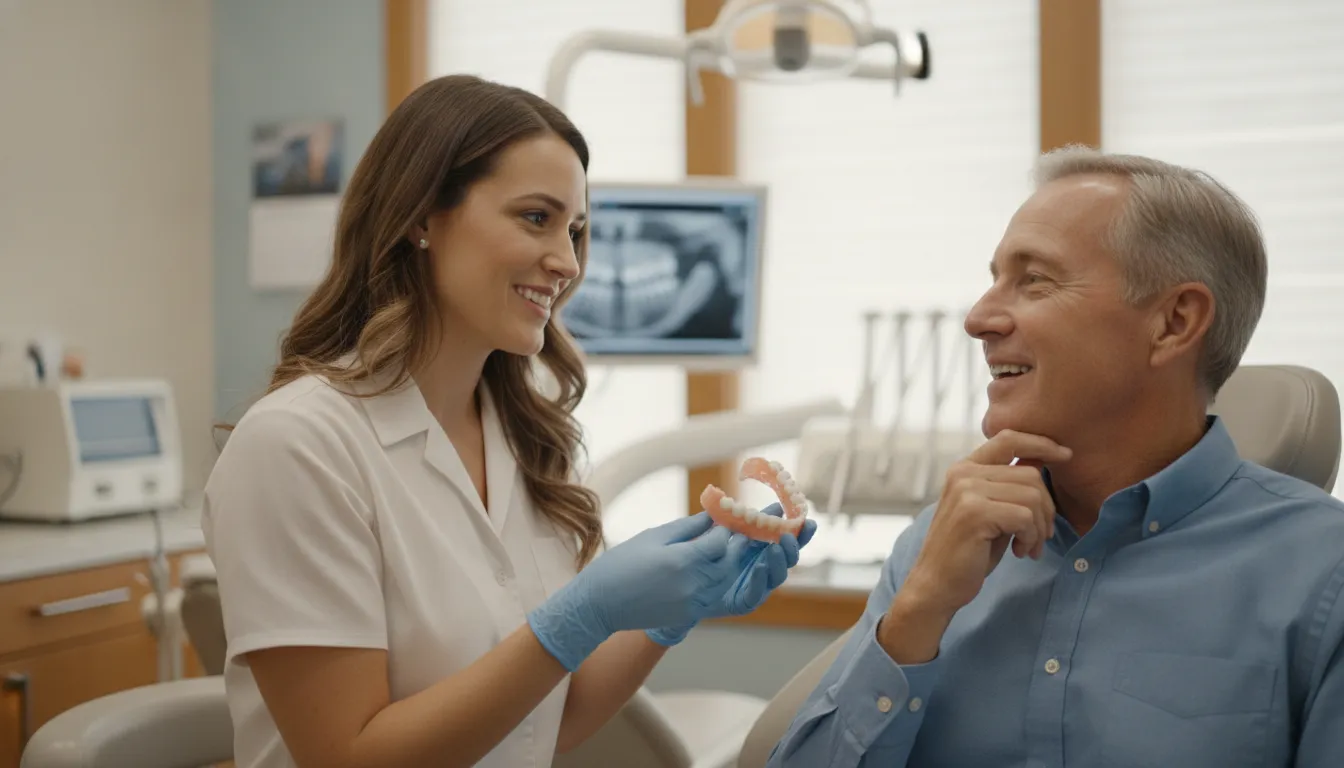
Understanding the difference between a reline and a simple adjustment can help you describe what you are experiencing and have a more useful conversation at your visit.
What Is a Denture Reline, and How Is It Different From an Adjustment?
A denture reline and a denture adjustment both relate to fit, but they are not the same process. A reline generally involves adapting the inside surface of the denture base to better correspond with the current shape of the gums and supporting tissues. An adjustment is a professional modification intended to improve how the existing denture contacts or rests against the mouth. The appropriate approach depends on what a dentist finds during an examination.
What does a denture reline do?
Full and partial dentures are removable appliances that replace missing teeth. Complete dentures cover an upper or lower jaw, while partial dentures replace one or several teeth. Because the mouth can change over time, the tissues supporting a denture may no longer relate to its original fit. That change can contribute to movement, discomfort, or irritation. A reline may be considered when the denture base no longer adapts well to the supporting tissues, but a consultation does not automatically mean a reline is needed.
Relining is different from using adhesive or making a quick, do-it-yourself modification. The American Dental Association notes that adhesive is not a remedy for an ill-fitting denture, which may require professional relining or replacement. MedlinePlus also advises patients to let a dentist handle denture adjustments. Over-the-counter reliner and repair products are available, but using them without professional guidance may make it harder to assess the denture and the tissues beneath it.
How is an adjustment different from a repair or replacement?
An adjustment changes a denture to address a particular fit or contact concern while preserving the existing appliance. A repair, by contrast, addresses physical damage such as a crack or break. Replacement means creating a new denture when the current appliance, the oral tissues, or both make that the more appropriate option. These categories can overlap with a person’s concerns, so looseness or sore areas alone do not identify the correct treatment.
If a denture moves, causes irritation, or no longer fits correctly, schedule an evaluation rather than trying to diagnose the cause at home. A dental professional can assess the appliance, the supporting tissues, and the bite before discussing whether an adjustment, reline, repair, replacement, or another plan is appropriate.
MedlinePlus explains when an ill-fitting denture should be assessed by a dentist.
When Do Dentures Need a Reline in West Melbourne, FL?
A denture that feels different from when it was first fitted may be signaling a change worth discussing with a dental professional. In West Melbourne, you may want to request an assessment if your denture feels loose, causes recurring sore spots, or makes chewing and speaking less comfortable. These signs do not prove that a reline is needed. An examination is necessary to determine whether an adjustment, reline, repair, replacement, or another plan is appropriate.
Looseness and movement
If a denture shifts while you eat, speak, laugh, or open your mouth, note when the movement occurs and whether it is becoming more frequent. Ill-fitting dentures can move and cause discomfort or irritation, including sore spots, according to MedlinePlus. Adhesive may sometimes help with movement. But the American Dental Association explains that adhesive is not a remedy for an ill-fitting denture that may require professional relining or replacement.
A loose denture can have more than one possible explanation. The shape of the supporting tissues can change over time, the denture may be worn or damaged, or the bite may need assessment. Avoid trying to reshape or adjust the denture yourself. MedlinePlus recommends having a dentist handle denture adjustments.
Sore spots, irritation, or burning
Persistent tenderness, rubbing, irritation, or burning beneath the denture deserves attention, particularly if the same area repeatedly becomes uncomfortable. Rutgers School of Dental Medicine notes that changes in oral bones and gums can affect denture fit. Those changes may be accompanied by sores, pain, or burning in certain areas. Chronic irritation is a reason to seek professional evaluation, not a reason to assume that a reline will solve the problem.
Bring the denture to the appointment and describe where the discomfort occurs, how long it lasts, and whether removing the denture changes the sensation. The dental team can examine the appliance and the tissues supporting it before discussing next steps.
Changes in chewing or speaking
Difficulty chewing foods that were previously manageable, clicking during speech, or a new feeling that the denture is not aligned properly can also justify an assessment. Rutgers notes that dentures may begin to feel loose, tight, or misaligned as the mouth changes over time. Those changes may point to a fit concern, but they can also involve the denture’s condition, the bite, the supporting tissues, or other oral health concerns.
Do not wait for a symptom to become severe before asking questions. A West Melbourne dental examination gives you an opportunity to explain what has changed and learn which option best fits your mouth, comfort, and goals.
What Should a Dentist Check Before Recommending a Reline?
A reline is not selected from looseness alone. Before recommending one, a dentist may examine how the denture behaves during everyday use, how the tissues look and feel, and whether the appliance can still support comfortable function. The goal is to distinguish a fit issue from a problem that may call for an adjustment, repair, replacement, or another treatment approach.
- Fit and movement. The dentist may assess whether the denture shifts while you speak, chew, open your mouth, or close your bite. Dentures that move can cause discomfort or irritation, including sore spots. MedlinePlus advises having a dental professional assess a denture that does not fit correctly because an adjustment or reline may be appropriate. Learn more about denture fit and relining.
- Sore or irritated tissues. The gums and other tissues beneath the denture base may be checked for tenderness, redness, sores, burning, or ongoing irritation. Rutgers notes that changes in oral bones and gums can affect denture fit and may be accompanied by sores, pain, or burning in certain areas. Persistent irritation deserves professional evaluation rather than repeated self-adjustment.
- The denture’s condition. A dentist may look for cracks, worn areas, damage, distortion, or other changes that affect the appliance. A reline changes how the base contacts the tissues, but it may not address every structural concern. If the denture is significantly damaged or no longer appropriate for the mouth, repair or replacement may be considered instead.
- Bite and daily function. The evaluation may include how the upper and lower dentures meet, whether the bite feels aligned, and whether chewing or speaking has changed. Rutgers explains that dentures may begin to feel loose, tight, or improperly aligned as the mouth changes over time. These observations help the dentist determine whether a reline could address the fit or whether a broader adjustment is needed.
- Remaining teeth and mouth changes. For a partial denture, the dentist may review the natural teeth that help support it, along with the gums and surrounding tissues. Ill-fitting dentures can sometimes signal another oral concern, so the assessment should consider the condition of the whole mouth, not only the appliance.
- Which option fits the findings. After the examination, the dentist can explain whether an adjustment, reline, repair, replacement, or another option makes sense. The ADA cautions that adhesive is not a remedy for ill-fitting dentures, which may need professional relining or replacement. Do not attempt to reshape the denture yourself. A clinical examination is needed before choosing the next step.
This type of evaluation can help answer questions about denture comfort without assuming that one symptom proves a reline is needed.
How Can Denture Care Help Protect Fit and Comfort?
Consistent care can help you notice changes early and keep your dentures clean and protected between dental visits. It cannot replace an examination when a denture feels loose, causes irritation, or no longer seems to function normally. A dentist can assess whether the concern relates to fit, the condition of the denture, oral tissues, or another issue.
Daily cleaning supports oral hygiene
Dentures can collect plaque, stains, and calculus. The American College of Prosthodontists recommends daily soaking and brushing with an effective, nonabrasive denture cleanser. Cleveland Clinic also advises brushing and cleaning dentures twice a day. Follow the product directions and ask a dental professional which cleanser is appropriate for your appliance. Avoid abrasive household products that may scratch the surface.
Care steps to remember
| Care practice | What to do | Why it matters |
|---|---|---|
| Clean daily | Brush and soak with a nonabrasive denture cleanser as directed. | Helps reduce accumulated biofilm and keep the appliance clean. ADA guidance supports daily care. |
| Remove overnight | Take dentures out while sleeping unless your dentist gives different instructions. | MedlinePlus advises overnight removal to help prevent sores, infections, and inflammation. |
| Store safely | Keep dentures in water or denture cleanser when they are not being worn. | Moisture can help the denture retain its shape and avoid drying out. |
| Avoid hot water | Use cool or lukewarm water, not hot or boiling water. | Hot or boiling water can warp dentures. |
| Check comfort and fit | Note new movement, sore areas, burning, or difficulty chewing and arrange an assessment. | Mouth changes can affect fit. An exam helps determine whether adjustment, reline, repair, or replacement is appropriate. |
Do not try to reshape or adjust dentures yourself. Adhesive is not a remedy for an ill-fitting denture, according to the ADA, and ongoing irritation deserves professional evaluation. If you are wondering when dentures need a reline in West Melbourne, FL, bring the denture to an in-person appointment so the dental team can evaluate your specific fit and comfort concerns.
Talk with the Celebrity Smiles Melbourne dental team about your denture fit
Reline, Repair, Replacement, or Implant-Supported Dentures?
A change in comfort or stability does not automatically point to one treatment. The mouth can change over time, and dentures may eventually need an adjustment or replacement. If a denture moves, creates irritation, or no longer seems to fit correctly, a dental professional should evaluate the fit rather than relying on symptoms alone. MedlinePlus notes that a dentist may determine whether adjustment or relining is appropriate, while the American Dental Association cautions that adhesive is not a remedy for an ill-fitting denture.
A reline may be considered when the denture itself remains suitable but the fit against the changing tissues needs professional attention. An adjustment may address a specific area of pressure or an issue with how the denture contacts the mouth. These terms are not interchangeable, and the right approach depends on the condition of the appliance, the tissues beneath it, and the overall bite. Celebrity Smiles Melbourne does not represent every denture concern as a reline service. The first step is an in-person assessment.
A repair may be discussed when the denture has a broken or damaged component and the rest of the appliance may still be appropriate. A replacement may be more suitable when the denture is worn, damaged beyond a practical repair, or no longer supports healthy, comfortable function. Chronic irritation beneath a denture base also warrants professional evaluation. Do not attempt to reshape or repair a denture at home, and do not use adhesive to mask persistent discomfort.
For some patients, the conversation may include an alternative to a traditional removable denture. Implant-supported dentures are anchored to implant posts in the jawbone and are a separate treatment option, not a type of reline. Candidacy depends on an examination, health history, imaging, bone and gum considerations, and the patient’s goals. You can learn more about implant-supported and traditional dentures or review the practice’s restorative dentistry services in Melbourne.
Celebrity Smiles Melbourne also provides complete and partial dentures, including metal-free flexible options. Dr. Anand Shah, DMD and the dental team can discuss whether assessment of the current appliance, a new denture, or an implant-supported approach best fits your needs. Final recommendations require an in-person examination and individualized treatment plan.
Request an appointment to discuss your denture options at Celebrity Smiles Melbourne
Frequently Asked Questions
Is it worth getting dentures relined?
A reline may be worth discussing when your denture has become loose, causes sore spots, or makes chewing and speaking less comfortable. The right choice depends on an examination of the denture, your oral tissues, your bite, and the condition of any remaining teeth. A dentist may recommend an adjustment, reline, repair, replacement, or another option rather than assuming a reline is appropriate. MedlinePlus explains that dentures that do not fit correctly should be assessed by a dental professional.
What are the disadvantages of relining dentures?
A reline may not address every reason a denture feels uncomfortable. An older or damaged denture may need repair or replacement, and ongoing irritation may require evaluation of the tissues underneath. A reline also cannot replace an individualized fit assessment. Avoid attempting to adjust the denture yourself, since MedlinePlus advises having a dentist handle denture adjustments.
How long does it take a dentist to reline dentures?
The timing depends on the type of reline, the condition of the denture, and what your examination shows. Your dentist can explain the expected appointments and whether a laboratory step is needed after evaluating the fit. Do not rely on a fixed timeline from another patient, because the recommended plan may be different for you.
Can denture adhesive fix a loose denture?
Adhesive may help with movement in some situations, but it is not a substitute for correcting an ill-fitting denture. The ADA notes that ill-fitting dentures may need professional relining or replacement, particularly when they contribute to oral sores. Schedule an assessment if looseness, pain, burning, or recurring irritation continues.
Ready to Discuss Your Denture Fit?
If your dentures feel less comfortable, seem loose, or make everyday activities harder, an appointment can help clarify whether an adjustment, reline, repair, replacement, or another option should be considered. The right next step depends on an in-person evaluation of your dentures, bite, and oral tissues.