Choosing an orthodontic treatment is easier when you understand what happens before the first aligner is made. Clear trays can offer a discreet way to address certain alignment concerns, but suitability depends on your teeth, bite, oral health, and treatment goals.
For adults considering clear aligners melbourne fl, treatment typically begins with an in-person examination and personalized digital planning. Removable aligners are then designed to guide selected teeth through a series of gradual movements, with the timeline and expected result varying by case. Celebrity Smiles uses digital intraoral scanning to support treatment planning, but only a professional evaluation can determine whether aligners are appropriate for you.
Understanding how the trays create controlled movement, how consistently they need to be worn. And how they compare with traditional braces can help you prepare for a more informed conversation with your dentist. The process starts with the design of a treatment plan tailored to your current smile and clinical needs.
What Are Clear Aligners and How Do They Work?
Clear aligners are transparent, removable orthodontic trays designed to guide teeth toward improved alignment. They may be considered for concerns such as crowding, spacing, certain bite problems, or teeth that have shifted after previous orthodontic treatment. Unlike fixed braces, the trays can be taken out, but they still need consistent daily wear to keep treatment progressing as planned.
A series of custom trays, not one appliance
Clear aligner treatment uses a planned series of custom trays. Each tray is shaped slightly differently from the one before it, creating gentle, controlled pressure on selected teeth. That pressure encourages gradual movement over time. Patients generally transition to a new set about every two weeks, although the exact schedule can vary according to the treatment plan and clinical instructions. This staged approach is described in the orthodontic guidance from Rowley Family Dentistry: clear aligners are changed in sequence to gradually move teeth.
Because tooth movement is biological and individual, the number of trays and the overall duration cannot be determined accurately without an evaluation. An in-person examination helps the dental team assess your bite, gum health, existing restorations, and the movements that may be appropriate for your situation.
How digital scanning supports planning
At Celebrity Smiles Melbourne, digital intraoral scanning is used to support precision treatment planning. Instead of relying only on traditional physical impressions, the scanner captures detailed digital information about the teeth and oral structures. The resulting records can help the clinical team evaluate alignment and plan the sequence of trays more efficiently. Learn more about the practice’s dental services and technology.
Daily wear and removal
For clear aligners to work as intended, patients typically wear them for approximately 20 to 22 hours each day. Remove the trays for meals, snacks, and brushing and flossing, then clean your teeth before putting them back in. Following the prescribed wear schedule matters because extended periods without the trays can affect how well they fit and may interfere with the planned sequence.
Clear aligners may be a practical option for some adults, but they are not suitable for every orthodontic concern. Final recommendations require an in-person exam and a personalized treatment plan.
Clear Aligners vs. Traditional Braces: Key Differences
Both clear aligners and traditional braces can effectively move teeth into healthier, more attractive positions. The better fit depends on the complexity of your case, your daily habits, and the treatment approach recommended after an examination. Comparative academic research notes that clear aligners have strengths in aesthetics and hygiene, while fixed appliances can offer greater precision for complex cases (academic review of clear aligners and fixed appliances).
| Factor | Clear aligners | Traditional braces |
|---|---|---|
| Appearance | Transparent trays are discreet and often difficult to notice during normal conversation. | Metal brackets and wires are visible throughout treatment. |
| Oral hygiene | Remove the trays to brush and floss normally, then clean the aligners before replacing them. | Brackets and wires remain in place, so brushing and flossing require extra care around the hardware. |
| Comfort | Smooth plastic may feel more comfortable for some patients, although pressure is expected as trays guide tooth movement. | Brackets and wires can irritate the cheeks or lips, particularly after adjustments. |
| Eating | Remove the trays for meals, so there are generally fewer food restrictions. | Avoid hard, sticky, or chewy foods that can damage brackets or wires. |
| Typical duration | Many treatment plans take about 12 to 18 months, depending on the movement required. | Many treatment plans also fall near 12 to 18 months, although individual cases vary. |
| Visits | Follow-up visits may be less frequent because trays are provided in a planned series. | Regular visits are needed to check progress and adjust wires or replace components. |
| Cost | Cost varies with treatment complexity, the number of trays, and any refinement or retention needs. | Cost varies with treatment complexity, duration, adjustments, and retention needs. |
Which option is more effective?
Neither option is automatically right for every patient. Fixed appliances may be preferable when precise control is needed for complex tooth movements. Clear aligners can be a strong option when discreet treatment and easier access for brushing are priorities. The research supports viewing both as effective, with the choice guided by case complexity rather than appearance alone (clinical comparison of orthodontic appliances).
If you are researching clear aligners vs braces, an in-person evaluation can help determine which approach suits your teeth, bite, goals, and routine. Final recommendations require a personalized treatment plan.
The Clear Aligner Treatment Timeline: What to Expect
Clear aligner treatment follows a planned sequence, but the timing is individualized. Many patients complete treatment in approximately 12 to 18 months, while mild cases may move faster and more complex cases may take longer. Published local treatment guidance reports a broader range of about 6 to 18 months, depending on each patient’s needs. Your final recommendation requires an in-person examination and a personalized treatment plan.
- Initial consultation and digital scan.
The process begins with an evaluation of your teeth, bite, and overall oral health. At Celebrity Smiles, digital intraoral scanning can create detailed records without relying on traditional impression material. This appointment is also an opportunity to discuss your goals, concerns, and whether clear aligners are an appropriate option for your smile.
- Custom 3D treatment planning.
Your records are used to develop a personalized 3D plan that maps the intended movement of your teeth over time. The plan helps determine the number and sequence of trays, although the final approach depends on the findings from your examination and clinical judgment.
- Receiving your aligner series.
Once your plan is finalized, you receive a series of clear trays. Each tray is shaped to apply controlled pressure to specific areas, gradually guiding teeth toward their planned positions.
- Wearing each tray for 20 to 22 hours a day.
Most treatment guidance recommends wearing aligners for approximately 20 to 22 hours daily, removing them for meals, drinking anything other than water, and oral hygiene. A new tray is commonly introduced every one to two weeks. Consistent wear is an important part of keeping treatment on schedule.
- Progress checks every 6 to 8 weeks.
Regular appointments allow the dental team to review your progress, check fit and oral health, and provide the next trays or updated instructions. These visits help keep the plan responsive to how your teeth are moving.
- Refinement, if needed.
Some patients need additional trays to make further adjustments or address changes during treatment. A refinement phase is not a guarantee or a sign that treatment has failed. It is one possible part of an individualized process.
- Retention after active treatment.
After the active series is complete, retainers help support the new tooth positions. Your provider will explain the recommended retainer schedule and how to care for them. Treatment timelines and retention needs vary, so follow-up recommendations should be based on your exam and progress.
Local guidance commonly describes aligners as changing every one to two weeks and treatment as lasting 12 to 18 months, but these figures are estimates, not promises. The best way to understand your expected timeline is to schedule an evaluation for clear aligners in Melbourne, FL.
What Dental Issues Can Clear Aligners Correct?
Clear aligners can address several common alignment concerns by applying controlled pressure through a planned series of removable trays. They are often considered for adults who want to improve the position of their teeth while keeping their orthodontic treatment discreet. Clinical scope commonly includes dental misalignment, crowding, and bite problems, although the appropriate approach depends on the individual case. Clear aligners are designed to move teeth gradually, rather than make an immediate change.
Crowded teeth
When teeth overlap or do not have enough room to sit evenly, aligners may help create a more orderly arrangement over time. Crowding can range from minor overlap to a more involved concern requiring additional orthodontic planning. An exam is important to assess available space, tooth position, and the health of the supporting gums and bone.
Gaps and rotated teeth
Aligners may also be used to close spaces between teeth, including gaps known as diastema. They can help turn teeth that have rotated out of position, provided the movement is suitable for the tooth and surrounding structures. These changes can be part of a broader plan for a more balanced smile. Patients exploring those options can also review our cosmetic dentistry services.
Minor bite concerns and orthodontic relapse
Some mild to moderate bite issues, such as an overbite, underbite, or crossbite, may be managed with clear aligners. They may also help address teeth that have shifted after previous orthodontic treatment, often called relapse. The extent of movement needed, the relationship between the upper and lower teeth, and whether retainers or other appliances are needed all affect the treatment plan.
Clear aligners are not the best fit for every concern. More complex tooth movements, significant bite discrepancies, or cases needing highly controlled movement may benefit from traditional braces or a combination approach. Final suitability cannot be determined from symptoms or photographs alone. A professional, in-person exam is needed to evaluate your teeth and discuss whether clear aligners, braces, or another option is appropriate for your goals.
Why Choose Celebrity Smiles Melbourne FL for Clear Aligners
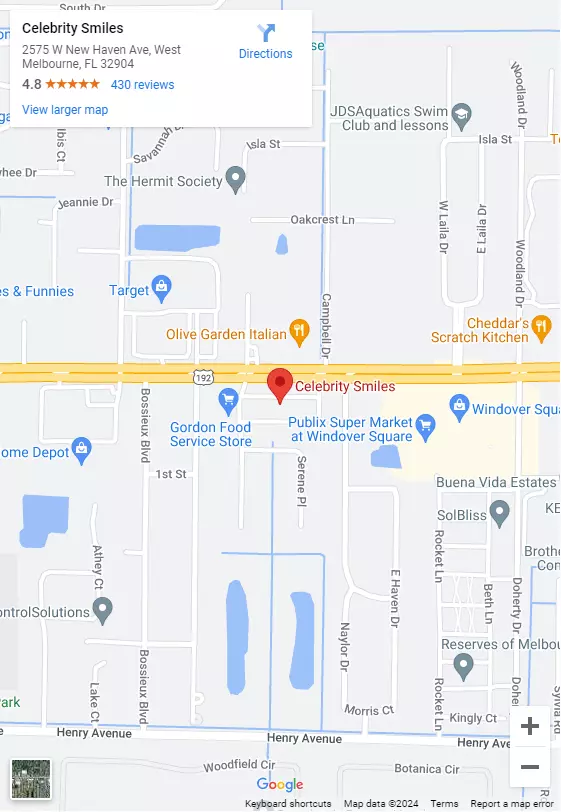
Choosing clear aligners is not only about selecting a type of tray. It is also about finding a dental team that understands your overall oral health, listens to your goals, and can explain what treatment may realistically involve. Celebrity Smiles Melbourne offers that care from a privately owned practice in West Melbourne, rather than a corporate chain built around a one-size-fits-all process.
Experienced, relationship-based care
Dr. Anand Shah, DMD leads the practice and brings more than 13 years of dental experience to treatment planning. He has placed thousands of dental implants, and Celebrity Smiles Melbourne has earned more than 500 five-star Google reviews. Those credentials do not replace an individual evaluation, but they can give patients a useful starting point when comparing local providers.
The practice serves patients from West Melbourne, Melbourne, Palm Bay, Viera, Suntree, Indialantic, Indian Harbour Beach, Satellite Beach, and throughout Brevard County. Its privately owned structure supports an ongoing relationship with the same local team, rather than sending patients through a remote or highly standardized aligner process.
Digital planning that supports a clearer starting point
Celebrity Smiles Melbourne uses digital intraoral scanning technology to support orthodontic treatment planning. Instead of relying only on traditional impressions. A digital scan can help the dental team evaluate the current position of the teeth and discuss possible next steps more clearly. The scan is part of the planning process, not a promise that every patient will be a candidate or that a particular result is guaranteed. Learn more about the practice’s dental services.
Clear aligner care also needs to fit within your broader oral health needs. A local practice offering comprehensive dental care can assess concerns that may affect timing or suitability and coordinate appropriate care when needed. This is especially helpful for adults who want to improve their smile while maintaining regular preventive and restorative treatment.
A personalized recommendation comes first
Final recommendations require an in-person exam and personalized treatment plan. During that visit, the team can review your goals, examine your teeth and bite, discuss available options, and explain what the proposed process may involve. If you are considering clear aligners in Melbourne, FL, Schedule an appointment to begin that conversation. The right next step depends on your clinical needs, preferences, and examination findings.
Frequently Asked Questions
Are clear aligners as effective as traditional braces?
Both options can move teeth effectively, but the better choice depends on your dental needs. Clear aligners may suit many mild-to-moderate alignment concerns, while fixed braces can provide greater precision for complex cases. An in-person examination helps determine which approach is appropriate for your treatment plan. Comparative research describes different strengths for each appliance.
How long does clear aligner treatment typically take?
Treatment time varies with the amount and type of tooth movement required. A commonly reported range is about 6 to 18 months, but your timeline may be shorter or longer. Wearing the trays as directed and attending planned reviews can help keep treatment progressing, although no timeline can be guaranteed before an examination.
What is the process for getting clear aligners?
The process generally begins with an examination, followed by digital records such as an intraoral scan. Your dentist uses those records to develop a personalized treatment plan, then provides a series of removable trays that are changed periodically. At follow-up visits, your progress is reviewed and refinements or retainers may be recommended when clinically appropriate.
Can I eat with my clear aligners in?
Remove your aligners before eating or drinking anything besides water. After eating, clean your teeth or rinse thoroughly before putting the trays back in. This routine helps reduce the chance of staining, trapped food, and avoidable damage to the aligners.
How much do clear aligners cost in Melbourne, FL?
The cost depends on the complexity of your alignment concerns, the expected treatment length, any refinements, and your personalized plan. Insurance benefits and payment options also vary by patient and policy, so they should be confirmed directly rather than assumed. Celebrity Smiles can discuss treatment and available financial details after an in-person examination.
Schedule Your Clear Aligner Consultation
Clear aligners may be a comfortable fit for some patients. But an in-person exam is the best way to discuss your goals and determine whether this approach suits your smile. Request an appointment with Celebrity Smiles Melbourne to review your options and next steps. Schedule an appointment online.