
Getting used to a new denture is a process, not a test you have to pass immediately. During the first several days, you may notice changes in pressure, speaking, saliva, or how comfortably you chew. Your experience depends on the type of denture, your oral anatomy, and the instructions from your treating dentist.
Request an appointment at Celebrity Smiles Melbourne or call (321) 914-0929.
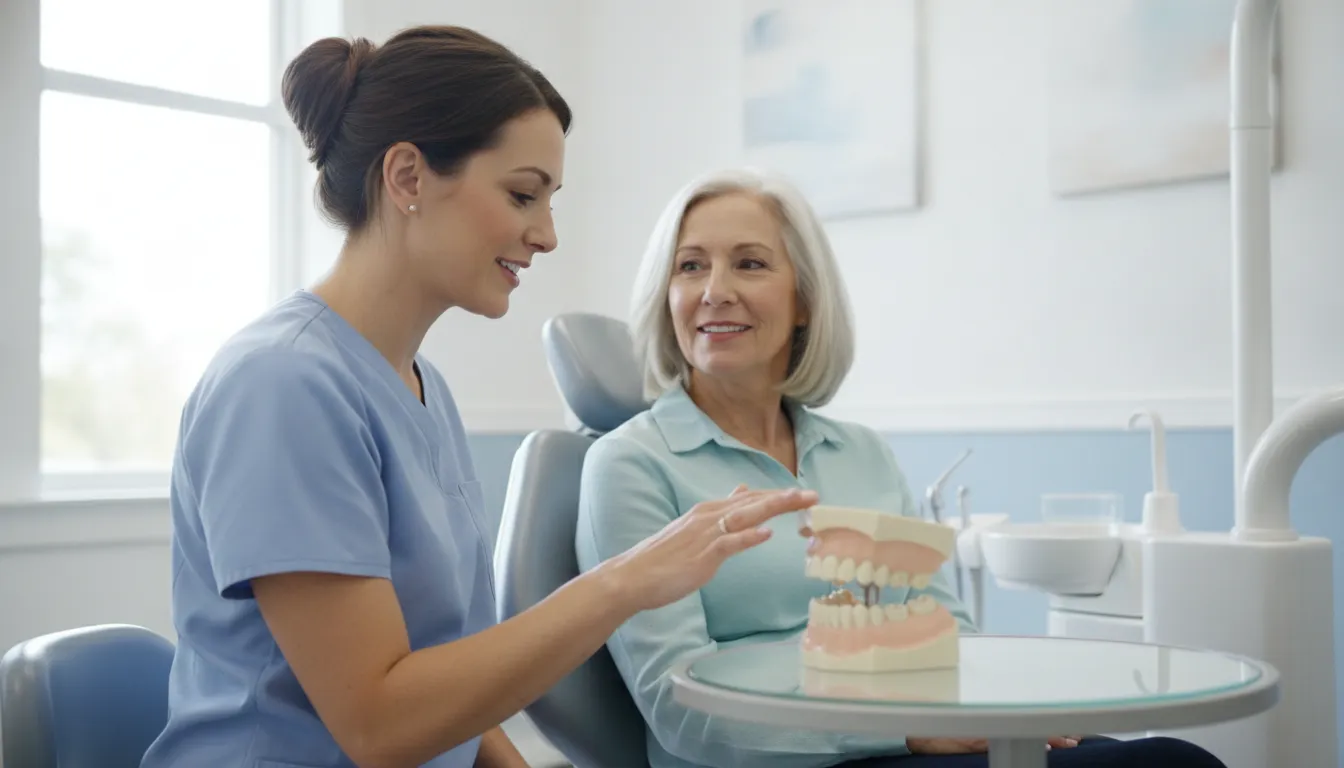
The first week with new dentures west melbourne fl may include an adjustment period with gradual changes in comfort, eating, and speech. Follow your dentist’s care instructions, and arrange an in-person evaluation for persistent pain, sores, looseness, or difficulty wearing the denture.
Knowing what can be expected, what deserves attention, and which habits support daily care can make the transition more manageable. Start by taking each day as it comes and noting any concerns to discuss at your next appointment.
What to Expect in Your First Week With New Dentures in West Melbourne, FL
The first week can feel like a period of learning rather than a pass-or-fail test. Your denture type, oral anatomy, and the way your mouth responds all influence comfort, speech, chewing, and stability. Some people notice pressure or mild irritation as they adjust, while others need an early professional adjustment. There is no single timetable that applies to everyone.
Early discomfort should not be ignored if it persists or interferes with eating, speaking, or wearing the denture. A dentist can assess the fit in person and determine whether a small adjustment or a different plan is appropriate. Research on denture follow-up has also found that lower dentures may require more adjustments than upper dentures. So a need for review does not automatically mean the treatment has failed.
A practical first-week checklist
- Follow your dentist’s instructions. Wear and remove the denture as directed, and ask what to do overnight.
- Start with manageable foods. Choose softer foods, cut them into small pieces, and chew slowly on both sides if that feels comfortable.
- Notice pressure points. Keep track of rubbing, sores, looseness, or areas that make chewing difficult rather than trying to correct the denture yourself.
- Clean as instructed. Clean the removable denture and your mouth using the products and technique recommended for your denture materials.
- Plan follow-up when needed. Contact the practice if irritation continues, the denture repeatedly slips, or you cannot comfortably wear it.
Do not file, sand, bend, or otherwise self-adjust a new denture. Changes that seem minor can affect its fit and make an accurate professional assessment harder. If persistent soreness develops, an in-person evaluation is the safest next step. You can also review what a professional denture fit assessment may involve before your appointment.
Why Can New Dentures Feel Uncomfortable at First?
Some tenderness, pressure, or awareness of a new denture can occur while your mouth adjusts to a different appliance. The denture may feel bulky, move slightly during speaking or chewing, or place pressure on areas that have not previously experienced contact. Your comfort can also depend on whether the denture is complete or partial, the design of the appliance, and your individual oral anatomy.
Movement can make a small pressure point more noticeable. For example, an edge or flange, the part of the denture that extends into the surrounding gum area, may press against soft tissue when you talk or eat. Research on denture placement has reported that early mucosal injuries may occur in areas such as the vestibule, the natural fold where the inner cheek or lip meets the gum. This is one reason a professional fit review matters, rather than assuming that ongoing soreness is simply something to tolerate. Read the denture adjustment study.
When pressure may signal a fit concern
A new denture does not need to feel perfect immediately, but persistent pain, a sore spot, rubbing, looseness, or difficulty wearing the appliance deserves attention. A dental professional can examine the tissues, assess how the denture rests and moves, and determine whether an adjustment or another step may be appropriate. Do not file, sand, bend, or otherwise alter the denture yourself. An at-home change can affect the fit and make the source of the problem harder to evaluate.
If you are using denture adhesive and still cannot keep the appliance comfortably in place, contact your dentist instead of repeatedly adding more adhesive or treating the symptom as a solution. Recommendations for fit, adjustments, and denture care require an in-person exam. For readers in West Melbourne, Florida, a professional denture fit assessment can help clarify whether the concern relates to fit or needs a different evaluation.
How Can You Make Eating, Speaking, and Cleaning Easier?
The first week with new dentures west melbourne fl patients often brings practical questions about meals, speech, cleaning, and storage. Your experience can vary, so follow the wearing schedule and care instructions from your treating dentist rather than trying to follow a fixed timeline. The steps below are general education, not a diagnosis or a substitute for an in-person evaluation.
- Start with the foods your dentist recommends. During the early adjustment period, many patients find it easier to begin with softer foods. Cut food into small pieces, and chew slowly on both sides of the mouth. Avoid foods that are hard, sticky, or difficult to control until your dentist advises otherwise. A review of denture-eating advice supports these commonly suggested strategies, while also noting that advice should be individualized: review the evidence on eating with dentures.
- Practice speaking in short, relaxed sessions. Read aloud or have a conversation at a comfortable pace if your dentist has advised you to wear the denture while practicing. Some speech changes may occur while you learn the new appliance. If speaking remains difficult, the denture feels loose, or you cannot wear it as directed, contact the treating dentist instead of attempting to reshape it.
- Clean the denture and your mouth as instructed. Removable dentures need regular care, and cleaning methods should match the denture materials. Ask your dentist which brush, cleanser, and soaking instructions are appropriate for your appliance. The clinical review on denture hygiene explains that both mechanical and chemical methods may be used and should be tailored to the wearer. You can also review neutral guidance from MedlinePlus denture care instructions.
- Follow the recommended overnight routine. Unless your treating dentist gives different instructions, ask whether the denture should be removed overnight and how it should be stored. Keep it in the recommended solution or water, away from children and pets, and do not use hot water unless specifically told to do so. Heat and unsuitable products can affect some denture materials.
- Protect the fit by avoiding self-adjustments. Do not file, sand, bend, or add unapproved materials to the denture. Adhesive use, if relevant to your treatment plan, should follow your dentist’s directions. Persistent soreness, sores, significant looseness, or trouble eating and speaking warrants professional evaluation. A dentist may need to assess the fit in person and determine whether an adjustment or another recommendation is appropriate.
Keep your follow-up instructions available. If you are unsure whether a cleaning product, storage method, food, or adhesive is suitable, ask the treating dental team before changing your routine.
Which Denture Option May Fit Your Needs?
Complete, partial, and implant-supported dentures address different patterns of tooth loss. The right choice depends on your oral health, remaining teeth, bone and gum conditions, goals, and overall treatment plan. A comparison can help you prepare questions, but it cannot determine which option is appropriate for you.
| Option. | What it generally replaces. | How it is supported. | What to discuss at an exam. |
|---|---|---|---|
| Complete dentures. | Most or all teeth in one dental arch. | Rests on the oral tissues and is shaped for the arch. | Fit, comfort, speech, chewing, and whether adjustments may be needed. |
| Partial dentures. | Several missing teeth when some natural teeth remain. | Uses the remaining teeth and oral tissues for support, according to the design. | Remaining-tooth health, appearance, function, and other replacement options. |
| Implant-supported dentures. | Missing teeth when an implant-retained approach is being considered. | Attaches to dental implants rather than relying only on oral tissues. | Implant evaluation, bone and gum health, maintenance, and the full treatment sequence. |
Complete dentures may be considered when an entire arch needs replacement. Partial dentures may be relevant when some natural teeth remain. Celebrity Smiles also discusses implant-supported dentures, which are anchored to implant posts and may provide more retention or stability than traditional dentures for some patients. That possibility does not mean an implant-supported option is suitable for every person, and it should not be treated as a promise of a particular result.
If you are comparing partial denture options for missing teeth, it may also be useful to ask how a bridge or another restoration would affect your care. You can review implant-supported denture alternatives before your visit, then bring questions to an in-person exam.
During the first week with new dentures in West Melbourne, FL, follow the instructions provided by your dental team. Do not file, bend, or adjust a denture yourself. Persistent pain, sores, looseness, or difficulty eating or speaking should be evaluated by a dentist. Final recommendations require an in-person exam and individualized treatment planning.
When Should You Call a Dentist About a New Denture?
Some awareness of pressure, movement, or tenderness can occur while you learn to wear a new denture. However, symptoms that persist, worsen, or interfere with daily activities deserve professional attention. During the first week with new dentures in West Melbourne, FL, contact your dentist if you are unsure whether what you are experiencing is part of adjustment or a sign that the denture needs evaluation.
Persistent soreness or mouth sores
Call if soreness does not settle, keeps returning in the same spot, or makes wearing the denture difficult. Mouth sores, raw areas, or bleeding should not be ignored. A dental professional can examine the affected tissue and assess whether the denture’s borders, pressure points, or fit may be contributing. Research on post-insertion care describes early follow-up and adjustment as part of managing mucosal injuries, but individual needs vary. Read the research on denture adjustment and mucosal injuries.
Looseness or difficulty eating and speaking
A denture that repeatedly shifts, lifts, clicks, or feels unstable may need an in-person fit assessment. Contact your dentist if you cannot comfortably keep it in place, or if eating and speaking remain difficult despite following the instructions you received. Do not file, sand, bend, or otherwise modify the denture yourself. You can also review this guide to a professional denture fit assessment for related questions about looseness and sore spots.
Questions about adhesive
If you are relying on adhesive to keep the denture in place, ask your dentist whether the product and amount are appropriate for your situation. Adhesive should not be used to disguise ongoing pain, sores, or a denture that does not fit properly. Follow the product directions and your dentist’s guidance, and arrange an exam if you have concerns about removal, residue, irritation, or stability.
Persistent pain, sores, looseness, or ongoing eating and speaking difficulty should be discussed with a dentist rather than self-treated. Recommendations require an in-person evaluation, so contact the practice if you need help deciding what to do next.
How Does a West Melbourne Exam Support Denture Planning?
A local exam gives you an opportunity to discuss your goals, concerns, and medical history before a denture recommendation is made. At Celebrity Smiles Melbourne, Dr. Anand Shah, DMD leads care in West Melbourne, Florida, with more than 13 years of clinical experience and experience placing thousands of dental implants.
The planning conversation should be individual. Complete and partial dentures serve different needs, and implant-supported options may be appropriate for some patients but not others. Your dentist can evaluate your existing teeth, gums, bite, jaw structure, and overall oral health before explaining which options may be reasonable to consider. A recommendation should follow an in-person exam, not a general online description.
How technology can support the evaluation
Technology can add useful information to the clinical exam. CBCT 3D imaging can help the dental team view jaw structures in three dimensions when that information is relevant to planning. Digital intraoral scanning can help capture detailed information about the mouth and support the design or evaluation process. These tools support professional judgment, but they cannot guarantee a particular fit, comfort level, adaptation timeline, or treatment outcome.
If you are in the first week with new dentures in West Melbourne, FL and notice persistent pain, sores, looseness, or difficulty wearing the denture, contact your treating dentist rather than attempting to file, bend, or adjust it yourself. A professional assessment can help determine whether the concern relates to fit, the appliance, or another oral-health issue.
Celebrity Smiles Melbourne combines advanced dental technology with relationship-focused care for patients in West Melbourne and nearby Brevard County communities. The practice has more than 500 five-star Google reviews, but the most appropriate next step still depends on your own exam and treatment goals. Learn more about restorative dentistry and denture care before arranging an appointment.
Request an appointment at Celebrity Smiles Melbourne or call (321) 914-0929.
Frequently Asked Questions
Is some discomfort normal during the first week with new dentures?
Some pressure, increased awareness, or mild irritation can occur while your mouth adjusts, but the experience varies by denture type and individual anatomy. Persistent pain, worsening irritation, or difficulty wearing the denture should be assessed by your treating dentist rather than managed by guessing at the cause.
Should I sleep in my new dentures?
Follow the wearing instructions provided by your dentist. Many removable denture wearers are advised to remove the appliance overnight so the denture and oral tissues can be cleaned and allowed to rest, but your specific instructions may differ. Denture hygiene methods should be tailored to the wearer and the materials used. Learn more about denture hygiene.
What should I do if food gets under my denture?
Remove the denture as instructed, rinse or clean it, and gently clean your mouth before replacing it. During the adjustment period, smaller bites, softer foods, and chewing slowly on both sides may feel easier for some people. Follow your dentist’s advice, especially if food repeatedly collects because the denture feels loose or uncomfortable. Review general eating guidance.
What should I do if my new denture causes a sore spot?
Contact your dentist for guidance if a sore spot persists, becomes more painful, or makes wearing the denture difficult. Do not file, sand, bend, or otherwise adjust the appliance yourself. A professional fit assessment may be needed to identify the cause and determine whether an adjustment is appropriate.
Can I use denture adhesive during the first week?
Use adhesive only as directed by your dentist and the product label. Adhesive should not be used to hide a denture that is persistently loose, painful, or difficult to wear. If you need increasing amounts or remain concerned about retention, arrange an in-person evaluation so the fit and your options can be reviewed.
Schedule Your Next Step for Denture Care
A first week with new dentures can bring questions about comfort, fit, eating, or speaking. An in-person exam can help your dental team assess your concerns and discuss appropriate next steps based on your needs. If you are in West Melbourne or nearby, contact Celebrity Smiles Melbourne online or call (321) 914-0929.
Request an in-person denture exam or appointment at Celebrity Smiles Melbourne.