A cracked or broken denture can make eating, speaking, and smiling feel unexpectedly difficult. Handle the pieces carefully, avoid household glue or other do-it-yourself repairs, and arrange a professional evaluation rather than guessing whether the appliance can be fixed.
Request an appointment or call (321) 914-0929
If you need denture repair in West Melbourne, FL, keep the damaged denture and any pieces safe. Avoid wearing it if it causes discomfort, and contact a dentist for an in-person exam. The evaluation helps determine whether repair, a reline, replacement, or another option is appropriate for your denture and oral health.
If you are in West Melbourne or a nearby Brevard County community, prompt guidance can help you protect the appliance and understand your next step. Start by taking a few practical precautions while arranging care.
What to Do First When a Denture Cracks or Breaks
A cracked or broken denture can be stressful, especially when you rely on it for eating or speaking. The safest response is to protect the appliance, avoid changing its shape, and arrange a professional evaluation. These steps can help you handle it carefully while you decide what to do next:
- Remove it gently if you can. Do not force a damaged denture into place or try to bend it back. Plastic sections and clasps can be damaged further by rough handling. Hold it over a towel, a counter covered with a soft cloth, or a sink containing some water. This reduces the chance of additional damage if it slips from your hands, as advised by the Mayo Clinic’s denture-care guidance.
- Save every piece. Place the denture and any fragments in a clean, secure container so they can be brought to the appointment. Do not throw away a small broken section, even if the break looks obvious. A dentist needs to examine the appliance and your mouth before recommending the next step.
- Rinse away loose debris. If food or particles are on the denture, rinse it gently with water. Mayo Clinic recommends rinsing removable dentures after eating to remove food debris and loose particles. Avoid scrubbing aggressively around a crack, and do not use a stiff brush, harsh toothpaste, bleach, or strong cleanser that could damage the appliance.
- Do not use household glue or attempt a DIY repair. Glue can introduce substances that are not intended for use in the mouth, and forcing broken sections together can alter the fit or create sharp edges. Keep the pieces together instead, and do not wear the denture if it causes pain, cuts, or significant irritation.
- Request an in-person evaluation. A cracked or broken denture is not automatically repairable. The dentist must assess the appliance, the surrounding tissues, and your oral health before discussing repair, replacement, or another option. Seek prompt care if the damage is causing bleeding, severe pain, swelling, or difficulty swallowing or breathing.
Do not rely on a temporary fix or a guessed repair method. An examination is the appropriate way to determine safe next steps for your particular denture and symptoms.
When Is Denture Damage Urgent?
A damaged denture deserves prompt attention when it is loose, painful, sharp, or no longer sitting securely. A poor fit can rub the gums and other tissues, contributing to irritation or sores. Mayo Clinic advises seeing a dentist right away when dentures are loose because ongoing movement may contribute to irritation, sores, or infection: denture-care guidance from Mayo Clinic.
Contact a dental office promptly if you notice:
- Persistent pain, rubbing, or a sore area after wearing the denture.
- Bleeding, swelling, or irritation that does not settle after removing it.
- A crack, broken tooth, sharp edge, or loose piece that makes the appliance unsafe or difficult to control.
- Difficulty speaking, chewing, swallowing, or keeping the denture in place.
Breathing difficulty, choking, or concern that a broken piece has been swallowed should be treated as an urgent situation. Seek immediate medical help for severe breathing or swallowing problems. Do not try to force a damaged denture into position, wear it through significant pain, or alter it with household glue. Keep the pieces safely stored and explain what happened when you contact the office.
Emergency guidance is individualized. Celebrity Smiles Melbourne lists prompt evaluation for acute dental concerns and serves patients in West Melbourne, Melbourne, Palm Bay, Viera, Suntree, and nearby Brevard County communities. However, same-day denture repair is not guaranteed. An in-person evaluation is needed to determine whether the appliance may be repaired, adjusted, relined, replaced, or whether another option is more appropriate.
What a Denture Repair West Melbourne FL Evaluation Involves
When you seek denture repair in West Melbourne, FL, the dentist does more than look for the visible crack. The examination helps determine how the damage occurred, whether the appliance still functions safely, and which option may best fit your oral health and treatment goals. A broken denture may need repair, adjustment, replacement, or another approach. That decision requires an in-person assessment rather than a diagnosis based on photographs alone.
Retention and stability
The dentist checks how the denture sits in the mouth and whether it stays in place during normal movement. Retention describes how well it resists lifting away from the tissues, while stability describes how well it resists rocking or shifting. A fracture can change either one, even when the broken pieces appear to fit together outside the mouth. The condition of the base, teeth, clasps, and supporting tissues may all affect the assessment.
Bite and the surrounding tissues
The way the upper and lower teeth meet is another important part of the evaluation. A dentist may assess the bite for occlusal errors, uneven contact, or changes that could place additional stress on the appliance. A study of 150 complete-denture fracture cases recorded retention, stability, and occlusal errors as part of its evaluation. The study also recognized that complete dentures can fracture for multiple reasons, so these findings are useful study context, not a way to diagnose your specific denture. Read the fracture assessment study.
The dentist also examines the gums and other oral tissues for tenderness, irritation, or sores. A damaged or unstable denture can make these concerns worse. If your main concern is that an intact denture has gradually become loose, see our guide to a denture reline and fit assessment. That article focuses on changed fit, while this denture repair West Melbourne FL guide addresses a cracked or broken appliance and the evaluation that follows.
Denture Repair Versus Reline or Replacement
A damaged denture may need more than a simple repair. The appropriate path depends on the location and extent of the damage, how the appliance fits, the condition of your mouth, and whether the denture can function safely after treatment. An exam is necessary to determine whether repair, a reline, replacement, or another option makes sense. Not every crack or fracture can be repaired reliably.
Relining is generally considered when the denture itself may be suitable but its fit has changed. A reline can add material to the tissue side of the appliance to improve adaptation, but it is not the same as repairing a broken base, tooth, or clasp. Learn more about signs that may call for a denture reline and fit assessment.
| Option to consider | Pattern that may prompt discussion | Why an exam matters |
|---|---|---|
| Repair | A crack, fracture, damaged tooth, or clasp may be present. | The dentist must assess the damage, the material, the fit, and whether the result would be stable and safe. A repair cannot be assumed from the appearance of a crack. |
| Reline | The denture may be intact, but it no longer adapts comfortably or stays secure. | The underlying tissues and oral health should be evaluated before changing the fit. Mayo Clinic notes that dentures may be relined to ensure a proper fit. |
| Replacement | The denture is extensively damaged, worn, unsuitable, or still problematic after an appropriate reline. | A dentist can decide whether a new denture is more appropriate. Mayo Clinic states that a new denture may be recommended if relining does not resolve the concern. |
| Other replacement path | A partial denture may no longer be the only option for replacing missing teeth. | Your tooth condition, bone and gum health, bite, goals, and budget can influence the discussion. Compare a bridge and partial denture through these partial denture replacement options. |
Do not use household glue or attempt to reshape the appliance at home. Keep the pieces if the denture has broken, and arrange an in-person evaluation with a dentist in West Melbourne, FL. The appointment allows the clinician to examine the appliance and your oral tissues together, then explain the safest available direction without assuming that every damaged denture is repairable.
Sources: Mayo Clinic denture care guidance.
How to Care for Dentures While Waiting for an Appointment
While you are arranging an evaluation, careful handling can help limit additional damage and keep your mouth more comfortable. These steps are temporary care, not a way to repair a cracked or broken denture.
- Rinse after eating. Remove the denture and run water over it to wash away food debris and loose particles. Work over a folded towel, a soft surface, or a sink containing some water. This can reduce the chance of damage if the denture slips from your hands. The Mayo Clinic’s denture-care guidance recommends this type of careful handling.
- Clean it gently. Use a soft-bristled brush and a denture cleanser that is not harsh or abrasive. Handle the appliance carefully, especially around plastic areas, teeth, and clasps. Avoid stiff-bristled brushes, strong cleansers, and harsh toothpaste because abrasive products can damage denture materials.
- Do not use bleach or household products. Bleach can weaken dentures and change their color. Do not use denture cleanser inside your mouth, and do not attempt to reshape, glue, bend, or otherwise repair the appliance at home. A home fix may alter the fit or create another problem that needs to be assessed in person.
- Keep the denture appropriately moist. Most dentures need moisture to help retain their shape. If you remove it for storage, follow the manufacturer’s instructions for any soaking solution, and ask the dental office about overnight storage. Rinse the denture thoroughly before putting it back in your mouth, particularly after using a soaking solution.
- Protect the broken pieces and arrange care. Keep every piece in a clean, secure container and bring it to the appointment. If the denture is painful, causing sores, or no longer usable, contact the office promptly rather than forcing it into place. For additional everyday guidance, read our article on caring for new dentures. An in-person examination is needed to determine whether repair, adjustment, reline, replacement, or another option is appropriate.
Denture Options for West Melbourne Patients
A damaged denture does not automatically point to one treatment. After an examination, a dentist can consider the condition of the appliance, your oral health, how much tooth replacement is needed, and whether the current design still supports your needs. That assessment helps distinguish a possible repair from a reline, replacement, or another restorative approach.
Celebrity Smiles Melbourne can discuss complete and partial denture options after an examination. Complete dentures may be considered when all teeth in an arch need replacement, while partial dentures replace some missing teeth and use the remaining teeth and oral structures for support. If you are comparing a partial denture with a bridge, review these partial denture replacement options with a dentist rather than choosing from general information alone.
Restorative care may also involve related treatment for the teeth, gums, or supporting structures. Celebrity Smiles offers crowns, bridges, and dentures as part of its restorative dentistry and dentures services, with planning shaped around the individual patient. If tooth loss is more extensive, an implant-supported approach may be discussed as an alternative to a removable denture. The practice’s implant-supported denture alternatives page explains one full-arch option, but candidacy requires an in-person evaluation.
For someone planning tooth removal, immediate denture planning may be another relevant conversation. These options are not promises of a particular result or timeline. Patients in West Melbourne, Melbourne, Palm Bay, Viera, Suntree, and nearby Brevard County communities can request an examination so Dr. Anand Shah, DMD, can assess the damaged denture and discuss appropriate next steps.
What Should You Ask at a Denture Evaluation?
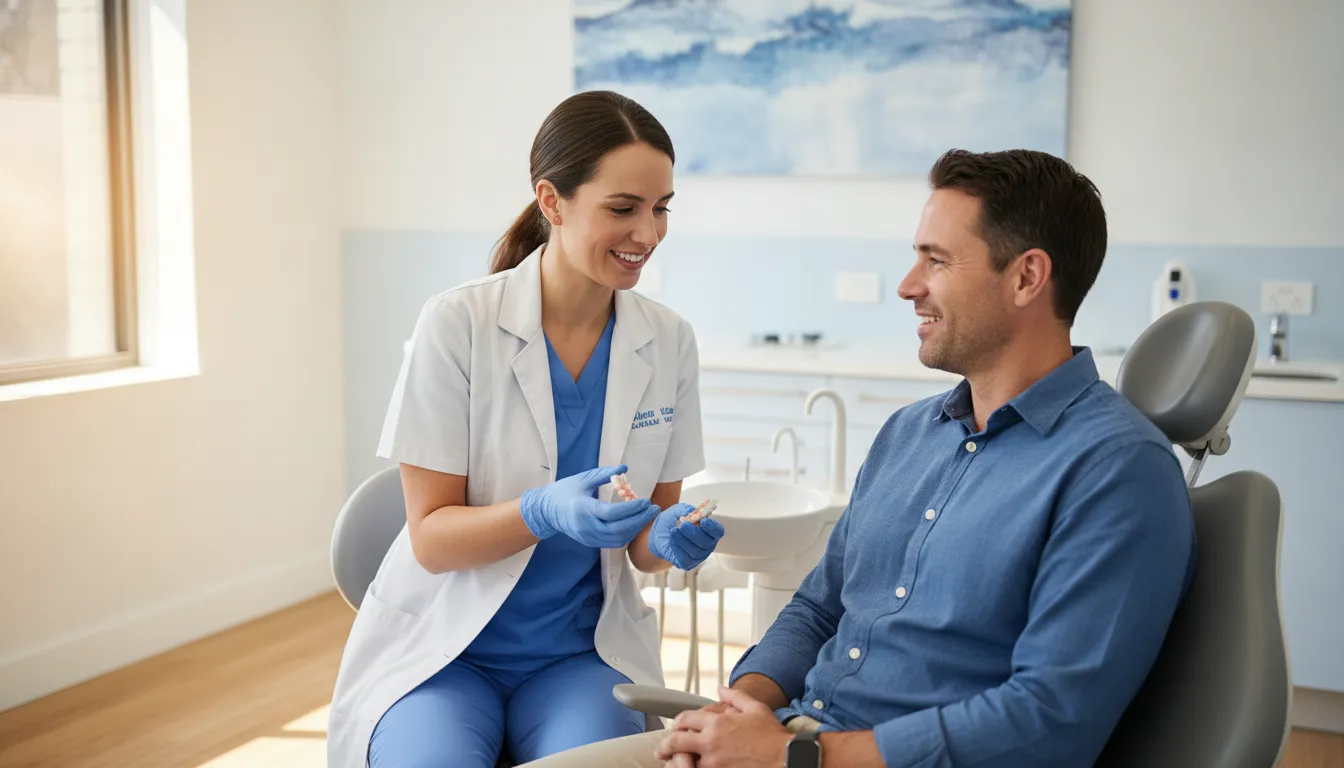
Bring the damaged denture to your appointment if it is safe to handle, along with any pieces that separated. A focused conversation can help you understand what the examination finds and what options may be appropriate. Consider asking:
- What damage pattern do you see? Ask whether the crack, break, missing tooth, or damaged clasp appears connected to another concern with the appliance or your oral health.
- How are the fit and bite affected? Ask whether the denture is stable, slipping, or contacting your natural teeth and gums differently. Dental evaluations may consider retention, stability, and occlusal errors when assessing a fractured complete denture.
- Could the damage be irritating my mouth? Ask the dentist to check for sore areas, irritation, or other oral-health concerns. Loose or damaged dentures can contribute to irritation and sores, so do not continue wearing an appliance that causes significant discomfort without professional guidance.
- Is repair, a reline, or replacement the most appropriate direction? The answer depends on the appliance, the damage, its fit, and the condition of your mouth. A reline may improve fit in some situations, while a new denture may be considered when relining does not resolve the concern.
- What should I expect next? Ask about the recommended sequence, how to use the denture while decisions are being made, and what signs should prompt a faster call. Avoid assuming that a repair can be completed within a particular timeframe until the dentist has examined it.
- How can I reduce the chance of future damage? Ask about handling, cleaning, storage, and whether changes in fit or bite should be checked periodically. For related fit questions, see this denture reline and fit assessment.
For denture repair in West Melbourne, FL, an in-person evaluation gives Dr. Anand Shah, DMD and the team the information needed to discuss your choices clearly.
Request an Appointment at Celebrity Smiles Melbourne or call (321) 914-0929.
Frequently Asked Questions
What should I do if my denture cracks or breaks?
Remove the denture carefully if it is uncomfortable or unstable, and keep all pieces in a clean container. Rinse it after eating and handle it over a towel or a sink filled with water to reduce the risk of further damage. Do not use household glue, bend the appliance, or attempt a do-it-yourself repair. Arrange a dental evaluation so the condition of the denture and your mouth can be assessed.
Can a broken denture be repaired?
Some damaged dentures may be repairable, but an examination is needed before anyone can recommend repair. The dentist may assess the type and location of the break, the denture’s fit and stability, and your oral health. Depending on those findings, the appropriate option may involve repair, a reline, replacement, or another treatment plan.
When is a cracked or broken denture urgent?
Seek prompt professional advice if the damage causes significant irritation, sores, bleeding, difficulty swallowing, or difficulty breathing. A loose or damaged denture can rub against oral tissues, so continuing to wear it may worsen discomfort. If you have severe symptoms or cannot safely manage the appliance, contact a dental office promptly for guidance.
Can a broken denture be repaired the same day?
Same-day evaluation or repair cannot be guaranteed because timing depends on the damage, the appliance, the clinical assessment, and the services available. Call Celebrity Smiles Melbourne at (321) 914-0929 or request an appointment through the contact page. The team can advise you about the next appropriate step.
Where can I get a broken denture evaluated in West Melbourne, FL?
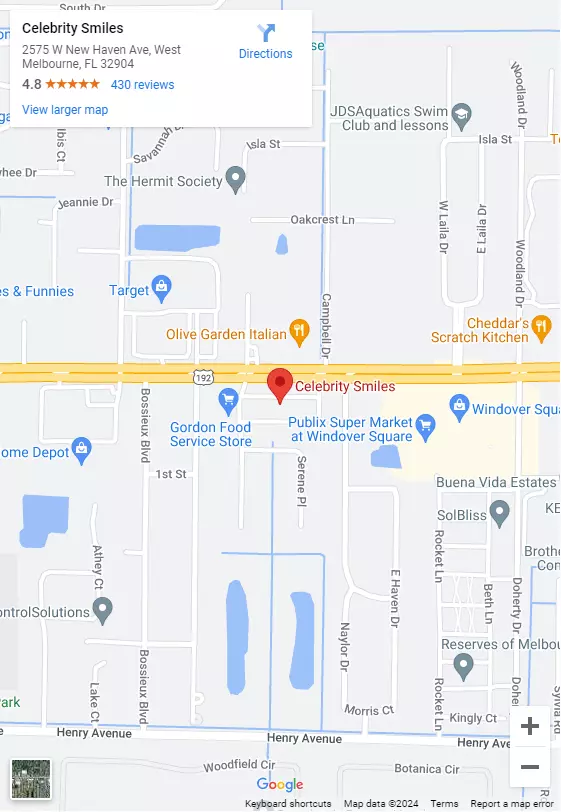
Celebrity Smiles Melbourne provides denture and restorative dental care for patients in West Melbourne and nearby Brevard County communities. Dr. Anand Shah, DMD can evaluate your concerns and discuss whether repair, a reline, replacement, or another option is appropriate. Schedule an in-person assessment through the practice contact page.
Ready to discuss denture repair in West Melbourne, FL?
An in-person evaluation can help clarify whether repair, a reline, replacement, or another option is appropriate for your denture and oral health. Celebrity Smiles Melbourne provides a careful, personalized next step for patients in West Melbourne and nearby Brevard County communities.
Request an in-person denture evaluation at Celebrity Smiles Melbourne
To speak with the practice, call (321) 914-0929.